
Podcast
|
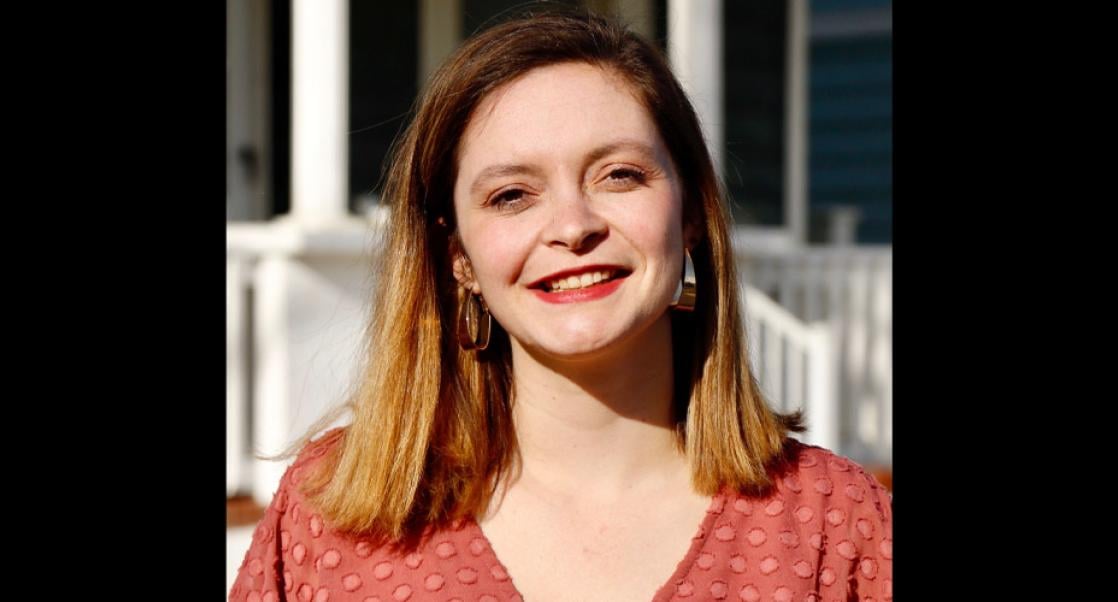
Mary Parker
E58: How To Be A Good Ally At Work
This month I am joined by Romaine Wright, Program Manager for Learning and Development for Charles River, to discuss allyship in the workplace. How can we use whatever privileges we have to help our colleagues and build a more diverse workforce?
-
Podcast transcript
Mary Parker:
I'm Mary Parker, and welcome to this episode of Eureka's Sounds of Science. In recent years, many people have felt called on to be better allies to marginalize people, particularly in the workplace. Many companies are trying to establish policies regarding Diversity, Equity and Inclusion, or DE&I, formalizing their stances on supporting minority employees. This usually involves employer sponsored training by professionals, and I am joined by one of those professionals today. Romaine Wright, program manager for learning and development for Charles River, is here to share her perspective on allyship and her experience training people to be better allies. Welcome, Romaine.
Romaine Wright:
Hi, Mary. Thanks for having me.
Mary Parker:
Thanks for coming. And I promise this isn't just an excuse for me to get free training from you. I didn't really want to have this, although that is just an added bonus.
Romaine Wright:
It wouldn't bother me. I'm used to it.
Mary Parker:
All right, good. All right. So can we start with your background in human resources and how you got started offering this kind of training?
Romaine Wright:
Sure. So my background is actually in psychology and behavioral health. I started wanting to be a child psychologist and started my career in mental health and social work in the state where I was, it was just really unstable. So after being laid off multiple times and getting close to 30, I was like, "Oh gosh, what am I going to do with my life? I need to figure out a different trajectory for my career." And so after I did some reflection on what I liked to do and what I was good at, I realized the training and coaching was always there. It was always part of my job and something that I did all the way back to being a peer mentor in middle and high school. And then I discovered a field of psychology called industrial organizational psychology, which is all about applying psychological principles in the workplace. So I shifted my career and my education towards IO psychology and employee development. And here I am today, still getting to use all of my psychology chops in my work for sure. But that-
Mary Parker:
Yeah, definitely.
Romaine Wright:
Yes. But that background also colors the way that I teach DE&I concepts and my perspective on it, because rather than really focusing like some professionals on the kind of intellectual understanding of definitions and things like that, my focus is always on improving interpersonal relationships, interactions between people, and really driving behavioral change by creating some awareness and understanding versus, I don't care if you can define bias for me, but if you can recognize it in yourself, that's what I want to see.
Mary Parker:
That's a fantastic perspective to bring to this. Honestly, it meets people on an emotional level, which is where I think a lot of this type of discussion tends to fall anyway. You can rationally talk about it all day long, and people are struggling with it. Meeting them on that level is a great way to go about it. So that's fantastic. So what is an ally from your experience?
Romaine Wright:
Wow. So what I've learned-
Mary Parker:
No, just a small question.
Romaine Wright:
Yeah, right. What I've learned about social constructs is our understandings of them are always super complicated because we see them that way. We're looking at the outcome rather than really trying to understand them at the heart and the root of what they are. And so with allyship, I realize that it's a challenge for people to understand because it requires us to first talk about privilege and we don't like to talk about that. Because you can't be an ally without having privilege that the other person doesn't have. And so, let's start talking about privilege first, because I know it's a triggering word, but again, we've got to start there. If we want to talk about what allyship is. So it's a triggering word I've seen because we limit it just to race and gender. So when we hear the word privilege, we're thinking about toxic masculinity and white privilege.
But it's so much bigger than that. If we look at privilege at its core and what it means, is just recognizing that a person or people have some kind of power, advantage, influence, access or opportunity that others don't have. And when we look at it that way and really think about it, we can understand that there's so many different types of privilege. Some were born with, some we can earn, but we all have it. And once we realize that we can start to become allies because it just means we're using our privilege on behalf of someone else. We know, of course, the commonly known ones that are super impactful, of course, race and gender and ability and orientation. But things like having a college degree, it gives you a level of privilege in the way that you pursue your career and maybe even what you're able to achieve.
Being a native of the place where you live is a privilege because that means you likely grew up speaking the language of the land, you likely grew up or practice the general religion of the land, you're familiar with the cultures and customs of the land, and someone coming from somewhere else has to learn those things. And so you've got some kind of access and advantage that they don't have. And then they're saying, it's not what you know it's who you know, so relationships we have with other people give us privilege as well. And so if I know you're a colleague of mine that has an experience in something, if I'm looking to fill a role, I may reach out to you before anyone else because I know you. And so again, being an ally is just recognizing that privilege and using it on behalf of someone else. And it's super powerful, especially for folks who are underrepresented or marginalized groups because we don't feel like we have privilege. And so it's hard to think, "Oh, I'll be an ally for someone else if I feel like I'm being oppressed." And so I know for me it was really, really powerful and empowering when I realized I had privilege and then I could be a support and lift someone up that didn't have that same type.
Mary Parker:
Yeah, I mean, there's nothing that says you can't have some privilege and some obstacles. It's a complex world. It could both be true at the same time.
Romaine Wright:
Absolutely.
Mary Parker:
So have you in the workplace personally observed any especially good or bad examples of someone trying to be an ally? Without naming names, we don't need to get into that.
Romaine Wright:
Yeah, for sure. No. I have a really great example of a bad one, not necessarily in my experience at work, but a friend of mine back in 2020 when all of the corporations, including Charles River, went on a quest to become more inclusive and decided to create ERGs, A good friend of mine's job did the same. They decided they wanted to have an African American ERG, and her manager was really excited about the opportunity to have my friend lead it, and felt like it was a great leadership development opportunity for her. And so she brought her into the office and shared the opportunity with her, was very excited and was super surprised that my friend was very, very offended. And the reason she was offended, because she's Jamaican, a very proud Jamaican, and she doesn't identify as an African American, she identifies as a Jamaican American. And so they really struggled with her frustration in them not understanding it wasn't relevant to her, and they felt like they were supporting her and bolstering her and being allies for her growth and development as a Black person. And she does identify as Black, but she doesn't identify as African American. And that one was really powerful for me when she shared it, I was like, "Wow." Yeah, that's real. That's very real.
Mary Parker:
That's a perfect example because I think that when people are trying to be allies, generally, their hearts are in the right place and they are trying. It's just trying isn't maybe necessarily enough. You also got to bring a lot of common sense into it and just think things through a little more deeply
Romaine Wright:
And understand and having a conversation with the other person.
Mary Parker:
Yeah, just ask.
Romaine Wright:
Just ask. Because on the other side, a great example, and probably seemingly simple example, is really just speaking up for others. And I love the look at this in the context of meetings, because we've all been in a meeting where someone had an idea, they shared and it was crickets, and then someone came up to them after and was like, "I thought that was such a great idea." Or, "I'm glad you brought that up. Why didn't you say that in the meeting?"
Say that in a meeting, especially if you do have that influence, that advantage in the group. Maybe you're a more seasoned employee and it was a newer employee that raised their hand and made the suggestion. And so using your privilege in this setting to support them and say, "Hey, you know what, that could be a great idea." Or, "Let's hear a little more about what Mary thinks." Inviting them into the conversation. So it seems simple, but super impactful on the person who's being supported.
Mary Parker:
Yeah. No one usually needs to prompt me to ask me what I'm thinking.
Romaine Wright:
Me neither.
Mary Parker:
So what does it mean to be an ally in terms of company policies? Besides meetings?
Romaine Wright:
Besides meetings? I want to make it clear, it's not much different. It's pretty much the same, except that if you are a person who has influence on company policy, the potential for the impact of your privilege, your allyship is magnified. Because if you have influence on company policy, that means you have a seat at the table and your voice is being heard. Now, I do want to be clear, because we use the phrase kind of seat at the table very casually, but it's very possible, just like I just gave in the meeting example, it's possible to have a seat at the table and still be silenced, still not be heard. So it's not enough to have a seat at the table, it's are you being heard at the table? Do you have a voice? And so if you have a seat at the table and a voice where you have influence on company policy, that means you have the opportunity to create equity across that organization.
You can look around at that table and see who's missing, and then fill in the gap for them because they're not there. That requires though having relationships with those missing pieces, those people, those groups, having a relationship with them where you know what that voice is, you know what's important to them, you know what they value, and what they need to feel like they're being heard, not just speaking on their behalf when you have no idea what's really important to them. So again, I see it the same way. It's just that the potential impact of that allyship is just so much more significant and greater.
Mary Parker:
Yeah, that's a really good point. I have caught myself not speaking up in places where I probably maybe should have, because I felt like I couldn't speak for other people that weren't there. But maybe it's better to just bring it up anyway and see what happens.
Romaine Wright:
It's not a bad idea because then that brings awareness to the fact that someone's missing, there's a voice missing. And so maybe you can't speak on behalf of that person or that group, but then we can now know, okay, we've got to invite somebody else to this table to find out what they're thinking and to hear that voice that's missing.
Mary Parker:
Yeah, absolutely. So you mentioned before that everyone has some form of privilege they can use to help be an ally. And so can you expand on that? Can you give, for example, coming from human resources, a way that you can be an ally?
Romaine Wright:
Absolutely. So I do want to say, I know clearly what let me know I had privilege that I didn't have before. The African Ancestry ERG for Charles River, last year, we have a book club and we read this book called Professional Troublemaker. And there were a couple pages where she shared some things about spending privilege, and I was like, "What do you mean spending privilege?" But then afterwards, I took some time to reflect and identify the areas in which I had privilege, and then I became really intentional about it. And then the places where I was already doing it, being an ally, now I do it even more because I realized the impact. And so one of those ways is in my seat where I sit at Charles River, I started at a site, so I know what sites go through.
I am aware of the just sheer volume of things they have to juggle to get the work done. And now in this global seat that I'm in, I have a different level of access and opportunity, right? Privilege, access and opportunity and influence on global programs and initiatives that someone at a site doesn't have. Because now I've got a different lens. And so when I'm involved with planning global programs and initiatives, and I have influence on what happens, I'm the one that raises my hand and says, "How does this impact a site? What is this going to look like at a site? How do we push this down to frontline employees?" And it's caused some reconsideration and reevaluation of how we do things on many occasions as we had to consider that. Whereas otherwise, we may not have. So I'm using my privilege, my excess, my influence, and my global seat to be an ally for site employees who again, really wouldn't have a voice otherwise in that space.
Mary Parker:
mentioned this a couple of times, ERGs standing for Employee Resource Groups. I had to look up that a couple of times when people were just saying ERG this and ERG that. So I just want to make that one clear. But also can you talk a little bit about those and what value they can bring for employees?
Romaine Wright:
Absolutely. So the Employee Resource Groups are something that was introduced probably towards the end of 2021 for Charles River, but we're not of course the only corporation that has them.
Mary Parker:
Right. Yeah, I've seen it around a lot.
Romaine Wright:
Yeah. Essentially, some of them call them affinity groups or special interest groups, but as they're opportunities for people that have the same something, to come together and form a community, whether that's based on race, gender, or any way that you could possibly identify, these are groups that really again, create a sense of community and an opportunity also to build some awareness and education for others that may not identify with that group but are interested in learning and possibly being allies for those groups. For Charles River specifically, we use our ERGs not just to have that community and kind of build that sense of belonging, but also for professional development opportunities, for networking and growth within the company, being able to connect with people that otherwise you may not have ever had a connection with or collaborated with or but a relationship with, because they may be on the other side of the world.
And so it's been, for me, I know personally being a part of an ERG has been super impactful because as a Black woman, I don't really see a lot of faces that look like in my global chair. And so it's allowed me to build relationships with folks that look like me across Charles River, but then as a lead, I'm a co-lead for our global chapter. And so that also allows me to, again, be an ally and influence all the ways in which we manage those ERGs and provide development opportunities across the others as well. And I'm an ally as a member of other ERGs as well.
Mary Parker:
And since a lot of us are still working from home, I think that those virtual meetings can be a really great way to get the networking in that you can't get by just going to the cafeteria anymore, unfortunately. I think it also helps to make people like you who have advanced so far more visible. And that way, if anybody has aspirations of having a career like yours, they can look to you and know that you're approachable by going to these meetings. So also pretty valuable.
Romaine Wright:
That's such an excellent point. And it makes me think of one of the things that the African Ancestry ERG did, actually a few of our ERGs, as we again have an emphasis on professional development, we coordinated some Clifton strengths sessions last year for interested ERGs as an offered opportunity for some professional development. And we scheduled it for the African Ancestry ERG, and I got COVID, and I was like, "Okay." Because they were like, "We want you to teach the class." And we had dozens of people signed up to take this class. I get COVID, I'm sounding like a frog, and I'm like, the class is tomorrow. My colleague is available. She lives in Scotland. "She's available to teach the class so you guys don't have to miss it." And they were like, "No, absolutely not. You have to teach this class." Because one person said, "In my 12 years at Charles River, I've never had a Black trainer, and it's so important that you be the one that teach this class for this particular group." And I was like, "Okay, let's reschedule. I get it." Because representation is so important. So I thought about that when you just made that comment. It's super impactful, even just to know what else is available in general, but definitely to see someone that you identify with in a seat that you couldn't even imagine yourself in before.
Mary Parker:
Yeah. Well, and this kind of gets into our next question, but in the previous episode of this podcast, I was talking with Elise Lewis, who is a reproductive toxicologist, and she's a woman, Black scientist, and just talked about the importance of not even just seeing people like her in scientific jobs, but seeing the different kinds of scientific jobs that even exist, because she thought that she was going to be a doctor because she didn't know that there were other really types of biological research out there. They're just not as well publicized. So yeah, now she makes a really big point of going into schools and encouraging, especially girls in STEM and joining all these organizations, be like, "Hey, you can be a doctor." Sure, that's great. But there's other options out there if you don't want to be a doctor, you don't just have to give up on science. So yeah, that's all kinds of examples of representation in ways like that, I suppose. But are there any special challenges in a scientific industry like Charles River that should be addressed to promote DE&I?
Romaine Wright:
Yeah, so I know Elise well, and she is definitely staking her claim in growing or created some inclusivity in the scientific space that she sits and navigates in. And I would say from my seat, I wouldn't even consider it industry specific because there's people like Elise ride our blazing trails where we see a lot more, at least gender diversity in scientific industry. Maybe not as much of other areas, but definitely gender. So the pendulum is swinging a bit, but from where I sit, the biggest challenges to DE&I for companies like Charles River is just the challenge of being a global company and being able to offer equitable opportunity across the whole company. In my seat, in talent management, we struggle significantly with offering training and support and consultation in the languages, just that people need, the preferred languages that people want to learn in.
And it's a whole reason I created the facilitator network. It's like we need to be more scalable. We need to be able to deliver all the good stuff in other languages because we're leaving out whole pockets of the world just because we don't have people that can teach or that can learn it in English and then teach it in the preferred language. So challenges like that, cultural differences, right? Because when we design solutions, we have to be mindful of the different cultural experiences and expectations that folks have across the world, regulatory guidelines around how we talk about diversity and race and inclusivity. And there are some places where it's very taboo, and so we're determining how we're going to handle things globally. We have to manage and juggle those, and then accommodating just the vast number of time zones and schedules we have. Because again, if we're offering development and we've got a whole side of the world who's on a different time, they're sleeping when we're offering this in English and it's like, "Hey, what about us over here? We're not getting it.
So it's a huge challenge that any company, regardless of the industry that is global, really has to deal with. And the one thing we've found that's been effective is driving some local ownership, allowing sites and different regions to customize and tailor global initiatives and programs in a way that meets their local needs and letting them own it and really be proud of what they're delivering in collaboration with us so we can maintain some level of integrity of what's being delivered.
Mary Parker:
For internal use. We created a glossary of preferred terms, so things like transgender, LGBTQ terminology, other all kinds of other things, like DE&I terminology. And someone asked if we could translate it for other languages, and I said, "No, absolutely not. You cannot just take this list and verbatim translate it into Finnish or German or simplified Chinese." That has to come from the local level. We don't know their preferred terms. We don't know what's going on culturally in those places. It's one of the things we can't do for them, unfortunately.
Romaine Wright:
Absolutely. I'm so glad that you had the insight to stop that.
Mary Parker:
It didn't really take much. They realized like, "Oh, yeah, yeah, you're right. That's not a good idea."
Romaine Wright:
And a lot of our English words, especially the emotional words, they don't have equivalent translations, like empower and inspire and all. That means nothing in other languages, or there's lots of different ways to define a single word, and we've got to figure out what's the right one of that word, right version of that word to communicate what we're trying to say. So again, I'm glad you caught that.
Mary Parker:
Yeah, yeah. Well, one time I didn't catch something was there wasn't even a language barrier involved, but I was working on a video project with our colleagues in Australia, which talk about time difference. I was having these very early morning meetings, very late. Anyway, it was about some patients that live out in a very rural area, and they have their own kidney dialysis center that they raised money for in order that they wouldn't have to leave their hometown to go far away for dialysis. And I was like, "Oh, I can't wait. I would love to interview these people. I don't mind staying up late or getting up early and getting on a zoom and asking them questions." And they're like, "No, we're going to have them be interviewed by the people they know from the area." And I'm like, "Okay, actually, that makes sense. I'm sorry."
Romaine Wright:
That makes sense.
Mary Parker:
It's just I really want to talk to them. But they're like, "They don't know you. They don't want to talk to you." And I'm like, "That's very fair." I'm glad they were agreeing to do it at all. So I had to hold back on that one, even though I got really excited though.
Romaine Wright:
Oh, yeah, it's been a learning curve for me as well. Again, going from a site role to being in a global role and just trying to sit back and take it all in like, "Oh, okay, I didn't know they'd do that in France." Or there's a different system to use for the APAC sites that we don't use over here. It's a lot. So, yeah.
Mary Parker:
And it might feel weird, but I don't see there's anything wrong with having an open document on your computer and with different countries listed and then taking notes about things you learn as you go along, talking with colleagues in different places. It's fine. No, we can't remember everything. Anyway.
Romaine Wright:
You know what? You're on it, right? Because when I teach about things, I teach a lot about unconscious bias and all of that, and people want to know, how can I be just not biased? You can't, because it is impossible for you to know everything about every person that you'll ever meet for the rest of your life and never offend anyone again. It's not possible.
Mary Parker:
Not going to happen. Nope.
Romaine Wright:
No. So I say that's actually a very good suggestion to just keep a log of the things that you learn and then know that when you learn something about a person, that still only represents them, it doesn't speak for everyone that looks like them, that believes like them, that identifies like them. It's still just their perspective. And there's diversity in diversity. It's diverse itself. There's just richness of uniqueness and individualism in how we live life.
Mary Parker:
Yeah. This kind of gets into our next question of what's your advice to someone who wants to be a better ally? It kind of sounds like just stay open to getting your mind changed every once in a while.
Romaine Wright:
Yeah.
Mary Parker:
It's a good start.
Romaine Wright:
It is, right? Being objective and being willing to learn. They say, be curious. I don't really like that terminology because it implies weirdness. The other person is strangely different and I'm curious about them. But I definitely encourage talking to people, finding out what's important to them. If you want to be an ally for an individual person, finding out if they even want you to be an ally, and then what that means to them that you support them, because it may be really, really simple. And then that we've heard of the golden rule, which is treat others the way you want to be treated. But in the DE&I space, we teach the platinum rule, which is treat others the way that they want to be treated, right? Because if we treat people the way we want to be treated, we make a lot of assumptions about what they believe and what's important to them based on our own biases and beliefs and values. And that may not be true of them.
So that's a great rule of thumb, is to just talk to a person, learn about them, and find out what you can do if you would like to be an ally, and again, if they even want that type of support from you. So we don't assume, I'm going to speak up for you in the meetings. No, you're not.
And then on the other side, if you really wanting to be a more general ally, spending your privilege, like I said, when I was introduced to the concept, it was kind of mind-blowing for me. I encourage everybody to sit back and reflect on what areas you may have some privilege, and then when you realize it, using that for the benefit of people who don't have it, because it's super empowering to know you can help others with the access and influence and opportunity that you have that they may not.
Mary Parker:
Yeah, that makes perfect sense. All right. Well, thank you so much for this conversation. I really, really appreciate it, and I can't wait to post it.
Romaine Wright:
Awesome.
Mary Parker:
Thank you so much for joining me today, Romaine.
Romaine Wright:
No problem. Thank you.