

Microbial Solutions
|
Mirna Vazquez and Duncan Barlow
EMPQ Essentials for Successful Cleanroom Qualifications – Part 1
Experts' take on why microbial tracking and trending, and static and dynamic monitoring matter in environmental monitoring
Gaining full clarity on all aspects of environmental monitoring performance qualification (EMPQ) for your cleanroom not only sets you up for long term success but also helps you choose the right resources, partners, and methods for your EMPQ strategy - giving you confidence in your deliverables.
During our recent EMPQ Essentials Webinar, subject matter experts from Charles River Laboratories and Veltek Associates Inc. shared actionable, data-driven insights for successful cleanroom qualification. We received over 50 questions, which we categorized into most frequently asked topics. In this two-part blog series, we’ll explore these key topics and share the ultimate EMPQ essentials, curated by trusted industry specialists.
Why Do Microbial ID & Tracking and Trending Matter in EMPQ?
The monitoring of pharmaceutical production cleanrooms is an important task that proves the controls implemented to minimise risk from contamination are effective. There are many regulatory authorities and standards organisations that set out regulations and guidance for environmental monitoring of surfaces and air in cleanrooms, such as the US Food and Drug Administration, World Health Organisation, International Organization for Standardization etc. These documents set out the expectations for limits on numbers of microorganisms permissible in each classified area, but also of critical importance is the identification of microorganisms detected.
Who is in your cleanroom?
Environmental Monitoring (EM) starts when a new cleanroom is built and validated according to its intended use. Extensive sampling is undertaken and the data obtained is reviewed to understand the microbiota present before introducing processes and disinfectant protocols. This review establishes a baseline understanding of the typical microbiota of the cleanroom. Therefore, identification of microbes isolated is critical. It might be tempting to expedite this process by only identifying a certain proportion of isolates.
Whilst there isn’t a regulatory expectation to identify all isolates it is considered best practice to do so. A full and complete overview of the microbiota ensures full understanding and informs additional activities such as cleaning and disinfection. For example, failing to identify everything at this stage could result in overlooking species that may pose a risk to the product, process or disinfection program. Data generated during EMPQ is the baseline for proactive controls such as trending. An incomplete picture at this stage could prompt that trending may be less effective as not all organisms have been identified.
Another key reason for identifying isolates will be to understand contamination sources in a cleanroom. Typically, these come from humans and material transfer and an overview might look like the below:
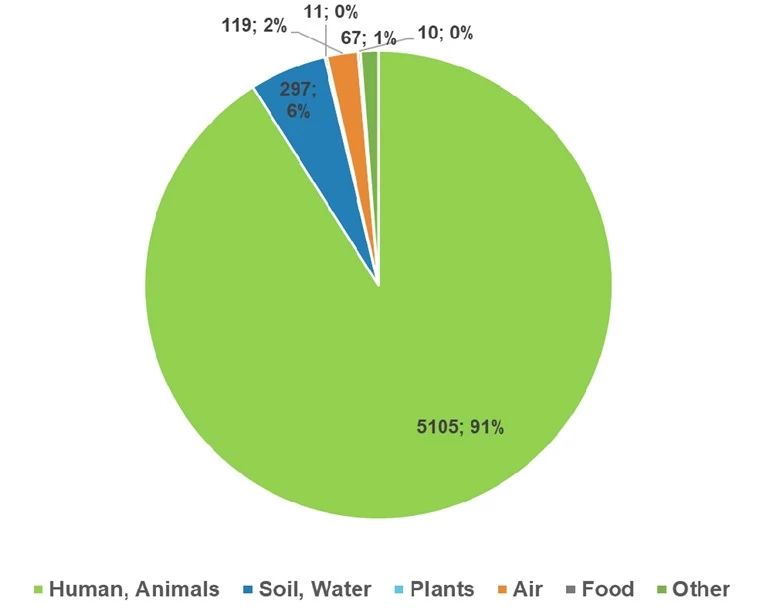
Pie Chart of General Habitats of Identified Microorganisms
Identifying unusual contaminants
Whilst it is important to understand the typical microbiota of a cleanroom, it is also important to understand the more unusual contaminants that may occur. For example, Filamentous fungi typically make up a small proportion of all the isolates detected in a cleanroom, but their presence can provide unique challenges. Fungi are often spore formers whose spores are not only potentially resistant to certain disinfectants but also potentially airborne and easily spread through a facility once present, posing a contamination risk.
Recent advances in technologies and techniques for identifying filamentous fungi have resulted in the industry attempting to ID more of these types of organisms. Improvements in sample prep mean that MALDI-TOF is now a good option to identify all isolates including traditionally more difficult organisms such as the filamentous fungi. However, it is more than just the technology utilised for the ID program. If the library associated with the system is limited or contains entries that are not relevant to those found in cleanrooms, then ID rates may be poor, and inaccurate results may be generated resulting in errors in decision making and possibly even ineffective CAPAs in the event of an excursion.
To truly understand the source of contamination the organism implicated should be identified correctly to species, which allows for a broad assessment of where it likely came from, either human or water. However sometimes the species implicated may be relatively common and it can be difficult to track the true source when multiple sources may be indicated. In this instance, advanced genetic techniques might be a better option, such as strain typing, where different isolates of the same species can be compared at the strain level to determine the likely source of the contaminant when many possibilities exist.
Techniques such as this can be extremely helpful during critical microbial deviations to narrow down the source of a contaminant.
Catch up on the 'EMPQ Essentials' Webinar
Whether you are setting up a new EMPQ program or enhancing an existing one, equip yourself with actionable, data-driven, insights to enhance your microbial identification processes and reinforce your facility’s quality control.
Watch On Demand
EMPQ Strategy & Process
The EMPQ process involves static and dynamic monitoring to ensure compliance with regulations such as ISO 14644-1. While there is no strict minimum requirement, at least one day for each phase is necessary, with multiple days recommended for dynamic monitoring. A critical element of this process is the EM risk assessment, which guides the development of the sampling plan. The sampling locations are determined considering high-traffic areas and critical zones within the cleanroom.
The 3 Phases of EMPQ process
- Baseline (Phase I), where viable sampling establishes microbial flora and action limits
- Initia (Phase II), where static and dynamic testing confirm compliance with ISO classifications
- Extended (Phase III), a long-term evaluation to ensure environmental stability across all seasons
Adjustments may be needed for airflow, personnel limits, and sampling sites to maintain compliance with cleanliness standards.
From EMPQ to Routine Monitoring
Routine monitoring follows EMPQ to maintain cleanroom classification and contamination control. The choice between one or three runs of EMPQ depends on risk assessment and regulatory justification, particularly when no significant facility changes occur. Pass-through HVAC systems, and other fixtures must be qualified as part of cleanroom validation. Sampling plans should be designed based on critical areas and ISO guidelines, with non-viable particle monitoring determined by room size and equipment layout. The EMPQ strategy varies depending on whether it is a new facility, an upgraded area, or a periodic reassessment, ensuring ongoing compliance and product safety. Ultimately, the frequency and scope of EMPQ should align with regulatory requirements and risk-based assessments to uphold microbial control standards.
Read Part 2 of this blog series, where we explore more EMPQ essentials. A guest expert from Veltek Associates Inc. - a long-standing leader in contamination control, shares insights on effective cleaning and disinfection. Plus, our own subject matter experts break down key regulations for cleanroom qualification and offer practical tips for overcoming EMPQ challenges and risks.
Mirna Vazquez is Associate Product Manager and Duncan Barlow is Senior Scientific Portfolio Specialist for Charles River Laboratories' Microbial Solutions business.

The Micro Keeps You in The Know
You don't need an agar plate to grow your microbial knowledge. Get industry updates, articles and other resources delivered straight to your inbox each month.
Subscribe