
Exquisite Science
|
Regina Kelder
The Fight to End Malaria
The parasite that causes malaria uses cellular tricks to divide and conquer. Malaria expert Dr. Jeffrey Dvorin is trying to outsmart it, and find new drugs in the process.
In June and July, eight locally acquired malaria cases cropped up in Texas and Florida, a relatively rare event that generated massive headlines and outsized public curiosity about the mosquito-borne killer. People raised concerns that malaria might be making a comeback in the US, after being relatively absent since the 1950s.
The reality is most of the world’s malaria burden occurs in the resource-challenged regions of sub-Saharan Africa, along with parts of South Asia and South America, resulting in devastating morbidity and mortality. According to a 2022 report from the World Health Organization, more than 600,000 people still die of malaria every year, most of them children, despite advances in both prevention and treatment. There are currently about 247 million new cases of malaria reported every year, the agency says.
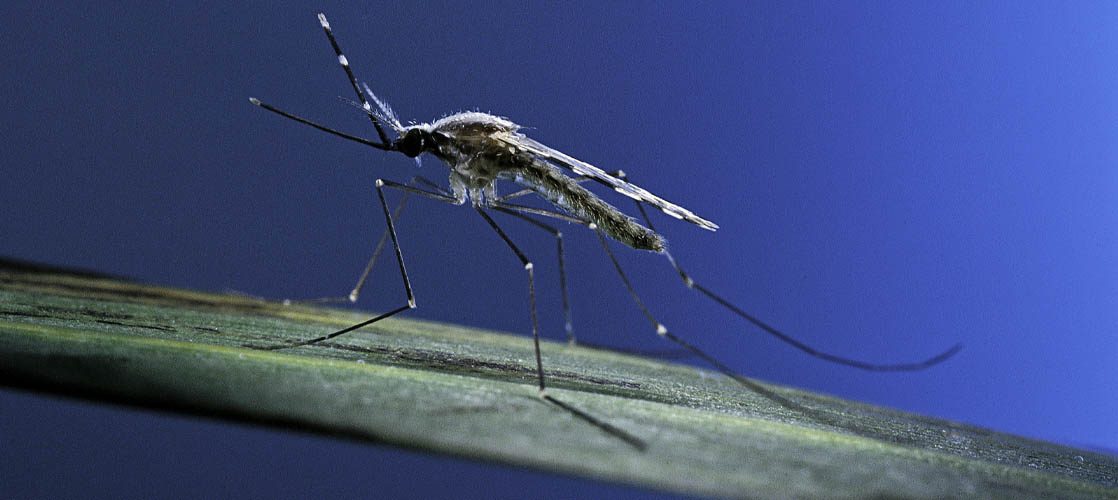
What can be done to arrest this disease, which is caused by different species of the blood parasite Plasmodium and spread via female Anopheles mosquitoes who require a blood meal to develop and lay fertilized eggs?
Years ago, doctors treated the infected with quinine drugs, but today artemisinin-based combination treatments (ACTs) are accepted as the best treatments for malaria. Artemisinin, which China isolated in 1965 and earned scientist Tu Youyou the Nobel Prize, quickly reduces fevers and rapidly lowers blood-parasite levels. However, resistance to artemisinin emerged in Southeast Asia about 15 years ago. More recent studies have confirmed that malaria parasites resistant to ACTs have emerged in three disease-prone areas, Rwanda, Uganda and the Horn of Africa, with no immediate replacement available. There is also a vaccines on the market that shows efficacy against malaria, but not potent enough to bring down incidence the way the smallpox vaccine eradicated that virus in the 1960s and 1970s. Other vaccines are in the pipeline. Rising resistance to insecticide-treated nets remain a major concern in Africa, while malaria parasites are escaping detection from the most widely used diagnostic tests.

behind him is an immunofluorescence image of an expanded
P. falciparum parasite. It shows the many nuclei within a
single schizont-stage parasite in a human red blood cell.
Dr. Jeffrey Dvorin, an MD, PhD, Infectious Diseases clinician, and Principal Investigator at Boston Children’s Hospital, hopes to find new therapeutics by halting the parasite’s ability to replicate. If history is a guide, the organism isn’t going to give up its playbook that easily. Plasmodium parasites have a complex life cycle with biological processes that are divergent from those in more well-studied organisms, making drug development challenging. The size and genetic complexity of the parasite means that each infection presents thousands of antigens to the human immune system, and a single effective antigen to halt the parasite growth has not been identified. The Plasmodium parasites change size and shape and invade humans on two fronts—first the liver and then the blood— making them extremely difficult to clear from our systems.
The goal of Dr. Dvorin’s research is to better understand the function of the genes essential to the parasite’s survival, and in turn open the door to more targeted and effective therapeutics. His group is using genetic manipulation and imaging techniques to manipulate and elucidate some of the more complex and less understood parts of the Plasmodium falciparum life cycle.
Dr. Dvorin has a PhD in molecular biology and is clinically trained as a pediatric infectious disease specialist. He began focusing on malaria in 2007 during his postdoctoral training in the laboratory of Dr. Manoj Duraisingh at the Harvard T.H. Chan School of Public Health. Dr. Dvorin investigated the molecular pathogenesis of the human malaria parasite Plasmodium falciparum, the dominant malaria parasite in most sub-Saharan African countries. When he was part of Dr. Duraising’s lab, he identified an essential protein, PfCDPK5, that is required for P. falciparum replication that could potentially be an ideal target for anti-malarial drugs. Dr. Dvorin became part of the faculty at Harvard Medical School and Boston Children’s Hospital in 2010 and started his independent laboratory there in 2011. Since then, Dr. Dvorin and his team have continued to discover novel cell biology and essential processes in the parasite.
Eureka spoke with Dr. Dvorin to learn more about his research and get his take on the unusual surge of cases in places where malaria rarely surfaces.
What facet of P. falciparum does your lab study?
JEFFREY: My group specifically looks at how the malaria parasites undergoe cell division during the blood stage; how one parasite infects one red blood cell and how that parasite will eventually divide and release 20 to 30 daughter parasites in each round. The exponential expansion in the number of parasites is why people get sick after getting bitten. After a bite from an infected mosquito, somewhere in the range of 10 to 100 make their way to the liver. After the liver stages 1000s of parasites are released into the blood where they can replicate to more than 1011 parasites in a few days.
In some ways, the fundamental biological processes in the parasite are just like our cells. They break down glucose the same way, they make proteins and ribosome the same way. But some of the critical biological pathways are completely divergent. Those divergent processes are the ones that my lab is mostly interested in.
How are the parasite’s biological processes different from, say, human cell division?
JEFFREY: Our cells, for the most part, divide in a fairly mundane manner. You go from one cell with one nucleus, to briefly one cell with two nuclei, and finally to two cells each with its own nucleus. That is the canonical mechanism of cell division, and how people always learn about mitosis. But in Plasmodium in the blood stage, specifically inside the one cell, the nucleus divides multiple times without cell division. You end up with a multi-nucleated cell known as a schizont. Then the nuclei independently start to divide from each other. So, you can go from one nuclei to two nuclei, and then this one over here decides to divide, but this one doesn't right away. And then you've got three nuclei, and then each one of them can decide when it wants to divide. You end up with a dozen or more nuclei.
These are regular cells that have all the stuff that cells need. They have mitochondria, they have an endoplasmic reticulum. Plasmodium parasites also have a plant-like organelle called an apicoplast, which is a little bit like the chloroplast in a plant cell but doesn't do photosynthesis. At the end of all of this, what would seem to be a disorganized division of organelles and nuclei, the parasite organizes to have the last round of nuclear division be synchronized in the parasite cell. At this special synchronized moment, the parasites undergo a massive cell division event where the nuclei and required organelles are partitioned into individual daughter parasites.
What are you learning from studying the parasite’s cellular processes?
JEFFREY: My lab has been particularly interested in segmentation—how do you take a cell that has lots of nuclei and lots of organelles and faithfully partition them into each single daughter parasite. … We are particularly interested in the assembly of the cytoskeleton as these daughter parasites are formed. There is a multi-protein ring that sits at the bottom of the segmenting parasite, called the basal complex. We are interested in what is this basal complex, what are the proteins involved in it and how it assembles the cytoskeleton? In other words, how does it segment out a single parasite and then get to the bottom and we think squeeze and contract and release a new daughter or parasite. My lab has identified many of the proteins within this complex in Plasmodium. And we are working to understand how these proteins function.
What techniques are you using to study the malaria parasite?
JEFFREY: We use two main techniques. One is that we make transgenic parasites. We use CRISPR/Cas9 systems and add an epitope tag or a fluorescent protein to our gene or our protein of interest. We also can regulate the amount of that protein either with an inducible knockdown or an inducible knockout of these genes. … Because these proteins are divergent it's hard to predict ahead of time what the function of a protein is, so often we need to yank it out to see what the consequence is.
We use a couple of [imaging] techniques to look at the biological consequences of a protein’s loss of function. One is a more standard immunofluorescence, where an epitope with a specific antibody is added to our protein. We also do super-resolution microscopy to see where things are. We have a new twist on that now, called expansion microscopy, [where] we infuse our fixed cells with a polymer. When you add water, the cells physically swell. So, we're able to take our parasite and expand it four to five times in each direction, which volumetrically is 60 to 80 times larger in 3D.
What that means is that two proteins that were right next to each other that we could not distinguish by standard light microscopy, in its expanded state are now far enough apart from each other that we can resolve where these proteins are.
And as a corollary of that, we use live fluorescent markers on proteins so that we can monitor over time in live parasites the assembly of these structures. We can see the cytoskeleton forming, we can see this basal complex ring forming, and we can monitor how that changes over time, and how that changes over time as we perturb the system. That really allows us to start to dissect out the function of these complexes.
What have you learned by using these techniques?
JEFFREY: The ongoing research for the lab right now is to understand the assembly and function of these basal complex structures. We just published a paper last week in Nature Communications where we described how the [basal] complex is extremely dynamic in both time and space. We were able to see as well, as any machine, be it a mechanical or molecular machine, that it has a stepwise assembly. So, all the proteins don't just go boom and come together… rather, we think that they get added in a particular way. We’re learning about how it assembles, and we are also learning that with our standard microscopy and even super-resolution microscopy, this structure seems to be one single spatial structure. With our expansion microscopy, we started to move things apart and realized that there are sub-compartments within this molecular machine.
Are you able to test whether knocking out a protein or knocking in a protein alters the parasite in such a way that is not as lethal as it is now?
JEFFREY: In an inducible way, we are able to identify proteins that are really essential for the parasite's survival, so that when we knock them down, the parasite will be unable to be infectious. So, I guess an ultimate goal would be able to generate some modified parasite that would be a good vaccine – as a live attenuated parasite. The difficulty is that it's unclear whether these proteins that we're looking at now would be good targets for a vaccine. The proteins that we are working on would be very good targets for drugs, though.
How so?
JEFFREY: There are lots and lots of huge, small molecule screens to find drugs that kill the parasite. Unfortunately, it's turning out that even if there are a thousand compounds on a list that kill a parasite, in the end, most of the drugs that have been screened target a very limited number of targets.
My group is interested in the processes that are parasite-specific and drugs that target a later stage of the parasite’s development, during 40-48 hours of the parasite’s lifecycle. It provides a larger window for the drug to be effective and adds a whole new pathway for drugs to target. Right now, there aren't any drugs that I know of that target this segmentation or daughter cell formation. So, it is a new timing in the life cycle and a new process.
Are you at a point where drugs like this can be tested clinically?
JEFFREY: So, we are now at the stage of identifying which aspects of the [basal complex] or the cytoskeleton are essential. The hope is that once we identify them, we’ll be able to prioritize a search for a small molecule inhibitor. The short answer is we’re thinking a lot about it but ask me again in two years.
Is any of your work being done to support vaccine research?
JEFFREY: I am a major proponent of the benefit of vaccines, especially in resource-limited settings. To be able to give someone a shot or series of shots that would provide them protection without further intervention would be fantastic in regions of the world where malaria is the most severe and getting to medical care difficult. So, my group collaborates with a laboratory at Brown, helping to investigate candidates for a new malaria vaccine. We provide the ability to do genetics on the parasite and to do some cell biology on the parasite to identify new malaria vaccine antigens.
Before we close, why are we suddenly seeing locally acquired malaria cases in the US?
JEFFREY DVORIN: So, the species of parasite that caused the recent surge in US malaria cases is called Plasmodium vivax. It is not the species that we think of as causing the most severe form of malaria, but it is geographically widespread. What Plasmodium vivax does do is become dormant in an infected person’s liver. The parasite then can reactivate weeks, months, even occasionally years later in someone who had traveled out of the country and had active parasites but wasn’t extremely sick. Why is this happening now? One, there was a person who likely had circulating parasites or circulating transmission stages of the parasites. Two, they were in an area that had an active population of Anopheles mosquitoes, and three, the conditions were right for the mosquito to then take a second blood meal and in fact, infect another person.
Malaria used to be endemic in the US. How did we get rid of it?
JEFFREY: The decline was due to a combination of factors. One, we decreased the mosquito breeding grounds by draining swamps. Two, modern housing with screened-in porches caused people to spend more time indoors and have less contact with biting mosquitoes. The third factor was greater recognition about how to treat and prevent malaria. Malaria is a disease caused by parasites and transmitted by mosquitoes, but it's also, on some level, a disease of poverty. As the living conditions improved and there were insect-free dwellings for people to sleep, as we decreased the breeding areas for mosquitoes with improved drainage and irrigation systems that could be turned on and off, that's a lot why malaria was eliminated from the US.


