

Cell & Gene Therapy
|
Regina Kelder
How Rare Diseases Are Driving Gene Therapy Research
The fight to end Duchenne and neurofibromatosis using gene therapy was center stage at Charles River’s 5th Annual World Congress. Stay tuned for more coverage.
If there is one thing, we have learned in the drive to bring rare disease drugs to patients it is that foundations are helping to lead the way. The Cystic Fibrosis Foundation developed the breakthrough therapy Kalydeco now marketed by Vertex. CHDI Foundation, a nonprofit devoted to Huntington’s disease (HD), has built relationships with the academic and industrial sectors to develop drugs that can slow the progression of the deadly, neurodegenerative disorder.
At yesterday’s World Congress Meeting in Cambridge, a day-long meeting devoted to cell and gene therapy, the non-profit biomedical research organization Cure Rare Disease showed how it is pushing boundaries in its quest to develop therapies targeting diseases that impact only a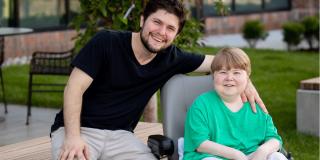 handful or even just a single patient. For its work it was honored with the 2022 World Congress Researcher’s Award created in 2017 to recognize a researcher, laboratory, or organization dedicated to supporting the development of novel therapies. “There were many hurdles to cross between basic research on cells and getting Terry’s treatment to work in animals and cells,” said Charles River President and CEO Jim Foster. “During this process we got to know Rich. He taught us so much about rare disease medicine, the art of perseverance, and how to make collaborations happen.”
Since 2019, the foundation’s Founder and CEO Richard Horgan, a Harvard MBA, has been on a mission to help his younger brother Terry, who was both with a very rare form of Duchenne muscular dystrophy, itself a rare disease caused by the body’s inability to make the protein dystrophin, which is critical for the structure and function of muscle cells. Through the work of academic and industry collaborators, a gene therapy was designed and developed that turns on a section of DNA that can override the damaged part of the DNA. An advanced version of the gene editing technology known as CRISPR, called CRISPR activation, is being used to specifically target a brain isoform of exon 1 and turn it on. Richard Horgan told attendees that they are expecting to submit an Investigational New Drug application to the Food and Drug Administration this spring, and if all goes well Terry will be dosed this year and their first cohort of ultra-rare disease patients in 2023.
Along with Terry, Cure Rare Disease is also helping around 20 patients impacted by rare neuromuscular diseases that affect muscles and movement. “We are trying to build this new model that will allow us to take something from bench to bedside in three years,” Horgan said.
Like so many disease foundations begun by families, Cure Rare Disease has not only advocated for treatments and cures, it has angled for a seat at the bench and built a large international network of scientists dedicated to helping them meet their mission of finding effective treatments and hopefully cures.
The unknown question is what the side effects of their gene therapy will be in patients, says Horgan, particularly ones as old as Terry. Cost of the therapy is another big factor. Horgan advocates talking to insurers early enough to discuss how they can approach covering these so-called N of 1 cases. “It is important to understand what the payers expect,” says Horgan.
Neurofibromatosis 2
Unlike the ultra-rare cases Cure Rare Disease focuses on, neurofibromatosis, while considered rare, is among the world's most common genetic disorders, occurring in about one of every 30,000 births. Kathrin Meyer, PhD, a scientist at Nationwide Children’s Hospital’s Center for Gene Therapy in Columbus, Ohio, is principal investigator of the Neurofibromatosis 2 Gene Therapy Project, where she focuses on studying disease mechanisms in neurodegenerative diseases and finding new innovative therapeutic strategies for them.
Neurofibromatosis 2, also known as bilateral acoustic neurofibromatosis, is characterized by tumors on the eighth cranial nerve, which can lead to hearing loss, headaches, loss of facial control, and problems with balance and walking. It is caused by a mutation on the NF2 gene, which produces a protein known as merlin/schwannomin that helps suppress the development of certain tumors. Dr. Meyer says there are several different approaches one can take to treat this condition with a gene therapy. One would be to replace the defective gene and thus help the merlin protein regain function. Another approach would be to inject the gene therapy into the tumor and kill it, a strategy known as suicide gene therapy.
The challenge, says Dr. Meyer, is that to develop gene therapies that can prevent tumors from growing you need to target a lot of cells. This means that the vector used to deliver the gene therapy has to be a large one, inviting more toxicity. “A lot of families have seen the amazing results from Zolgensma (an AAV gene therapy recently approved for spinal muscular atrophy. “Unfortunately, you don’t always see the same outcomes in other patients.”
Neurofibromatosis 1
The final talk of the day was as deeply personal as the opener. Beth O'Brien, the mother of 17-year-old Jack Burke, first appeared at the World Congress in 2019 to talk about her family’s fight to find a cure. Jack was born with plexiform neurofibromas, a common variant of neurofibromatosis type 1, which is caused by a mutation on chromosome 17 (as opposed to NF2 which results in a mutation on chromosome 22.) Neurofibromas occur in about 30-50% of those with NF. Half of the cases appear spontaneously. To date, the foundation, CureNFwithJack, founded in their son’s name has raised more than US$3 million for research. They work closely with the Children's Tumor Foundation.
 Jack, who spoke to the World Congress via video with his dad, is a sophomore at Cambridge High School in Atlanta. He has a part-time job and hobbies, but his disease remains an ever-present focus. Some days—and years—are worse than others. Since his diagnosed at age 2, he has had an eye orbit tumor, a brainstem glioma, eye surgery, brain surgery and a year-long course of chemotherapy. The consequences of his disease have been painful and disfiguring.
“As a mother, I worry not only about his physical health but his emotional health,” says Beth. “Jack’s tired. He’s sick and he’s tired.” Beth said her son has even wondered whether all the advocacy they have done will ever lead to a cure. “The other day, Jack said that ‘if we cannot find a cure or real treatment in 10 years, then maybe we stop trying so hard to raise funds."
One glimmer of hope could be a gene therapy. NF1 is a complex condition caused by more than 3,000 mutations in the large NF1 gene. There is currently research trying to identify which mutation lines up with which NF1 symptom, of which there are many. On the bright side, Beth says animal models have been developed and scientists are looking to capitalize on the success seen with cystic fibrosis, which is another rare disease of many mutations.
(Our coverage continues on Thursday with a look at more of the speakers, and the new (slide-less) format that World Congress used to stimulate of the discussion.)