

Research Models
|
Daniel Klein
Laboratory Rats Gaining in Biomedical Research
Thanks to technologies like CRISPR, genetic modification previously only possible in laboratory mice can now be done with laboratory rats
NOTE: This article is available in other languages (FRANÇAIS / DEUTSCH).
Humanity’s impact on the animals around us has been profound. Wolves have become dogs, aurochs become cattle. Many ostensibly wild animals, like pigeons and geese, all have the imprint of human genetic meddling. Some remain wild, finding their own niche alongside humanity. The house cat, we accept. The rat, we do not. For thousands of years, rats have lived among us, an ever-present piece of the human biosphere. They are hated, rightly considered pests and vectors for dangerous diseases. And we have domesticated them as well.
Though some are kept as pets, by far most captive-bred rats are used as model organisms for scientific experimentation. The history of the lab rat is long — the earliest recorded use was in the early 1800s, though it was not until the Wistar rat in 1902 that the first rat was bred and designed specifically for experimentation. (Charles River, which began 75 years ago as a breeding laboratory and quickly evolved into the largest supplier of research animals, began with Sprague Dawley rats.)
The benefits are numerous: the rat reproduces quickly, it is large enough to make sampling and dissecting easy, and many of its biological systems are close analogs to our own, making the rat useful in studying everything from behavior to pharmaceuticals. As far as science was concerned, the rat was king, and many organizations, including Charles River, have grown out of the need for a ready supply.
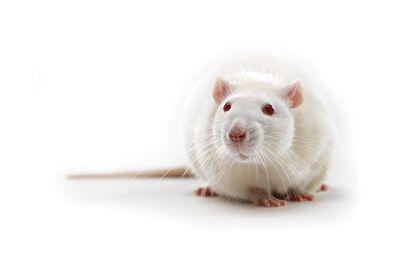
Advancing Preclinical Research with the Rat Model
This presentation will explore how the unique physiological characteristics of rats provide translational value across multiple therapeutic areas, as well as best practices for husbandry that optimize both welfare and experimental reproducibility.
Watch the Webinar
The genetically engineered mouse challenged laboratory rats
Of course, other animals have been used, but it wasn’t until the 1980s — and the discovery of embryonic stem cells — that the rat’s dominance was threatened. The ability to modify the stem cells, and the relative ease of creating living mice with the selected modification was game changing. Goodbye rat, hello mouse. Still, rodents as a whole have predominated, some studies estimate that they comprise over 99% of all laboratory animals.
The shift was dramatic, as hard to pin down medical disorders could be generated within an animal model. The number of different modified mice grew quickly, with pinpoint DNA changes to make them easier to study. Mice with obesity, mice with diabetes, mice with heart disease, mice with human ears growing out of their backs — the variety is overwhelming.
However, despite the growing ubiquity of genetically modified mice, a growing body of evidence has cast doubt on many of the experiments based on modified mice. And some complex behaviors and physiological processes that can be readily studied in rats are difficult or impossible to investigate in mice. In studying substance use disorders, neurodevelopment disorders and cardiovascular disorders, rats offer advantages over mice.
Gene editing techniques help spark the comeback of the laboratory rat
Fortunately, gene modification technology has advanced as well. With the advent of CRISPR in the 2010s, genetic modification previously only possible in mice has now can now be done with rats. As the technology catches up, the natural superiority of the rat model is once again at the forefront, and the number and relative proportion of experiments using rats has continued to increase. “With the new technology, the CRISPR/cas9, we can easily introduce some very small modifications,” says Jean Cozzi, innovation manager of genetically modified organisms at Charles River’s Europe headquarters. “Changing only a few phases of the DNA will change a few amino acids in the protein. Many human diseases are caused by point mutations like this… This can be easily done because these are just short replacements, and the CRISPR system does it very well.”
Alzheimer’s disease is suspected to be caused by such a mutation, though it is still being studied. “Several genes are implicated… we find several different versions in humans,” says Cozzi. By replacing the genes in the rats with the faulty human mutations, the disease can be induced in rats. This is a case where the rat’s innate intelligence is a bonus, as much of the testing and the disease itself, is visible in the degradation of complicated behavior.
“More researchers are looking at the rats with new eyes,” says Cozzi. “[Many organizations] are now translating to rats, especially for neuroscience — the rat is really far superior in some domains than a mouse.” That means better models for Alzheimer’s, cystic fibrosis, Tay-Sachs and more. The tide is turning, slow as it may be. But no need to worry, after all, the rats will always be with us.