
Safety Assessment
|
Niels Timmer, PhD, ERT
New Restrictions on Microplastics in Europe
Industry is called on to keep up with new environmental realities
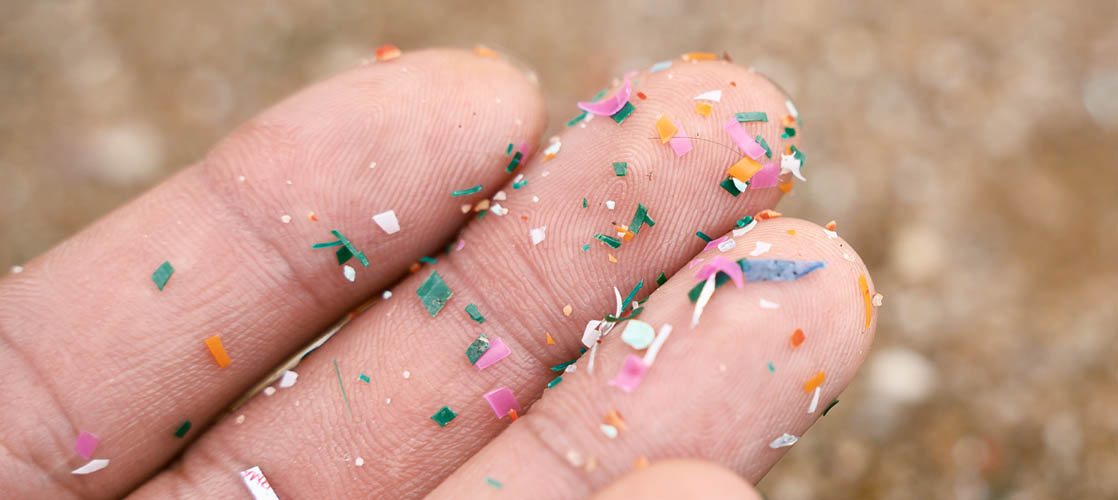
Microplastics, defined as any plastic fragment that is less than five millimetres, have been a hotly contested environmental concern since the term was coined in 2004 by marine biologist Richard Thompson. They are both a natural product of plastic degradation, and intentionally added to some products for various purposes.
In response to this growing issue, the European Commission adopted its long-anticipated restriction on microplastics under REACH (Registration, Evaluation, Authorisation and Restriction of Chemicals) in September 2023. The topic of microplastics has been high on the agenda for many industries impacted by REACH as pressures increase for companies to minimise their environmental impact. So what do these new regulations mean and how can companies safeguard their product portfolios?
What is covered in the restrictions?
Products containing synthetic microplastics (down to 0.1 %) will be banned from the EU market after a grace period of 4-8 years, unless the microplastics are demonstrated to be biodegradable. There are also requirements for information and labeling of any product containing microplastics.
The regulation went into effect 15 October 2023. Labeling requirements will become effective as of 15 October 2025, reporting requirements following REACH reporting guidelines will follow one year later. Depending on the industry, biodegradability has to be established as early as 15 October 2027 up to 15 October 2031.
Are microplastics harmful?
There is increasing concern regarding environmental fate of polymers in general and (secondary) microplastics in particular. This concern is supported by literature describing how microplastics can move up the food chain. For instance, mussels are filter feeders that can pick up microplastics from the marine environment. A 2021 study found that a typical serving of mussels can contain up to 200 microplastic particles. Other potential sources would be breathing in of microplastics present in ambient air, or microplastics moving up the food chain from agricultural soil. The EU expects the environmental release of microplastics will be significantly reduced by this regulation.
Who will be affected by new regulations?
Microplastics were previously not regulated specifically, and their persistence or biodegradability did not affect access to the EU market. This regulation may also affect industries previously not affected by REACH. A few examples of products potentially containing microplastics would be seed coatings, fragrance capsules, washing detergents and fabric softener, household cleaning products, controlled release fertilizers, personal care products, medical devices, and artificial sport fields.
Product portfolios in relevant industries may not be completely in compliance, which means those products will have to be withdrawn from the EU market unless biodegradability of microplastics contained in the product is demonstrated. This could negatively affect revenue and market share. The labeling requirement may also affect consumer behavior, as there is increasing societal interest in sustainable products.
Biodegradable microplastics
There is an exemption for biodegradable microplastics, which is currently the only option to keep marketing any product or formulation containing microplastics. Work on developing and validating tests for biodegradability has been ongoing since 2019, when it seemed that the industry would be trending in this direction, and Charles River offers all the tests for biodegradability currently accepted by the European Commission. This includes several ISO Standards specifically designed to test the biodegradability of polymers, which can make all the difference compared to the more general OECD Guidelines.
Creating and validating biodegradability of microplastics is tricky, and the right test is needed for different types of plastic. Microplastics are not easily degraded, because only the outer surface is accessible. In addition, many polymers consist of large molecules which usually have to be cut into smaller fragments (e.g., dimers or monomers) before they can be taken up by the micro-organisms responsible for breaking down materials in the environment.
For a micro-organism, digesting a polymer particle could be compared to eating a boiled lobster. It is not possible to eat a lobster in one bite, and the proper test setup ensures the right utensils are present to cut the polymer into digestible fragments. The development of biodegradable polymers is not as simple as combining biodegradable building blocks; the resulting microplastic particles also need to be confirmed as biodegradable. Therefore, it is of vital importance to select a test design employing the most appropriate test setup as well as the right combination of micro-organisms.
Reducing microplastics responsibly
As scientists and the public become more aware of the potential dangers of microplastics, industry must keep up. Sustainability is a moral, legal, and financial concern – there are many arguments in its favor, both altruistic and commercial. For EU industries, microplastic regulation is now the norm, and companies must either adjust or fall behind.