
.jpg?crop=true&keep=n&q=80&color=ffffffff&u=wiu7bt&w=1118&h=500)
Microbial Solutions
|
Ryan Cox, BS
From the Soil of Greece to the Forests of South Korea
The New Entry presents the latest additions to the Accugenix® Sequence Database
 Accurate microbial identification depends entirely on whether the reference libraries behind an ID system reflect current, valid, and traceable taxonomy. Accugenix® puts massive emphasis on this alignment for several reasons that directly impact QC labs, contamination investigations, EM trending, and regulatory compliance. You can find information about Accugenix® libraries and reporting here. As new bacterial and fungal species are described daily in peer‑reviewed journals such as IJSEM and Systematic and Applied Microbiology, proper review, integration of new species, and updated nomenclature of Accugenix® library entries is paramount in keeping the database current and relevant to customers’ identification needs. In the ever-living world of microbiology, the Accugenix® Sequence Database recently added these microorganisms to join a library of over 14,000 species – all with their own unique story.
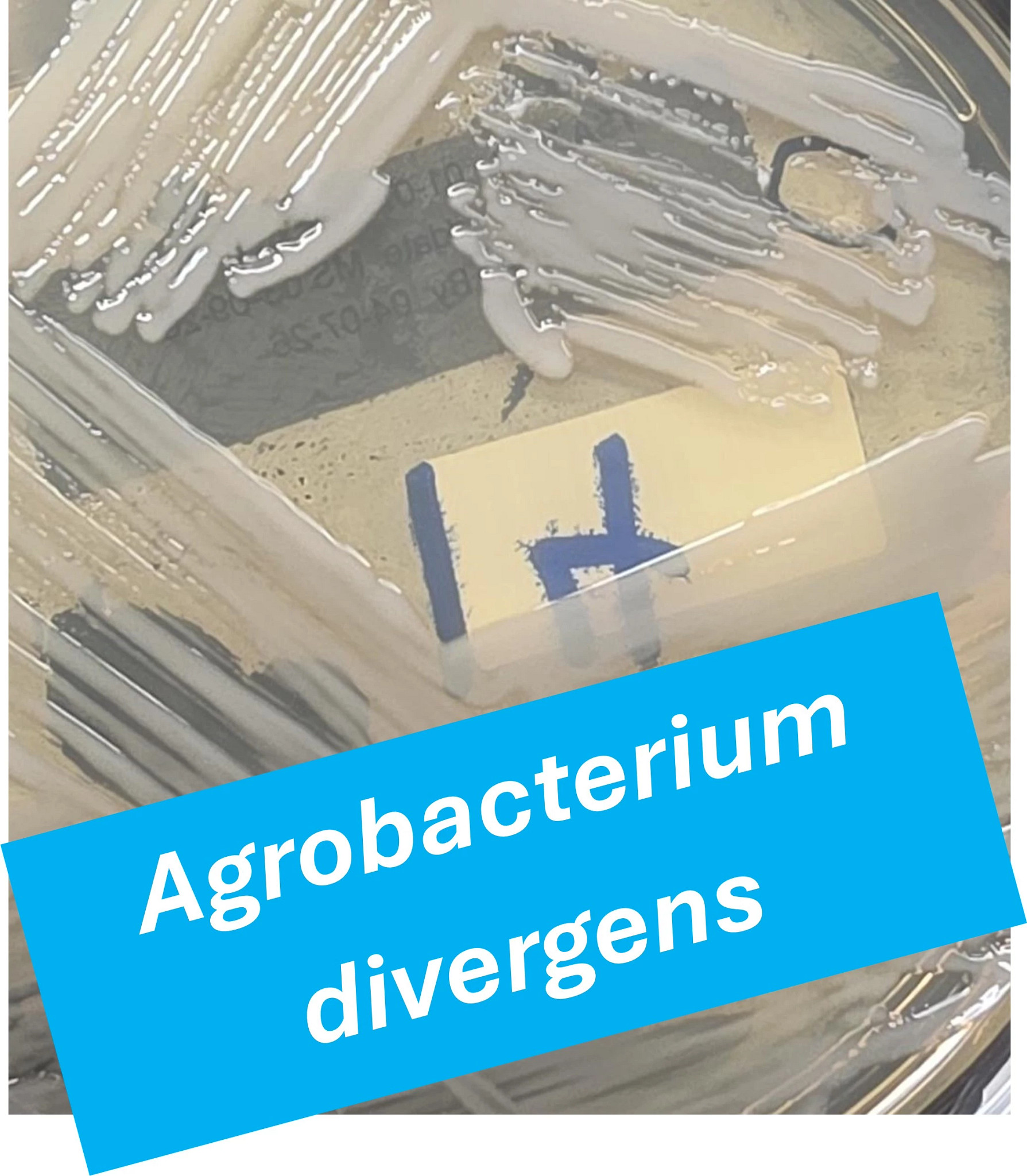
Agrobacterium divergens
.jpg?crop=false&position=c&q=80&color=ffffffff&u=wiu7bt&w=250)
The Agrobacterium (derived from Ancient Greek agros, "field" and New Latin bacterium, "small rod") genus was originally established in 1942 to encompass plant‑associated bacteria commonly associated with rhizogenic (Ri, root producing) and tumorigenic (Ti, tumor inducing) properties, but this genus has recently adopted more species shown to have non‑pathogenic traits.1 Agrobacterium divergens (from Latin divergens “diverging” or “branching apart”) was originally described in 2023 after two strains were isolated from plant roots in northern Greece and soil in Belgium.1 These strains lack Ti/Ri plasmids and genes associated with plant hormone manipulation or classical plant growth promoting traits, reinforcing their distinction from many historically studied Agrobacterium species.1 The characterization of A. divergens employed a polyphasic and comparative genomic approach, integrating classical microbiology with modern genomics including 16S rRNA gene analysis, MALDI-TOF mass spectrometry profiling, whole genome sequencing from a hybrid Illumina & Oxford Nanopore approach, followed by genome based taxonomy and comparative phylogenomics.1 Agrobacterium divergens is on the List of Recommended Names for bacteria of medical importance (LoRN) because of the recorded risk group of other species in the genus.2 True to the species name etymology, A. divergens branches out from historically long-rooted, predefined expectations emphasizing how modern taxonomy increasingly requires an integrative, genome‑centered approach that unifies phylogeny, comparative genomics, and phenotypic context to accurately resolve taxonomic boundaries and evolutionary history.
Clinoconidium onumae
.jpg?crop=false&position=c&q=80&color=ffffffff&u=wiu7bt&w=250) The taxonomic history of Clinoconidium onumae reflects more than a century of evolving mycological concepts, moving from appearance‑based classification towards a framework grounded in developmental morphology and molecular phylogeny. Originally observed forming galls (abnormal, tumor-like growths of plant tissue) on the shoot buds of Cinnamomum tenuifolium (commonly known as Japanese cinnamon – an evergreen tree) in Japan, it was first mentioned in 1917 without formal description named as Anthracoidea onumae.3 In 1935, the species reclassified as Ustilago onumae after observations of a brown, powdery spore mass on gall surfaces strongly resembled smut fungi (parasitic fungi causing plant diseases as seen by dark, powdery, soot-like spore masses) which dominate the genus Ustilago.4 By 1982 Ustilago was deemed inappropriately named because Ustilago fungi make spores deep inside plant tissues in a very specific way, while this fungus makes its spores on surface layers of galls instead, resulting in the genus for this species being assigned to Melanopsichium.5 Evolving genomic approaches and increased quantity of morphological evidence finally brought about a neotype (a specimen designated to serve as the nomenclatural type of a species when the original type material is missing, lost, destroyed, or was never designated) for this species in 2017, ultimately leading to the name of Clinoconidium - from Greek kliné (bed or slope) + konidion (conidium), referring to the distinctive arrangement of spores within gall tissue rather than smut and onumae - after the collector of the neotype specimen, Dr. T. Onuma.6 The naming history of Clinoconidium onumae mirrors the evolution of fungal systematics from appearance-based taxonomy, through developmental reassessment, to morphology-phylogeny consensus, finally stabilized through neotype designation allowing for continued research grounded in a commonly accepted name backed by molecular phylogentics, biology, and ecology.
The taxonomic history of Clinoconidium onumae reflects more than a century of evolving mycological concepts, moving from appearance‑based classification towards a framework grounded in developmental morphology and molecular phylogeny. Originally observed forming galls (abnormal, tumor-like growths of plant tissue) on the shoot buds of Cinnamomum tenuifolium (commonly known as Japanese cinnamon – an evergreen tree) in Japan, it was first mentioned in 1917 without formal description named as Anthracoidea onumae.3 In 1935, the species reclassified as Ustilago onumae after observations of a brown, powdery spore mass on gall surfaces strongly resembled smut fungi (parasitic fungi causing plant diseases as seen by dark, powdery, soot-like spore masses) which dominate the genus Ustilago.4 By 1982 Ustilago was deemed inappropriately named because Ustilago fungi make spores deep inside plant tissues in a very specific way, while this fungus makes its spores on surface layers of galls instead, resulting in the genus for this species being assigned to Melanopsichium.5 Evolving genomic approaches and increased quantity of morphological evidence finally brought about a neotype (a specimen designated to serve as the nomenclatural type of a species when the original type material is missing, lost, destroyed, or was never designated) for this species in 2017, ultimately leading to the name of Clinoconidium - from Greek kliné (bed or slope) + konidion (conidium), referring to the distinctive arrangement of spores within gall tissue rather than smut and onumae - after the collector of the neotype specimen, Dr. T. Onuma.6 The naming history of Clinoconidium onumae mirrors the evolution of fungal systematics from appearance-based taxonomy, through developmental reassessment, to morphology-phylogeny consensus, finally stabilized through neotype designation allowing for continued research grounded in a commonly accepted name backed by molecular phylogentics, biology, and ecology.
Sphingomonas oligoaromativorans
.jpg?crop=false&position=c&q=80&color=ffffffff&u=wiu7bt&w=250) Similar to one of the previous New Entries covered, Sphingomonas (from the Greek sphingos, related to sphinx plus monas meaning single unit) oligoaromativorans (from Greek oligos (“few”), Latin aroma (“aromatic compound”), and vorans (“devouring”) - “consumer of a limited range of aromatic compounds”) was isolated from South Korea; specifically from humus forest soil in Gyeryong Mountain National Park7. S. oligoaromativorans is a novel oiligotrophic (an organism that can live in an environment that offers very low levels of nutrients) bacterium that distinguishes itself among its closely related species by its salt sensitivity, specific fatty acid profile, growth limits, and restricted aromatic degradation capacity as originally described in 20147. Recently in 2025, Wang, Yuan, et al presented a genome based taxonomic revision of the bacterial order Sphingomonadales. By analyzing 429 type‑strain genomes, the authors demonstrated evidence showing Sphingomonadales organisms are deeply polyphyletic (an assemblage that includes organisms with mixed evolutionary origin but does not include their most recent common ancestor) with many species grouping inconsistently.8 The authors comprehensively reorganized Sphingomonadales into 13 families (nine newly proposed) and proposed reassignment of 163 species to newly erected or emended genera, and in the case of Sphingomonas oligoaromativorans – reclassifying its name to Solisphingomonas oligoaromativorans. Most importantly, Sphingomonas oligoaromativorans retains its current name as Solisphingomonas oligoaromativorans is treated as a synonym pending broader consensus9. All together, the study and the case of Sphingomonas oligoaromativorans exemplify a paradigm shift in bacterial systematics, highlighting taxonomy shifting from reliance on single genes or phenotypic checklists toward integrated, genome-based approaches underscoring how genomes, not just appearances, increasingly define the natural framework for bacterial diversity.
Similar to one of the previous New Entries covered, Sphingomonas (from the Greek sphingos, related to sphinx plus monas meaning single unit) oligoaromativorans (from Greek oligos (“few”), Latin aroma (“aromatic compound”), and vorans (“devouring”) - “consumer of a limited range of aromatic compounds”) was isolated from South Korea; specifically from humus forest soil in Gyeryong Mountain National Park7. S. oligoaromativorans is a novel oiligotrophic (an organism that can live in an environment that offers very low levels of nutrients) bacterium that distinguishes itself among its closely related species by its salt sensitivity, specific fatty acid profile, growth limits, and restricted aromatic degradation capacity as originally described in 20147. Recently in 2025, Wang, Yuan, et al presented a genome based taxonomic revision of the bacterial order Sphingomonadales. By analyzing 429 type‑strain genomes, the authors demonstrated evidence showing Sphingomonadales organisms are deeply polyphyletic (an assemblage that includes organisms with mixed evolutionary origin but does not include their most recent common ancestor) with many species grouping inconsistently.8 The authors comprehensively reorganized Sphingomonadales into 13 families (nine newly proposed) and proposed reassignment of 163 species to newly erected or emended genera, and in the case of Sphingomonas oligoaromativorans – reclassifying its name to Solisphingomonas oligoaromativorans. Most importantly, Sphingomonas oligoaromativorans retains its current name as Solisphingomonas oligoaromativorans is treated as a synonym pending broader consensus9. All together, the study and the case of Sphingomonas oligoaromativorans exemplify a paradigm shift in bacterial systematics, highlighting taxonomy shifting from reliance on single genes or phenotypic checklists toward integrated, genome-based approaches underscoring how genomes, not just appearances, increasingly define the natural framework for bacterial diversity.
- Henry D. Naranjo, Liesbeth Lebbe, Margo Cnockaert, Florent Lassalle, Chin Chin Too, Anne Willems, Phylogenomics reveals insights into the functional evolution of the genus Agrobacterium and enables the description of Agrobacterium divergens sp. nov, Systematic and Applied Microbiology, Volume 46, Issue 3, 2023, 126420, ISSN 0723-2020, https://doi.org/10.1016/j.syapm.2023.126420.
- “Species Agrobacterium Divergens.” Species: Agrobacterium Divergens, lpsn.dsmz.de/species/agrobacterium-divergens. Accessed 15 Apr. 2026.
- Shirai, M. and Miyake, I. 1917. “A list of Japanese fungi hitherto known,” 2nd ed. Tokyo Shuppan, 733p.
- Ito, S. (1935) Notae Mycologicae Asiae Orientalis II. Transactions of Sapporo Natural History Society 14: 87–96.
- Kakishima, M. (1982) A taxonomic study on the Ustilaginales in Japan. Memories of Institute of Agriculture and Forestry, University of Tsukuba (Agriculture and Forest Science) 1: 1–124
- Kakishima, M., Ji, J-X., Nagao, H., Wang, Q. & Denchev, C.M. (2017) Clinoconidium globosum, nom. nov. (Cryptobasidiaceae) producing galls on fruits of Cinnamomum daphnoides in Japan. Phytotaxa 299: 267–272. https://doi.org/10.11646/phytotaxa.299.2.11
- Han SI, Lee JC, Ohta H, Whang KS. Sphingomonas oligoaromativorans sp. nov., an oligotrophic bacterium isolated from a forest soil. Int J Syst Evol Microbiol. 2014 May;64(Pt 5):1679-1684. doi: 10.1099/ijs.0.052894-0. Epub 2014 Feb 12. PMID: 24523444.
- Wang, Yuan, et al. “Genomic-based taxonomic classification of the order sphingomonadales.” International Journal of Systematic and Evolutionary Microbiology, vol. 75, no. 5, 14 May 2025, https://doi.org/10.1099/ijsem.0.006769.
- “Species Solisphingomonas Oligoaromativorans.” Species: Solisphingomonas Oligoaromativorans, lpsn.dsmz.de/species/solisphingomonas-oligoaromativorans. Accessed 16 Apr. 2026.