Research Models
|
Mary Parker
Ten Years of Mouse Genome Research
The history and impact of the International Mouse Phenotyping Consortium
Imagine you are in an alien spaceship, in front of a panel covered in flashing buttons. You need to determine which button performs which function, so you start turning them on and off. Some are flashing brightly, and might grab your attention first, but the only way to find out how the ship operates is to press each and every button and analyze the results.
Now imagine you are a geneticist working on mouse models. You want to know which gene controls which function, so you start knocking them out. You might start with the most interesting genes – the ones whose functions you know, or which you think you know, or the ones you know are associated with a disease – but eventually you will need to study each and every gene to find out what they do.
That is the goal of the International Mouse Phenotyping Consortium (IMPC), which celebrated its tenth anniversary this year. Using knockout strains from the International Knockout Mouse Consortium (IKMC), the IMPC is systemically studying the effects of knocking out one protein-coding gene at a time in order to determine their function and their potential contributions to disease. As the favored model animal for pharmaceutical research, this detailed level of understanding of the mouse genome will prove invaluable not only for mammalian biology but as a powerful underpinning to genomic and precision medicine.
Precision medicine requires genetic knowledge
With cell and gene therapy on the rise, along with the promise of antisense oligonucleotides (ASOs) for personalized medicine, understanding the function of every gene is vital for future drug development.
“We were cognizant of the fact that there were significant risks to those ambitions [for precision medicine] if we didn’t have a complete catalog of mammalian gene function,” said Professor Steve Brown, Emeritus Chair of the IMPC. “It was absolutely critical to generate that resource.”
To that end research institutions involved in mouse genetics around the world, Charles River among them, are committed to helping fulfill the IMPC’s goal. According to Brown, they are over halfway done with the first goal of phenotyping the 20,000 coding genes. Some of the IMPC’s successes so far include finding many instances of pleiotropy, insights into the sexual dimorphism of some diseases, and the creation of hundreds of new mouse models of disease based on phenotype match with clinical symptoms.
Shedding light on the dark genome
In genetics, there is still a vast category of genes and proteins whose function is opaque to us. The so-called “dark genome” consists not only of the unclassified, or poorly understood protein coding part of the genome, but also the less well understood non-coding genome. Illuminating the dark genome is a key goal for the IMPC, who have up till now focused on protein coding genes. But now IMPC is extending its goals beyond the protein coding genome to include the design of mouse strains that model variation in the non-coding genome. Throwing light on the entire dark genome will be a key pillar as the IMPC strives to “transform biology, medicine, and global health.”
Even the known genes can present a tricky puzzle when they display pleiotropy (when one gene produces two or more seemingly unrelated effects). Understanding co-morbidities and multi-morbidities of disease involves fully understanding the role that “dark genes” and pleiotropy play in each disease, and the goals of the IMPC have expanded to include these tasks.
The IMPC has six goals for the next ten years, including continuing their current work, expanding to more mouse strains and the dark genome, and improving their data analysis tools. We spoke with Brown about the past and future of the IMPC, and his edited responses are below.
Eureka: In your opinion, what is the coolest thing discovered so far by the IMPC?
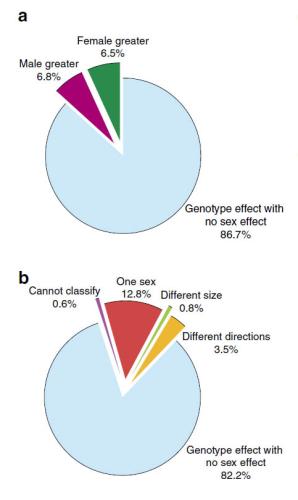
Steve Brown: We have found that if we take many of our mouse knockouts where the gene has been ablated and we look at the effect on the phenotype of that knockout, we find that up to 17% of those traits across all of the knockouts were sexually dimorphic.
I think more emphatically than anyone had ever imagined in the past, sexual dimorphism is pervasive. We saw this sexual dimorphism not only in the impact of the mutations on males and females, but also in terms of when we simply looked at the wild type, the baseline control phenotypes of males and females as well. We obviously knew that there are sexual dimorphisms between males and females, not least our outward features and so on and so forth. But in terms of changes in genes that are going on in the human population and their impact on disease outcomes, we must be prepared to consider the outcomes of disease variants and their impact on disease phenotypes as highly variable between males and females.
It tells us that we should always be looking at the impact of a treatment or a mutation in both males and females. It's bad science now to not do that. (See figure below).
Eureka: What is the most useful technology to come out in the last 10 years that has sped up IMPC’s work?
Brown: I think we'd all say at IMPC that the development of gene editing and CRISPR technology to create mutations in mouse models has had a transformative effect. Making a knockout has been markedly sped up and also made a bit cheaper by employing CRISPR technology.
We're now moving from the knockout project into generating mutations in mice that mimic specific human variants in genes. There are point mutations, pathogenic variants as they're called, which lead to disease in the human population. A considerable focus of IMPC in the future is to make models of those human pathogenic disease variants, introducing exactly the same mutation into the mouse gene as we see in the human population. That endeavor is underway and has been transformed by gene editing because it has made it so much easier for us to generate mice that carry those individual DNA based changes.
Eureka: Can you tell us about IMPC’s next goals?
Brown: I've already mentioned one in passing when I talked about the advantages of CRISPR Cas9. A big goal is that rare disease and Mendelian disorders are an enormous disease burden on the human population. Individual rare diseases by their very nature are rare, but collectively all of the rare disease across the global community are an enormous disease burden. For many of those rare diseases, we still don't know the under underlying gene.
So a big focus of IMPC over the next 5 to 10 years is putting much of its capacity towards the rare disease community in order to generate models of rare diseases. Not only using our resources to discover and validate the correct gene for each disease, but also to use the mouse models to understand the genetic and disease mechanisms that are involved whereby each variant leads to a particular disease.
The second major goal is that we have very little knowledge of how non-coding, non-protein coding sequences in the genome impact disease. That includes variance in regulatory elements for protein coding genes but also other non-coding sequences in the genome, which we know are transcribed into RNA, and that we know are part of the cell’s genetic network. We know in some instances that when they go wrong, they can lead to disease phenotypes. But we really know very little about how they interact with the protein coding network and how when they go wrong they cause disease?
A big focus over the next 5 to 10 is to look at mouse mutations in this very dark part of the genome, in regulatory elements for protein coding genes and other non-coding sequences, and see how they impact on disease.