Microbial Solutions
|
Sahil Parikh
Understanding Pharma 4.0
Automation, innovation and the creation of a roadmap to Pharma 4.0 in QC microbiology
As the pharmaceutical industry begins undergoing its next significant transformation —often referred to as Pharma 4.0—the integration of automation and innovative technologies in Quality Control (QC) microbiology is no longer a futuristic concept but a present-day necessity. This shift isn’t just about adopting new tools on an as needed basis; it’s about following a roadmap to systematically enhance efficiency, accuracy, and compliance to meet a future state.
Pharma 4.0™, originally coined by the International Society for Pharmaceutical Engineering (ISPE), is the pharmaceutical adaptation of Industry 4.0, representing the convergence of digital technologies, automation, and data analytics to create smart manufacturing environments. It emphasizes connectivity, real-time data integration, and intelligent systems that can learn and adapt.
In the context of QC microbiology, these principles translate into more efficient testing processes, faster results, and proactive quality management. Connectivity ensures seamless communication between equipment, systems, and personnel. Data integration provides real-time access to information across departments, facilitating informed decision-making. Intelligent systems utilize artificial intelligence (AI) and machine learning to predict outcomes and optimize processes.
The role of automation in QC labs
Traditional microbiological methods are manual, time-consuming, and labor-intensive. Manual handling increases the risk of human errors and inconsistencies, and the interpretation of results can vary between technicians, introducing subjectivity into assays. Automation addresses these challenges by streamlining processes and enhancing reliability.
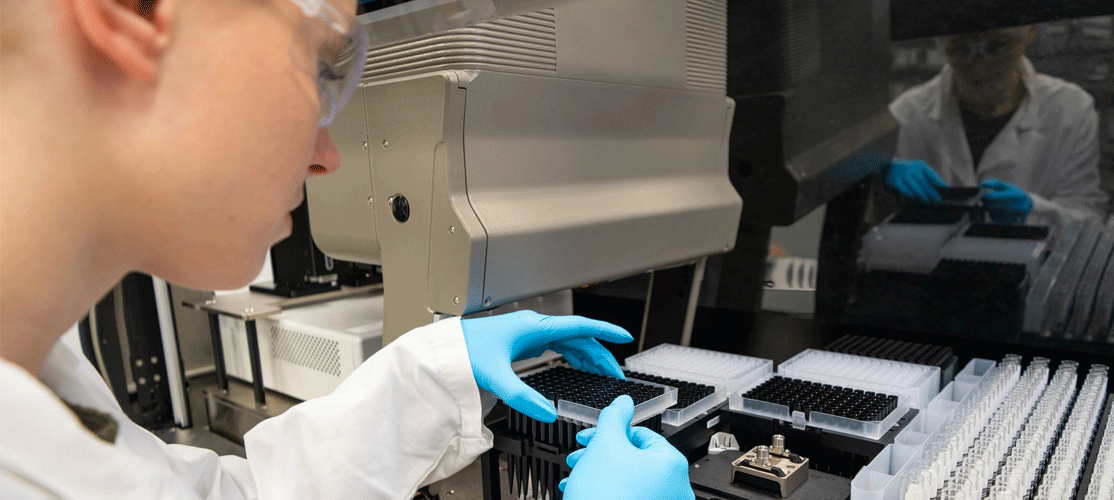
Automated systems and robotics, such as the Endosafe Nexus 200, reduce hands-on time and improve consistency in endotoxin testing. Integration with Laboratory Information Management Systems (LIMS) enhances data management and traceability through advanced software solutions. Moreover, AI and machine learning technologies assist in data analysis, pattern recognition, and predictive maintenance, leading to smarter decision-making.
The benefits of automation are significant. It increases efficiency by accelerating testing processes and allowing for higher throughput. Accuracy is enhanced through the reduction of variability, improving the reliability of results. Automation also strengthens data integrity by automating data capture and minimizing transcription errors, all while supporting compliance with regulatory standards.
Overcoming barriers to adoption
Despite the clear advantages, adopting automation technology comes with its own set of challenges. The initial investment can be substantial, raising concerns about cost implications. Uncertainty about validation and acceptance by regulatory bodies leads to apprehension regarding regulatory compliance. Additionally, change management becomes a hurdle as staff accustomed to traditional methods may resist transitioning to new systems.
To overcome these barriers, organizations can start with scalable solutions, implementing modular systems that can expand over time to manage costs effectively. Engaging with regulatory agencies early ensures compliance and provides clarity on guidelines that support the use of new technologies. Investing in training programs helps staff adapt to new systems, emphasizing the benefits to their daily work and easing the transition.
Your Role in the Transition
As the industry moves toward Pharma 4.0, your proactive involvement as QC professional is crucial. Embracing automation and innovation requires more than just being aware of trends, it requires intentional efforts about positioning your lab and organization for long-term success.
- Stay informed about technological advancements and industry trends through continuous learning.
- Connect regularly with peers and industry leaders allows you to share experiences and best practices, fostering a collaborative approach to innovation.
- Attend industry events like the QC Micro Summit to gain valuable insights and firsthand exposure to these emerging technologies.
This industry shift offers unprecedented opportunities to help shape the landscape and lead your lab, your organization, and your career to new heights.
Are you ready to lead the change? Join us at the QC Micro Summit to delve deeper into these topics, engage with experts, and discover how you can implement these advancements in your own lab.
About the QC Micro Summit
The QC Micro Summit is the premier event for professionals in QC microbiology eager to embrace innovation and drive progress. With sessions focused on automation, sustainability, and cutting-edge technologies, it’s the perfect platform to equip yourself for the future of pharmaceutical quality control.
Register now to take advantage of our significant early registration discount before rates increase on December 31st. Don’t miss this chance to be at the forefront of industry transformation.
To learn more and register, visit http:/www.qcmicro.com.