

|
Anne Lodge, PhD
Using Anti-MART-1 T Cells for Melanoma Immunotherapy Research
MART-1 (melanoma antigen recognized by T cells 1) is a “widely shared melanoma antigen recognized by the T lymphocytes of patients with established malignancy.”
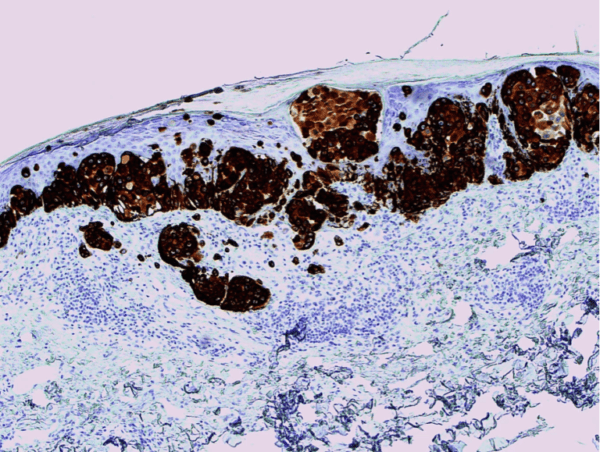
“Melan-A (A103) highlights the invasion in this melanoma.” Image Source.
MART-1 is one of the oldest identified tumor antigens and is a protein found on normal melanocytes in the skin and retina. It is also found in most melanomas, cancers that originate in melanocytes.
Normal individuals seem to have a significant number of MART-1-reactive T cells. MART-1 is targeted by tumor-infiltrating lymphocytes (TIL) and is thought to be naturally recognized by the immune system.
Read more about the discovery of the MART-1 antigen in this 1994 research by Yutaka Kawakami, et al. and the independent, concurrent discovery of the same antigen, referred to as Melan-A by Coulie et al.
MART-1 Vaccinations
Antibodies against MART-1 are used as markers to diagnose melanoma, and the discovery of the MART-1 antigen itself opened doors to new immunotherapy development for patients with melanoma.
Vaccines utilizing the MART-1 antigen are being investigated for their ability to boost the immune system’s cytotoxic T cell response to malignant melanoma cells.
There are dozens of completed or in-progress clinical trials studying the impacts of MART-1, a few of which include:
- MART-1 Antigen With or Without TLR4 Agonist GLA-SE in Treating Patients With Stage II-IV Melanoma That Has Been Removed by Surgery (Mayo Clinic)
- Radiation, Chemotherapy, Vaccine and Anti-MART-1 and Anti-gp100 Cells for Patients With Metastatic Melanoma (National Cancer Institute)
- Immunization of HLA-A201 Patients With Metastatic Melanoma Using a Combination of Immunodominant Peptides From Three Melanoma Antigens, MART-1, GP100 and Tyrosinase (National Cancer Institute)
- Vaccine Therapy in Treating Patients With Stage IV or Recurrent Malignant Melanoma (Jonsson Comprehensive Cancer Center)
- Adoptive Transfer of MART1/Melan-A CTL for Malignant Melanoma (Dana-Farber Cancer Institute)
Anti-MART-1 T Cells for Immunotherapy Research
To aid in the advancement of MART-1 immunotherapy research, we have developed a T cell line specific to the MART-1 antigen.
Our anti-MART-1 T cell line is specific to the sequence AAGIGILTV (residues 27–35) that binds to HLA-A*02:01. The analog peptide ELAGIGILTV (residues 26–35) can also be used for improved binding to HLA-A*02:01.
Use our anti-MART-1 T cell line to study the recognition and death of melanoma cells.