Discovery
|
Justin Bryans, PhD
What’s Hot in 2024: mRNA Encoding for Antibodies
The same approach used in COVID vaccines is also being used to tackle the high cost of antibody therapies
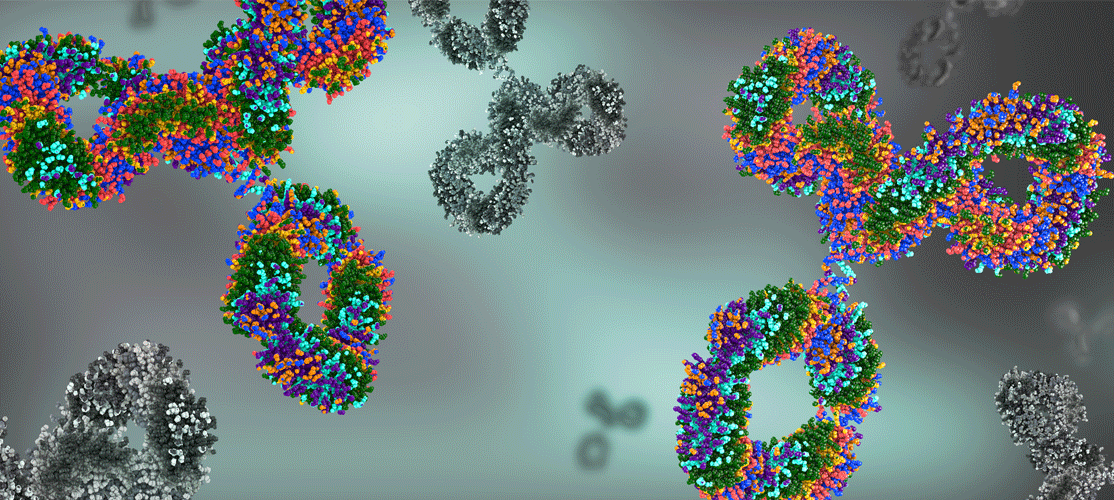
 Antibodies represent a class of powerful medicines that are valuable in tackling a range of diseases. Pembrolizumab (cancer), adalimumab (rheumatoid arthritis) and donanemab (dementia) are just a few examples. Whilst they can be incredibly effective, antibodies are also very expensive to manufacture and purify to GMP standards; many treatments cost in excess of US$100,000 per patient, which restricts their use to economies and patient populations that can support these prices.
The COVID-19 pandemic potentially provides us with a solution to the cost issues. In a number of COVID vaccines (e.g. Pfizer andModerna), immunisations contain a piece of mRNA which encodes for the COVID virus spike protein. The mRNA is read by a person’s cells which in turn generate and secrete the spike protein. It is this spike protein which triggers our immune system to make COVID-19 neutralising antibodies. We have seen from these vaccines that mRNA can be generated to GMP standards, stored, and dosed at very low prices, often less than $100 per dose.
Beyond vaccines and expressing viral proteins, we are now seeing mRNA technology being harnessed to encode fully functioning antibodies. This raises the exciting prospect of being able to dose mRNA encoding for an antibody, where the patient’s own cells “deal with” the manufacture and purification cost issue. If this is successful in driving down the cost, the economics of lower prices will democratise antibodies and open new markets and new diseases to the power of antibody therapies.
—Justin Bryans Chief Scientific Officer, Early Discovery, Charles River Labs