
Patient Stories
|
Regina Kelder
Will the Ultra-Rare YWHAG Mutation Meet Its Match?
Through the Donated Resource Center, scientific groups from Charles River and 3billion are working pro bono to develop an ASO drug that can rescue 5-year-old James Miner from the clutches of a toxic gene
A day after Father’s Day, Andrew Miner got the ultimate gift: a potential treatment for his son. James, age 5, carries a mutation in the YWHAG gene, known to cause seizures and developmental delays. There is currently no cure or approved treatments, but thanks to the international N=1 Collaborative and its Donated Resource Center program, the Miners may be on track to change that.
Discovery scientists from Charles River Laboratories are designing antisense oligonucleotide drugs—pieces of custom-made DNA or RNA that correct for genetic errors—that hopefully will stop the progression of James’ disease and perhaps even restore some earlier function caused by the mutation. Along with Charles River, a genetic testing company in Seoul, 3billion, is using their enhanced version of genome sequencing (in itself a cutting-edge tool) to boost Charles River’s odds of finding customized ASOs that will truly work for James. Both companies are doing the work pro bono.
“I know there are no guarantees, but I’m hopeful for a better future for my son James and for others like him in the rare disease community,” says Andrew.
This feeling of hope stands in stark contrast to the day Andrew realized something was seriously wrong with his infant son. It was just a regular morning in the Miner’s Southern California household when James, then 5 ½ months old, went limp in his Boppy chair and suffered the first of what would eventually be an intermittent series of epileptic-like, debilitating seizures. “It was horrible. He turned blue, and I thought, ‘Oh my gosh, did I lose him?’,” recalls Andrew. “That moment is forever etched in my mind.”
A year later, after pushing for genetic testing, Andrew and his wife, Meagan finally learned what was causing the chaos in their son’s brain: a mutation in a gene called YWHAG that encodes for a crucial protein in signal transduction (how cells communicate with each other and their environment), cell cycle regulation, and protein trafficking. They also learned that James’ mutation was de novo—science speak for mutations that are present for the first time in an individual rather than inherited from either parent.
Mutations in the YWHAG gene are extraordinarily rare; based on one estimate, fewer than 50 individuals have been described in the scientific literature. Drug companies typically do not invest in treatments for ultra-rare diseases; also hard is finding researchers interested and willing to study them. “I’ll never forget this one doctor, though very nice, telling us that the problem with these rare diseases is that no one is ever going to look at them because they’re so rare,” said Andrew.

Like many parents in the same situation, the Miners created a foundation to raise awareness, educate the public about the disease, and support families impacted by YWHAG syndrome in any way they could. Friends referred James to some excellent pediatric specialists at Children’s Hospital Los Angeles, a short drive from their Orange County home, experienced in treating rare epilepsy. Eventually, they found a researcher at the University of Alabama in Birmingham who provided, for free, the first comprehensive report on James’ mutation, which helped the Miners better understand how and why the errant gene was turning their son’s life upside down. They also connected with a Palo Alto biotech to conduct what is known as a drug repurposing screen, in hopes of finding existing drugs that might do James some good, even for the short term. One of the drugs the company identified was a cholesterol medication, which the Alabama scientist is now testing using induced pluripotent stem cells that were CRISPR-generated. A mouse model from Jackson Labs will be available soon for in vivo testing, too.
An ASO design aided by deep sequencing
But it is an ASO drug, an increasingly common pathway for people with rare and ultra-rare diseases that could potentially bring the biggest step forward. The N=1 Collaborative and laboratories that provide pro bono services through their Donated Resource Center are making this possible, said Nicole Nolen, Program Manager at N=1 Collaborative.
“One of the key challenges in developing a therapy for an ultra-rare disease is the mismatch between population size and commercial incentive. The potential market is too small to justify traditional investment into R&D, which leaves families with limited paths forward. The N1C realized we could help just by lowering the activation energy it takes to get a program off the ground, or in other cases, advance a program toward the clinic. Sometimes this means connecting a family with scientific advisory services like we are with Charles River or 3billion.”
Roxana Redis, PhD, Science Director of Advanced Modalities at Charles River’s Leiden site in the Netherlands, said James has two genetic versions or alleles encoding for the YWHAG protein. Her goal is to design ASOs that can get rid of the allele with the mutated version of YWHAG but leave as much of the healthy allele intact as possible to retain normal protein function.
If it sounds like a straightforward process of slicing and dicing, you would be wrong. Removing or shrouding toxic genetic material that triggers a rare disease like YWHAG syndrome is a little like designing a house key without the duplicate and then doing it again and again and again until you get the absolute perfect match. A tiny misstep can prevent the key from fully working. “What we are trying to do is find as many differences as possible between the healthy and the diseased alleles of James,” says Redis. “All these differences that we find, all these variants between the two alleles, I will then use to design oligonucleotides to distinguish between the two alleles.”
Maximizing chances for ASO success
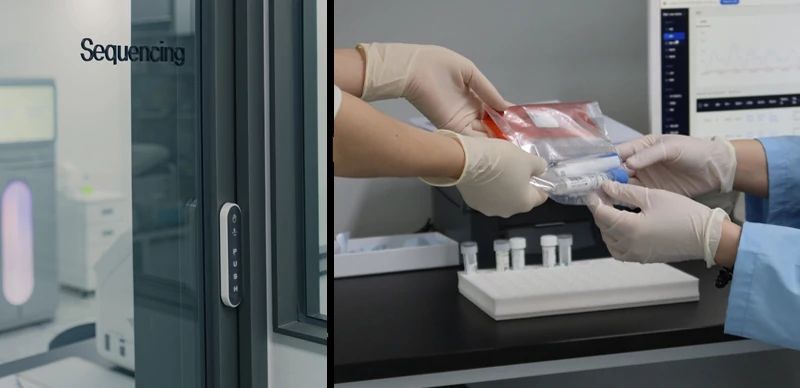
Samples from James and his parents were shipped to 3billion in Seoul for high-resolution, clinical grade sequencing.
To maximize their chances of selecting the best variant or variants that will form the foundation of their ASO, Leiden scientists are getting help from scientists a continent away. 3billion, so-named for the number of DNA-based pairs in the human genome, is not just a genetic testing company. It’s a group of scientists in Seoul, South Korea, who are deeply committed to making a difference for patients with rare diseases like James. When the Miner family reached out through the N=1 Collaborative, 3billion immediately stepped in to help, not as a genetic testing service provider, but as a partner in hope. 3billion relies on an enhanced version of genome sequencing that offers an even higher diagnostic rate than exome sequencing. It is able to uncover structural variations that inform large-scale changes in DNA structure, including insertions, deletions, inversions, and translocations, and provides in-depth coverage of pathogenic variants. Its hyper-focused lens on these toxic variants is what hopefully will help maximize the Leiden team’s chances of designing ASOs that truly have a chance of accurately targeting James’ mutation. For rare diseases, where every genetic clue matters, having a larger pool of variants greatly enhances the chances of zeroing in on an individualized treatment. It could also pay it forward by helping other children whose genetic makeup is similar to James.
Changwon Keum, CEO of 3billion, says the company relies on bioinformatics, including AI, to interpret the data. “We use our proprietary software called GEBRATM, which is fast and accurate, to interpret all 5 million genetic variants found in each patient’s genome. GEBRATM is a multi-layer genome interpretation AI system trained with published literature, case evidence, real-world phenotype association between diseases and patients, and billions of genetic variants of patients. “A key feature of GEBRATM is its ability to accurately interpret the pathogenicity of genetic variants, including the novel variants that have never been validated with the suspected diseases of a patient. That means we can provide insight even when the data is scarce, which is often the case for ultra-rare diseases like James,” says Keum.
In the case of James Miner, the diagnosis of YHWAG syndrome was already known before 3billion became involved in his. “However, for him to receive the ASO drug, scientists needed a much deeper look into his genome, something only high-resolution, clinical-grade genome sequencing could provide, which is why his parents applied for this program [with the N=1 Collaborative] and got connected with us,” says Jane Han, who heads up the Global Business division at 3billion. “James and his parents’ samples were sequenced in our lab, and within just a few weeks, the full analysis was complete. The full data was then shared with Charles River to guide their ASO design.”
Even though James has a de novo mutation, researchers need to sequence the genomes of James and his parents to determine if the mutation he is carrying is on the maternal or paternal allele of his YHWAG gene, says Dr. Redis. “We need to sort out all of the differences between the maternal and the paternal alleles and figure out how best to target the mutant allele.”
Dr. Redis says cases like James, where the goal is to design an allele-specific oligonucleotide, are far more complex than developing an oligonucleotide that removes or downregulates both alleles of the gene. “With allele-specific oligonucleotides, you have very limited options to design and target the differences observed between the mutant and the wild type versions of the gene,” she said. Despite the complexity of these cases, Redis advises clients that her team is in it for the long haul, that if they don’t get a good ASO on the first try, they will go back, tweak the design, and test anew. “We don’t just design an ASO, throw it over the fence and say to the families, ‘Good luck.’ If needed, we will do a redesign because we want to make sure that they get a good ASO. That could make all the difference in a child’s life.”

While the Miners wait for the hoped-for ASO, they are grateful for the specialists in LA who are helping their son manage his symptoms and are relieved he hasn’t suffered any seizures recently. But the possibility of a sudden attack is always at the back of Andrew’s mind, whether it’s at the bowling alley – a new obsession their boy has embraced – in the swimming pool, which he loves, or at home surrounded by his parents and his new baby brother.
“One of the reasons I started the YWHAG Foundation was to help other families. I didn’t want them to ever be like, ‘it is what it is. I guess we’ll see what happens.’ At least for me, there is hope for a better future for my son James and for others in the community, because in the back of your mind, you know there are people that care and are actively trying to help.”
Grateful acknowledgement to the Miners and 3billion for the use of their images in this story.