
Featured News
Toxicology Study Advances a First-in-Human PACS2 Treatment
Toxicology and safety at the heart of a family’s hope
For Piotr and Gosia Kosla, parents to five year old twins, science has become deeply personal. While one daughter, Zuzanna, is healthy, her twin sister Lena was diagnosed as an infant with PACS2 syndrome, an ultra rare genetic neurological disorder with no approved treatment at the time.
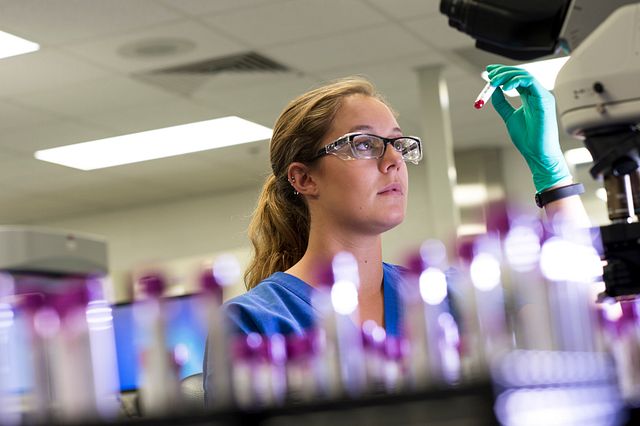
Today, Lena’s potential therapy is approaching a first-in-human (FIH) milestone. The antisense oligonucleotide (ASO) treatment was developed by N-Lorem, a nonprofit foundation dedicated to creating individualized medicines for patients with ultra rare diseases. To help advance the program safely, Charles River is conducting the required toxicology studies at our Montreal site, in Canada, supporting the critical work needed before a treatment can move into clinical testing.
For the Kosla family, this collaboration represents more than scientific progress; it is a tangible sign of hope, built through partnership, rigor, and a shared commitment to patients with no other options.
Q: Can you tell us about Lena and her twin sister, Zuzanna?
Piotr and Gosia:
Lena and Zuzanna are twins and are almost five years old. While Zuzanna is healthy and developing typically, Lena had her first epileptic seizure when she was just three months old, and from that moment on, life changed for our family. Raising twins means seeing two paths unfold side by side. It’s joyful and painful at the same time. You celebrate milestones with one child while working through serious medical challenges with the other. It makes everything very real and very urgent.
Q: How did Lena’s diagnosis shape your understanding of PACS2 syndrome?
Piotr and Gosia:
PACS2 syndrome is an ultra rare condition, with only about 200 diagnosed patients worldwide today, and less than 40 at the time Lena was diagnosed on February 22. This condition causes epilepsy and significant neurodevelopmental challenges. Many children are nonverbal. Some cannot walk. We were fortunate to receive Lena’s diagnosis early, just five months after she was born. But at that time, there was no treatment at all. We were essentially told there was maybe a one percent chance of changing the outcome for her.
Q: What made you decide to push forward despite those odds?
Piotr and Gosia:
That one percent became everything to us. We couldn’t accept doing nothing, not for Lena, and not for other PACS2 children. That’s why we helped establish the PACS2 Research Foundation and began working directly with scientists and drug development partners. We often say we were building the plane while flying it because every moment matters.
Q: Why is the toxicology phase such a critical moment for your family?
Piotr and Gosia:
This would be the FIH treatment, so the toxicology studies are essential. As parents, safety is our top priority. We want to help Lena, but we never want to risk harming the progress she has already made. Knowing that these studies are being done carefully, transparently, and with the patient always in mind gives us confidence and trust.
Charles River has been with us almost from the very beginning. We see the dedication of the scientists and technicians involved in this work, especially in the toxicology phase. Drug development doesn’t just happen. It takes people who are willing to go the extra mile, especially in ultra rare diseases, where you’re truly working one child at a time. We feel that commitment, and we are deeply grateful for it.”
Piotr and Gosia Kosla, PACS2 Research Foundation Co-Founders
Q: What does hope look like for Lena today?
Piotr and Gosia:
Because Lena is still young, there is real potential. The current assessment is that if she receives this treatment, she may be able to live independently in the future. That possibility means everything to us, not just for Lena, but for her sister, for our family, and for every PACS2 child who might follow.
From Cell Painting to Toxicology: Advancing Treatment for PACS2 Therapy
Discover how Lena’s ultra rare PACS2 diagnosis sparked a global scientific effort, accelerating a potential treatment from discovery to preclinical toxicology in just two years.
Listen to Podcast