
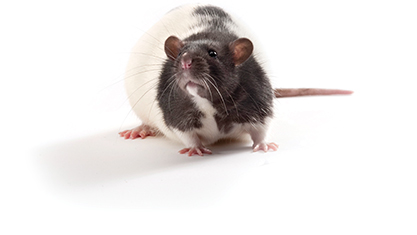
B6 ob (lean +/+) Mice (JAX® Mice Strain) Details
The B6 ob (lean +/+), B6 ob (lean +/-), and B6 ob (lean +/?) are control models for the B6 ob/ob. Also known as B6 ob, these animals are homozygous for the obese spontaneous mutation, Lepob (often referred to as ob or ob/ob), show obesity, hyperphagia, transient hyperglycemia, glucose intolerance, and elevated plasma insulin. Ob/ob mice are also hypometabolic, hypothermic, and often subfertile. Hormone production from both pituitary and adrenal glands is increased, and wound healing is impaired. Ob/ob mice are commonly used to model phases 1 and 2 of diabetes type II, as well as obesity. The obesity is characterized by a growth in the number and size of adipocytes. Although hyperphagia furthers the obesity, homozygotes gain weight and deposit surplus fat even when restricted to a diet sufficient for normal weight maintenance in lean mice.
Growth chart not available.
UNIT: A003
Download the Report
➤ DOWNLOAD OUR CATALOG for instant access to Standard List Pricing
➤ TALK TO US to discuss organization or volume-based discounts
Already have an eCommerce portal account?* Login to order research models, obtain quotes, view organization-specific pricing, and see inventory. Processing time required to validate new eCommerce access requests.
*eCommerce is available in US, Canada, UK, France, Germany, Austria, Netherlands, Denmark, Finland, Norway, Sweden, Spain, Portugal, Belgium, Luxembourg, and Switzerland
Try out the JAX® B6 ob (lean +/+) mouse with our animal evaluation program
POSTER: Metabolic & Cardiovascular Disease Models
Explore the models available in your area and identify which one is best suited for your study.
Download the Poster
Optimize Your Cardiovascular/Metabolic Disease Program
Our expertise in drug discovery, spanning from target identification and pharmacology to IND studies, makes us well-suited to run your CV/Met studies for you.
Learn More

JAX® Mice and Research Services
Charles River is the exclusive distributor of JAX® Mice and select research services in Europe, Korea, and Taiwan.

JAX® is a trademark of The Jackson Laboratory registered in the United States. All rights reserved.
Technical Resources
- LITERATURE
-
FURTHER INFORMATION
At approximately 4 weeks old, mice which are homozygous for the obese spontaneous mutation (Lepob; or ob/ob) are first identifiable.
Homozygous ob/ob mice gain weight quickly, and may approach a weight of 3 times that of control mice. Besides obesity, these mouse models exhibit hyperphagia, a condition of hyperglycemia, similar to diabetes.
They display glucose intolerance, increased levels of plasma insulin, weakened wound healing, subfertility, and an increase in hormone production (both in adrenal and pituitary and glands). Moreover, these ob/ob mice become hypothermic and hypometabolic.
Obesity in these animals can be seen through an increase in both adipocyte number and size. Adipose tissue transplants in Lepob homozygotes guard against obesity, normalize insulin sensitivity, and restore fertility.
Homozygotes have an unusually low tolerance for stimulation of pancreatic islet insulin secretion. Female homozygotes exhibit reduced uterine and ovarian weights, diminished ovarian hormone production and hypercytolipidemia in follicular granulosa and endometrial epithelial tissue layers (Garris et al., 2004).
Though hyperphagia contributes to obesity in ob/ob mice, homozygotes gain excess weight and deposit excess fat even when limited to a diet sufficient for normal weight preservation in lean mice. Hyperinsulinemia does not progress until after the rise in body weight, and is likely a result from it. Similar to the diabetic mutation (Leprdb), manifestation of the diabetic syndrome is clearly reliant on on genetic background.
Hyperglycemia is only transient, (decreasing about 14 to 16 weeks) on the C57BL/6J background. On the C57BLKS background, obese homozygotes become severely diabetic with regression of islets and early death.
Injection of recombinant leptin into obese homozygotes dramatically decreases weight and food consumption, while increasing the energy spending and energy and and reinstates fertility in male ob/ob mice.