
129 Mice Details
Developed by Dr. L.C. Stevens from The Jackson Laboratory. During the 1970s, Dr. Stevens introduced this line to the Pasteur Institute of Paris in the laboratory of Dr. J.L. Guenet. Charles River France acquired this strain in August 1996. The strain was renamed 129S2 in 1999 after the revision of the international nomenclature.
Note: We also offer the 129 VAF/Elite® Mouse with a VAF/Elite® health profile (bred in US) and the 129 SOPF Mouse with a SOPF health profile (bred in France).
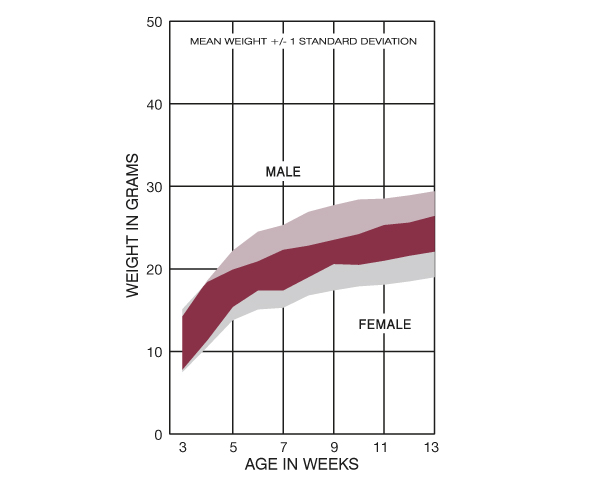
Growth chart data should be used as a guideline only.
The shaded areas on each chart are the mean weight plus or minus one standard deviation at a given age averaged across all production facilities. This represents approximately 67% of the population, with the remaining 33% falling outside of this weight range.
UNIT: B70
Download the Report
➤ DOWNLOAD OUR CATALOG for instant access to Standard List Pricing
➤ TALK TO US to discuss organization or volume-based discounts
Already have an eCommerce portal account?* Login to order research models, obtain quotes, view organization-specific pricing, and see inventory. Processing time required to validate new eCommerce access requests.
*eCommerce is available in US, Canada, UK, France, Germany, Austria, Netherlands, Denmark, Finland, Norway, Sweden, Spain, Portugal, Belgium, Luxembourg, and Switzerland
Try out the 129 Mouse with our animal evaluation program (Europe)
129 Mice Details
Developed by Dr. L.C. Stevens from The Jackson Laboratory. During the 1970s, Dr. Stevens introduced this line to the Pasteur Institute of Paris in the laboratory of Dr. J.L. Guenet. Charles River France acquired this strain in August 1996. The strain was renamed 129S2 in 1999 after the revision of the international nomenclature.
Note: We also offer the 129 VAF/Elite® Mouse with a VAF/Elite® health profile (bred in US) and the 129 SOPF Mouse with a SOPF health profile (bred in France).
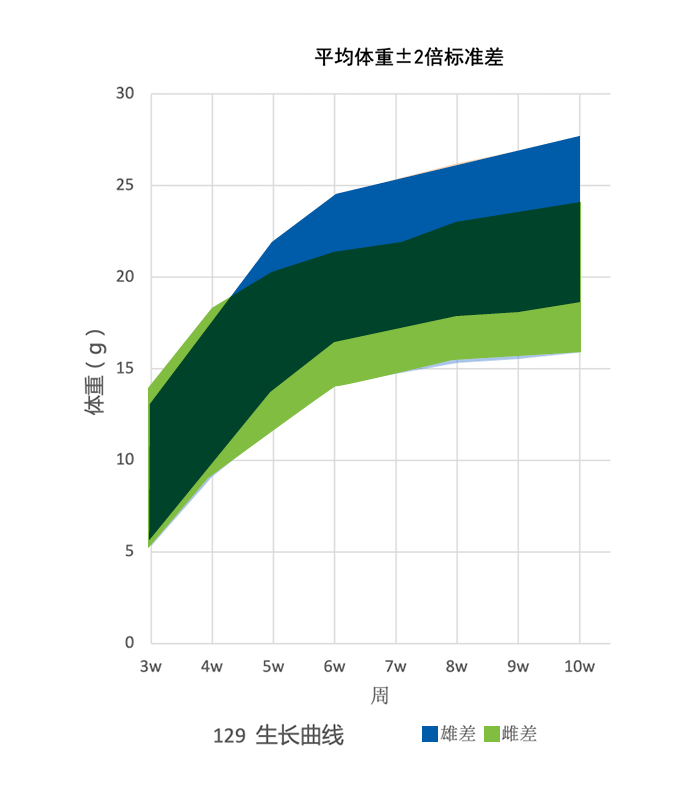
Please email us at [email protected] to request a health report for this model.
For additional information, including pricing details, please visit the 129 mouse page on the Vital River Laboratories website.
Try out the 129 Mouse with our animal evaluation program (Europe)

Guidebook to Rodent Model Genetic Quality Control
Learn the essentials of genetic QC programs: inbred/outbred colony quality control, transgenic rodent model creation, rederivation, and cryopreservation techniques. Download Now
Frequently Asked Questions
-
What makes 129 mice unique compared to other strains of mice?
129 mice are known for having a higher likelihood of developing certain diseases such as cancer and diabetes, making them valuable for research in those areas. They also have a docile temperament, making them easy to handle and work with in laboratory settings.
-
What are some common research applications for 129 mice?
129 mice have been used in a wide variety of research applications, including studies related to cancer, diabetes, obesity, neurological disorders, and more. They are often used for genetic studies, as their genomes are well-characterized. Additionally, their docile temperament makes them ideal for behavioral studies examining anxiety, depression, and other psychological disorders.
-
Are there any special considerations that need to be taken when working with 129 mice?
Like all laboratory animals, certain protocols must be followed to ensure the ethical and responsible treatment of 129 mice. These include providing them with adequate food, water, and housing, as well as minimizing pain and distress during procedures. Additionally, researchers working with 129 mice need to be aware of their higher susceptibility to certain diseases and take appropriate precautions to minimize the risk of infection or illness.