
ZDF Rat (Obese fa/fa) Details
A mutation occurred in a colony of outbred Zucker rats in the laboratory of Dr. Walter Shaw at Eli Lilly Research Laboratories in Indianapolis, IN in 1974–75. Part of this colony containing the mutation was moved to Indiana University Medical School (IUMS), to the laboratory of Dr. Julia Clark in 1977. Several groups of animals with diabetic lineage were identified and rederived in 1981. Inbreeding of selected pairs from this rederivation was done in the laboratory of Dr. Richard Peterson at IUMS. An inbred line of ZDF rat was established in 1985. To Genetic Models, Inc. in 1991. To Charles River in 2001.
Control models for the ZDF Rat (Obese fa/fa) are the ZDF Rat (Lean fa/+) or ZDF Rat (Lean +/?).
Note: We recommend male obese ZDF rats be fed Purina #5008 diet to induce programmed and consistent development of Type 2 diabetes. Female obese ZDF rats express a reproducible Type 2 diabetes phenotype when fed D12468 from Research Diets, Inc.
Growth Chart Not Available
LOCATION: Kingston
UNIT: K83
Download the Report
➤ DOWNLOAD OUR CATALOG for instant access to Standard List Pricing
➤ TALK TO US to discuss organization or volume-based discounts
Already have an eCommerce portal account?* Login to order research models, obtain quotes, view organization-specific pricing, and see inventory. Processing time required to validate new eCommerce access requests.
*eCommerce is available in US, Canada, UK, France, Germany, Austria, Netherlands, Denmark, Finland, Norway, Sweden, Spain, Portugal, Belgium, Luxembourg, and Switzerland
ZDF Rat (Obese fa/fa) Details
A mutation occurred in a colony of outbred Zucker rats in the laboratory of Dr. Walter Shaw at Eli Lilly Research Laboratories in Indianapolis, IN in 1974–75. Part of this colony containing the mutation was moved to Indiana University Medical School (IUMS), to the laboratory of Dr. Julia Clark in 1977. Several groups of animals with diabetic lineage were identified and rederived in 1981. Inbreeding of selected pairs from this rederivation was done in the laboratory of Dr. Richard Peterson at IUMS. An inbred line of ZDF rat was established in 1985. To Genetic Models, Inc. in 1991. To Charles River in 2001.
Control models for the ZDF Rat (Obese fa/fa) are the ZDF Rat (Lean fa/+) or ZDF Rat (Lean +/?).
Note: We recommend male obese ZDF rats be fed Purina #5008 diet to induce programmed and consistent development of Type 2 diabetes. Female obese ZDF rats express a reproducible Type 2 diabetes phenotype when fed D12468 from Research Diets, Inc.
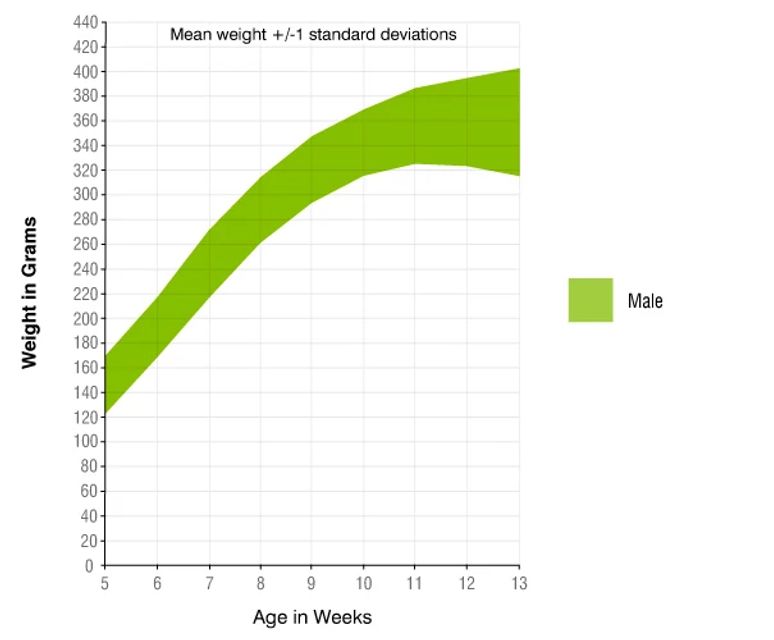
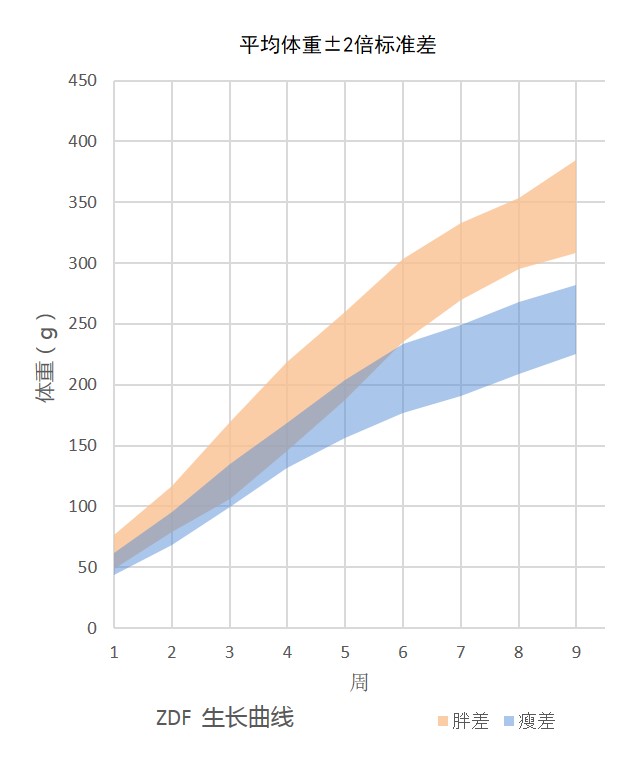
Growth chart data should be used as a guideline only.
The shaded areas on each chart are the mean weight plus or minus one standard deviation at a given age averaged across all production facilities. This represents approximately 67% of the population, with the remaining 33% falling outside of this weight range.
UNIT: B23
Download the Report
UNIT: B41
Download the Report
➤ DOWNLOAD OUR CATALOG for instant access to Standard List Pricing
➤ TALK TO US to discuss organization or volume-based discounts
Already have an eCommerce portal account?* Login to order research models, obtain quotes, view organization-specific pricing, and see inventory. Processing time required to validate new eCommerce access requests.
*eCommerce is available in US, Canada, UK, France, Germany, Austria, Netherlands, Denmark, Finland, Norway, Sweden, Spain, Portugal, Belgium, Luxembourg, and Switzerland
ZDF Rat (Obese fa/fa) Details
A mutation occurred in a colony of outbred Zucker rats in the laboratory of Dr. Walter Shaw at Eli Lilly Research Laboratories in Indianapolis, IN in 1974–75. Part of this colony containing the mutation was moved to Indiana University Medical School (IUMS), to the laboratory of Dr. Julia Clark in 1977. Several groups of animals with diabetic lineage were identified and rederived in 1981. Inbreeding of selected pairs from this rederivation was done in the laboratory of Dr. Richard Peterson at IUMS. An inbred line of ZDF rat was established in 1985. To Genetic Models, Inc. in 1991. To Charles River in 2001.
Control models for the ZDF Rat (Obese fa/fa) are the ZDF Rat (Lean fa/+) or ZDF Rat (Lean +/?).
Note: We recommend male obese ZDF rats be fed Purina #5008 diet to induce programmed and consistent development of Type 2 diabetes. Female obese ZDF rats express a reproducible Type 2 diabetes phenotype when fed D12468 from Research Diets, Inc.
Please email us at [email protected] to request a health report for this model.
For additional information, including pricing details, please visit the ZDF rat page on the Vital River Laboratories website.
Poster: Metabolic & Cardiovascular Disease Models
Access this quick-reference poster to compare commonly used cardiovascular, renal and metabolic disease models by application, phenotype, and study considerations—so you can align model choice with endpoints and program goals. Download Poster
Optimize Your Type 2 Diabetes Program
Our expertise in anti-diabetic drug discovery, spanning from target identification and pharmacology to IND studies, makes us well-suited to run your type 2 diabetes studies for you.
Learn More

Technical Resources
- NUTRITION AND DIET
- SCIENTIFIC POSTER
-
BASELINE COLONY DATA
- Biochemistry and Hematology for ZDF Rat Colonies in North American for January 2008 – December 2010
- Blood Glucose Values for Obese Male ZDF Rats Fed Purina 5008 (Kingston, NY; March 2010 – October 2010)
- Fed Glucose and Insulin Values for Obese Male ZDF Rats Fed Purina 5008 (January 2010 – July 2010)
- Blood Glucose Values for Obese Male ZDF Rats Fed Purina 5008 (Kingston, NY - July 2009)
- Cholesterol Levels for Obese Male ZDF Fed IR Purina 5008 (Portage, MI and Kingston, NY - September 2005)
- Insulin Values for Obese Male ZDF Rats Fed IR Purina 5008 (Portage, MI and Kingston, NY - September 2005)
- Triglyceride Levels for Obese Male ZDF Rats Fed IR Purina 5008 (Portage, MI and Kingston, NY - September 2005)
- Oral Glucose Tolerance Test on Obese Male ZDF Rats Fed IR Purina 5008 (Portage, MI and Kingston, NY - September 2005)
- Weight Chart for Obese Male ZDF Rats Fed IR Purina 5008 (Portage, MI and Kingston, NY - September 2005)
Advancing Preclinical Research with the Rat Model
This presentation will explore how the unique physiological characteristics of rats provide translational value across multiple therapeutic areas, as well as best practices for husbandry that optimize both welfare and experimental reproducibility.
Watch the Webinar