
Commercializing Cell and Gene Therapies: Navigating Complex Commercial Readiness Hurdles for a Successful Product Launch

A surge in the number of market approvals for cell and gene therapy products is anticipated, as numerous programs advance into late-phase clinical trials. Nonetheless, the path to commercialization for developers remains exceedingly complex.
To ensure a sufficient return on investment and to provide the maximum benefit to patients in need, sponsors conducting late-phase trials must effectively launch their products. However, the industry’s understanding of, and expertise in, implementing a successful commercial readiness strategy are still evolving.
This webinar shares insights gained from the experience of being the first North American CDMO to gain EMA approval for commercial production of an allogeneic cell therapy drug product and discuss approaches to streamline and accelerate cell-based therapy commercialization.
Explore:
- Critical factors to achieve commercial readiness
- Risk mitigation activities
- Steps to address process/analytical robustness and reproducibility
- Quality control and regulatory considerations
About the Presenters
Andrea Briggs
Senior Director, Global Cell and Gene Therapy Compliance
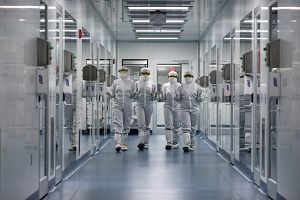
A New Era for Cell Therapy Manufacturing
Memphis facility paves the way to become the first North American CDMO to receive EMA approval for commercial allogeneic cell therapy production.
Get the Details
-
Transcript
Abigail Pinchbeck (00:00:09):
Hello and a very warm welcome to today's Cell & Gene Therapy Insights webinar, titled Commercializing Cell and Gene Therapies: Navigating Complex Commercial Readiness Hurdles for a Successful Product Launch. I'm Abi Pinchbeck, an editor at BioInsights. And joining me today is Andrea Briggs, who will share insights gained from the experience of being the first North American CDMO to gain EMA approval for the production of an allogeneic cell therapy drug product. After the presentation we'll have a live Q&A session. Do feel free to pose your questions to Andrea using the ask a question box at the bottom of your screen, and we'll try to get to these during the session. I'd also like to draw your attention to the resources tab on the right of your screen where you can find more information on the topics covered today.(00:01:01):
I'd now like to introduce our presenter. Andrea Briggs is the Senior Director of Global Cell and Gene Therapy Compliance at Charles River Laboratories. She has over 30 years of experience in all aspects of the pharmaceutical industry: development, technical transfers, regulatory support, inspection management, quality control, and quality insurance practices in R&D, clinical and commercial environments. In her current role, Andrea has overall responsibility for compliance at the cell and gene therapy CDMO sites at Charles River Laboratories. So without any further ado, I'll hand over to Andrea to kick us off with her presentation.Andrea Briggs (00:01:50):
Hello everyone. Thank you for joining us today to discuss commercializing cell and gene therapies and how to navigate the complex commercial readiness hurdles for a successful product launch. I'm Andrea Briggs and I am the Senior Director of Cell and Gene Therapies within Charles River. Today's agenda, we'd like to talk through each of these topics. We're going to discuss Charles River and our current focus as a global cell and gene therapy CDMO. We're going to discuss common commercial readiness activities as well as challenges that are unique and specific to the cell and gene therapy space. And we're also going to talk through some inspection readiness, have some closing thoughts, and then of course open it to questions.(00:02:37):
As Abi mentioned, I'm Andrea Briggs. I've been with Charles River now for a little over three months as the Senior Director of Cell and Gene Therapy Compliance. I have the overall responsibility for the compliance of all of our CDMO sites and we'll go through each of one of them in a few minutes. Prior to this position, I was the director of quality for the cell and gene therapy group within Thermo Fisher. And when I started this adventure in the cell and gene therapy space, I wasn't sure what I was going to get into, but I've got to tell you, this has just been the greatest, the closest I've been to a patient. These treatments that they're coming up with, they're very novel, they're treating rare diseases as well as cancer, and it's just a great space to be in and I'm very excited that I get to continue my career with Charles River in this space.(00:03:33):
So, Charles River. Anybody within the pharmaceutical business knows Charles River does testing. They are your partners for maybe difficult assays you don't have the experience or the bandwidth to support. They can do bulk testing to ensure that you meet timelines. But let me be honest, Charles River is not just for testing. Our mission at Charles River is to create healthier lives, and we do that. We have over 110 facilities in over 20 countries. In addition, we've supported the development of 86% of the novel FDA approved drugs in 2021. And on a side note, we have supported the development of 11 FDA-approved cell and gene therapy products, which makes me very proud. We do this through our different divisions that are listed down there and each one of them serves a different purpose.(00:04:35):
As you can see, the CDMO is part of the biologic solutions, but we do leverage each and every one of these other divisions to help us with our clients to get quicker to market. In doing that, we have an integrated cell and gene therapy development platform solution, which allows you as a client to go faster through the development lifecycle. We feel this is a differentiation against most other contract drug developer organizations in that we have this comprehensive integrated CGT development platform, starting with our discovery group, which can work with you to identify novel drug candidates. They can also help, we can also help with in vitro and in vivo studies, and then we can also do your clinical trials. We can manage those for you. And then through our CDMO sites we can manufacture your plasmids, your viral vectors, and then also do your manufacturing for you. This breadth and depth of experience gives us that background and experience to help get to your goals faster of commercializing your product and with less disruptions.(00:05:56):
We are committed here at Charles River to accelerating commercialization through our various CDMOs and testing sites. Our gene therapy division, which is based in Alderley Park in Keele, near Manchester UK, they are our plasmid DNA manufacturers. They have experience in a wide range of plasma DNAs and through their work they transfer them to our Rockville, Maryland site, where they will manufacture your viral vectors. And we do have 20 years of experience supporting a variety of vectors, from everything from AAVs to Len antivirus to retroviruses. So our Rockville Maryland site can be your partner for your viral vectors. And then using those viral vectors, we utilize those at either our Hanover site, which is also in Maryland. They are more of a analytical and process development site where we take our clients' programs and we essentially kick the tires and make sure that these processes can work within our systems.(00:07:06):
And then once that's been developed through our procedures there at Hanover, they are transferred to our Memphis, Tennessee facility where we perform our manufacturing of your cell and gene therapy product. And with that, we have five different locations for the CDMOs, as I mentioned, in Europe as well as here in the United States. We have over 800 CDMO employees. And on top of that, we have the entire Charles River laboratory networks to leverage to help test these products to expedite and speed to market. And we have over 720 global testing employees.(00:07:51):
So I've mentioned a lot about what is cell therapy. We've talked about cell therapy. They're getting approved at a rapid rate. You hear about them all the time in the news, but maybe you don't know what the differences are. So I want to just do a little quick background here. We won't spend a lot of time, but in essence, cell therapy is taking donor material, cultivating it and modifying it outside the body, in what I like to liken to becoming a mini medical device that gets re-infused into the patient for treatment or to cure a disease. And that process can be autologous or allergenic, and we'll talk a little bit about the differences there in a second. Now, contrast that to gene therapy where we're taking, again, a donor, donor material, whether it be blood, marrow, other cells. We're taking that and we're removing and/or changing the genetic code within the cell. And that change or that gene of interest is delivered using those viral vectors I spoke about a few minutes ago.(00:08:59):
Once we've done that, we again culture the cells and then we reinfuse it back into a patient and it's aimed at treating and/or curing a disease. Now, I mentioned autologous versus allergenic and the difference between that is an autologous product is it comes from a patient, we do this modification, we make that mini medical device and then we reinfuse it back into the patient. And with autologous products, there's a lot of variability in your starting material because, again, you're taking that from a patient and that patient is relapsed from another treatment. They're very ill. And in most instances, you have to take that material fresh and you may not get everything that you need, so there's a lot of issues inherent with an autologous product, although the benefits far outweigh those. Allergenic on the other hand is when you take a healthy donor sample and then you modify the genetic code or you make that a MiniMed device before infusing, so you can take one healthy donor batch of material and you can treat many patients.(00:10:14):
So, that does make a difference because the allergenic process is the wave of the future for commercialization, and we'll talk a little bit more about that in just a second. So, we understand that Charles River path to market is important to our clients and it's important to us, and one of the reasons that we wanted to sponsor this webinar today is that we care about speed to market and we wanted to show that we have those capabilities to get your product to market. We are the first North American CDMO to receive EMA approval for a commercial allergenic cell therapy drug product. And we're very pleased with that, and we're going to take these lessons that we've learned, share them with you and we can partner with you to ensure your product makes it to the market.(00:11:10):
So again, another reason for using a CDMO, they provide continued commercial readiness. As you know, there's an increased market size. It's an emerging market, the cell and gene therapy space. We anticipate last year $18.61 billion within the cell and gene therapy space, and it's projected to grow at least 22.41% from 2022 to 2023. And we've also seen an increased in commercial approvals in late stage clinical trials involving cell and gene therapy products. Last year alone there were six new advanced therapies, and right now, there's five advanced therapies approved in outside of the US or four new indications that weren't there before to treat our very sick patients. And again, we are seeing more late-stage clinical trials using cell and gene therapy material. So it's in a very exciting space to be in.(00:12:11):
And lastly, for late stage program disruptions, there's four MAbs in the biologics. There's more disruptions in that space. We also are looking at disruptions in regulatory filings, the CMC sections, and the CDMO can offer you assistance with that with we have the background and we have the experience in filing and supporting CMCs for our clients, and we'll talk through how we can help you with that. So the path to commercialization I'm sure is very familiar to everybody on this call. We all know that you start with preclinical work, you do your talk studies, then you move into phase one and two, which are your first human trials. Very small patient population. Phase one is usually efficacy or safety. It could be some efficacy. I'm not going to talk about clinical trial makeup right now. That's for another discussion. And then as you see some improvement or you see some clinical response, you move into phase three, which is a larger patient population.(00:13:24):
You're scaling up your process to meet those demands. And then if as you get the results back and you see some positive results, again, you're going to move into your PPQ stage, which in most instances becomes your CMC section that you would file. And here, you're going to establish and validate your CPPs, which drive your CQAs. So then after you do your PPQ batches, you file, you get notice of review, you'll go into the PAI/PLI phase where you work with your CDMO partner to support regulatory inspections, and then upon approval you go into commercialization. The one thing I do want to point out here, quality oversight increases the closer you get to commercialization.(00:14:16):
Also, too, risk assessments are utilized throughout this entire process to ensure a data-driven risk-based approach is taken. And let's talk a little bit about that. Implementing risk management from the start is a key to successful manufacturing. I can't stress this enough. You really need to be making risk-based decision makings or RBDM. And yes, I came up with that new acronym, so we need it within the pharmaceutical industry. But essentially you need to start. When you are working with a new client or you're working to transfer into a new facility, you do need to do a process FMEA to begin with, and that outlines any of the risks that may be present for this process as you move into a different manufacturing facility.(00:15:07):
In addition, any time that you are doing any changes to the process, you want to do a risk assessment. And what you want to look for are what are those harms to the patient? Obviously, you want to look at your process. Is it closed? Is it sufficiently closed? What can you do to mitigate those gaps? Perform a closure analysis on that to ensure that because that leads to contamination of the material which could impact the patient. In addition, you want to look at what's the impact to the study. If you're making any significant changes to the process or the materials utilized, that could impact your clinical study and you need to risk assess and understand that. Another thing you need to be conscious of is the risk to the site in and of itself. Are you bringing in materials that could be harmful to your facility or your production crew? So you want to make sure that you risk mitigate those out.(00:16:05):
Also, regulatory standing of the site. You don't want to put your site that you are going to be manufacturing, that you're hoping to make commercial materials out of, you don't want to put that at risk. And then, again, risk to production. The site reputation. If something goes wrong at the site and it impacts the reputation, makes it more difficult to move products through and to get the support you need. And then of course there's always unknowns. You don't know what you don't know, and that's what risk management can do for you. It can help you determine what those unknowns are. And you do this within a cross-functional team and you use very common risk management tools that are out there. I'm not going to go in depth about them. I mentioned process FMEAs, root cause analysis. Having a risk register for the site is an important aspect of having a good risk management program.(00:17:02):
So let's talk about some common challenges within cell and gene therapy where you can utilize your risk management program. First, materials. Within the cell and gene therapy space, most treatments, most manufacturing processes start out in a development and/or academic lab, so they're utilizing whatever materials they can grab, whatever they can use. So that puts the potential for having animal-derived raw material, which is that first bucket there, into your process. And while it's a potential for youth in a phase one program, you really do want to develop that out of your process. You want to replace that with a non-animal-derived raw material as soon as possible. Same thing with research grade. You may just pull something that you have on the shelf and use it and everything is fine. But when you move into human trials, you need to remove that and you need to develop that out of the process as well.(00:18:07):
Apheresis, this is again the starting material. I can't stress this enough. For an autologous program, you are dealing with very sick patients and it may be difficult enough to pull enough material, so you're going to have variability between lot to lot even from the same patient. So in addition, for an autologous program, you're starting with fresh material that has to be processed ASAP. You cannot wait. You have to process it immediately. So that's a whole logistical challenge, getting materials ready, getting production staff ready, getting your support staff ready as well. So really, again, looking towards the future, moving away from autologous to an allergenic process. You can do some risk-based decision making on apheresis, making sure that you fine tune the logistical aspects of using fresh material, but really looking to the future of an allergenic process.(00:19:10):
Lastly, in some of the development academic labs, they'll utilize antibiotics within the formulation, and that is their contamination control because they're just in a standard lab, they're not in a controlled environment lab. Obviously, most pharmaceutical companies want to shy away from the use of antibiotics depending on what class it is. But again, if that's something that is inherent and is required for the process, you can utilize your risk management program to ensure you're mitigating any risks inherent with use of antibiotics. And you also have notification of other clients for using antibiotics in your space. So next topic is equipment. I want to do a special call out about irradiators. While they're very good at stopping the proliferation of the cells without impacting the production of cytokines, which is a key feature in many of our cell and gene therapy production steps, they do have some inherent safety risks involved.(00:20:16):
You need special site and local licensing to support the use of an irradiator. You may even need to go to the US government and get some special licensing from them. So if that can be eliminated from the process, all the better. There are new irradiators, new types of irradiation that are coming in the future, but they're not necessarily here yet. The next two go hand in hand. Again, this industry is changing so quickly, the technology is struggling to keep up. So there's the use of a lot of beta level equipment or perhaps equipment that is obsolete and no longer being supported by the manufacturer. And while you can do some risk management to ensure that the equipment is working, really these types of instruments cause some concerns from a part 11 compliance aspect. You are going to have to do some more gap assessments around how the data is being protected. Are you meeting the ALCO plus requirements? And that can be done through gap assessments. And again, a risk mitigation. And again, some of the early stage equipment doesn't have a DMF, so that's something that you'll run into.(00:21:34):
And then for the process, again, development in a academic lab, they could be using an open system. That's why they use antibiotics as their contamination control. However, in a production facility, that can lead to contamination and that's where doing a closure analysis risk assessment comes into play. You mitigate any potential for contamination of the material if it's an open system or you look to close the system. That's ideally, from a commercial standpoint, what you want to do. Some of these really early processes are very manual, very labor-intensive. You're piping material from one vial to another into a bag. Very manual, which again leads to human error potential issues as well as potential contamination.(00:22:29):
Now, this is where you can utilize really good development partners such as our team in Hanover. They can work with you to eliminate as many manual manipulations as possible and look to automate as much as you can with the technologies that we have. Another issue with process moving into a commercial space, especially for clients that have had orphan drug designation and been fast-tracked on the approvals, they just don't have a lot of run data. So you are using very minimal run data to set your parameters for your PPQ runs and that can be very difficult. Also, there's unclear directions included. What works in the mind of the scientist doesn't necessarily work as you put that onto paper, so working very closely with the scientists who developed it to make sure that you are capturing every nuance of the production cycle is very important.(00:23:29):
And then the analytical testing. This in and of itself is its own unique challenge within the cell and gene therapy space. Flow cytometer, which is a critical test for cell and gene therapy, it shows you the cell population of interest that you're, you are trying to isolate, it is an art in a science. There's a gating strategy that has to be developed. You have to be able to make sure that it's a consistent. Again, as your starting material changes and your ability to isolate the cells that you need, this can become somewhat problematic. Again, working with a good analytical development team to define as much as you can of this test method is critical. Undeveloped assays. Again, development labs and academic labs, they may not have a potency assay in place, so you can't go beyond phase one without a potency as essay. So that makes it difficult. Most potency assays are very complicated requiring culturing and then ELIZAs perhaps some other techniques, so a big focus on developing those appropriately so that not only can they be used for your development work, but they can also be used in a commercial setting.(00:24:55):
Safety testing, and this isn't so much of an issue, but this needs to be looked at from the perspective of turnaround times for these drug products. These dosages need to be as short as possible to get these lifesaving medicines back to our patients. So safety testing, looking at those rapid methodologies that are out there, rapid mycoplasma, rapid stability, whatever you can do in that arena is going to help your turnaround times in getting that material back to patients. And then reference materials. In this space, there aren't a lot of reference materials, so that becomes part of the development cycle is how are you managing the reference materials?(00:25:40):
And I want to say one last thing on the analytical testing that has to do with routine samples. While not necessarily a part of testing, it is a requirement. And when you're working with an autologous product, you're lucky if you get about 10 vials or 10 bags depending on your bag size. So working through how you are going to manage your retain program is going to be critical. Your are still required by the regulatory agents to take a reference standard or a retain sample to use if there's any issues later on the line, so working with a partner that's been through this before would be very helpful.(00:26:27):
So again, moving into path to commercialization. We're in this phase one, phase two, we're in a pilot lab. We are identifying our CPPs and CQAs, our test methods are qualified. We're ready to move into the next phase, which is our phase three. This is where you're in a GMP environment or you are very close to a GMP environment. You have the contamination controls in place, including EM as well as any cleaning and sanitization. Your test methods are validated at this point. You are ready to move towards doing this Phase three. This is, again, a larger patient population, and let's say you have some efficacy that you really like and you want to move into the PPQ phase. So this is where you're at commercial scale, you're confirming manufacturing, it's reliable, that it ensures the identified risks are mitigated, and you're establishing your CPPs and CQAs. This is done under a protocol with clear acceptance criteria. And this also includes your things such as your APS. Running up to the PPQ, you'd want to do some engineering runs or training batches using healthy donor materials.(00:27:54):
So we're going to talk a little bit about the control strategy for PPQs. There's three essential stages. The first stage is your process design where you're working with your cross-functional teams. We at a CDMO include the client. They're very important in this stage. They're important at all stages, but no moreso than here. We design what that process is going to look like. We create our process performance qualification documentation, and then we execute. And then, after the approvals, we'll move into stage three, which is relatively new in the industry, which is a continued process verification, and there's two stages to that. The initial stage is increased batch monitoring, where it's a predefined number of batches that will have additional sampling and review. And then moving into stage three is your continued annual review of your process data, but you don't do additional testing. Now, if you've done your process FMEA at the very beginning during transfer, then your process design should be in good shape, leading into a successful PPQ campaign.(00:29:17):
See, here's a little bit more regarding process control strategy based off ICH Q10 guidelines. A control strategy is a planned set of controls derived from current product and process understanding that assures process performance and product quality. These are just some of the highlights of what needs to be part of your control strategy. Obviously, understanding your equipment. Is your equipment qualified? Do you have those specific qualification reports available? And we have here some of the designations that we use here at Charles River. Qual is the protocol, record is the executed data, and then the report summarizes that data. So we would make sure that all the equipment is ready, it has been qualified, it is calibrated. The next one we would obviously look to, having a master plan. What is our master plan for the entirety of this PPQ? How many APSs? How many engineering runs are we going to do? What kind of level of healthy donor training runs are we going to do? We will capture that all into another protocol which would outline individual activities that are part of the master plan.(00:30:35):
Can't forget analytical testing. We've got to look at our test methods that support the process. In-process test methods need to be qualified, whereas the final release test methods need to be validated. And again, you have all of that as you can create a master plan if you want, or you can just drive that through individual reports that are listed here. And then risk management. If you've integrated a robust risk management program from the beginning, this particular pillar of your control strategy should be in good shape. So again, here's a PPQ overview. This is all done under a change control so that you can clearly document each step that you've taken. So you want to look at your suite readiness. Is the layout of the suite correct? Have we done our smoke studies. Without doing a smoke study, you won't know if there's any dead space within the production facility and that won't meet our ISO classifications. So we want to make sure that the smoke studies are done and showing ample airflow throughout the rooms.(00:31:47):
Also, you want to look at your EMPQ. Has that been done? And then are your utilities ready? Then you want to look at your equipment. As we mentioned before, we want to make sure all the equipment has been qualified and within its calibration cycle so that it can be used. Make sure your test methods are in place and then perform your PPQ and get ready for the next stage. So again, the outputs from your PPQ. There will be a written report that covers all the aspects. It talks about your in-process monitoring and your in-process controls. You will have alert and action limits inputted. You'll look at your critical process parameters, those that drive your critical to quality attributes. You will include target values in your normal operating ranges and pars. All of this information is incorporated into what will become your commercial batch record, and it's all captured in a final report that shows all of the activities that were done to support your PPQs.(00:33:05):
And here at a CDMO, we do include our clients in all of these steps. They are a key player, a stakeholder in the PPQ activities, and reviewing and approving all the PPQ supporting documentation. So let's say client has filed, the health agency has agreed to review, and now we're getting ready for regulatory inspection. The FDA, they use the term PAI, which is pre-approval inspection, and then the EU uses PLI, which is pre-licensing inspection for those that weren't aware. But for a CDMO, we do include a mock inspection. We have our clients drive this. It's written into our quality agreements with them that they can conduct a mock audit of our facility to make sure that we're ready for the real thing. We also do a lot of preparation for the inspection. We train our personnel, we do fit and finish of our facility to make sure it's at its shining best.(00:34:12):
And then we host, we do a lot of training as I mentioned. We look to our SMEs, which are subject matter experts or SMEs, depending on how you like to say it. These are people that have a bonafide expert knowledge about what it takes to do a particular job. So you want to make sure that you're looking for the rights me that they have the expertise and the skillset. Not everybody can talk to an investigator and I understand that it's not necessarily the most comfortable position to be in, but again, we want to make sure that we get them the training or we identify somebody else within that department that can do that. We do include clients in the SME preps. Clients may be called into an inspection to speak to their CMC sections that we have no visibility to, and that's perfectly fine. We use them as unofficial inspectors to grill our teams, and we make sure that the site is getting the information that they need to be inspection-ready. So I won't go into every detail here. I'm sure everybody's very familiar with that.(00:35:24):
But we do a lot of training, as I mentioned. This is some of the overview of what we do. We make sure that the backroom understands that critical turnaround time for requests and for documentation. Nothing says the site's not in control if you can't get an SOP to an inspector within 10 minutes at most. They do rate you on that, so we are very keen to practice with our backroom for them to pull documents for us. Again, the coaching sessions. We identify those SMEs, we identify secondary SMEs, we identify tertiary. We want the site to be inspection-ready at all times, so this is something that we do on a routine basis. We coach them, we sit with them, we walk through some of the questions that they will get asked. And then we make sure that the site understands we only get one chance to make a first impression, so we talk about appropriate clothing to wear at work, business casual. We discuss being professional, be ready to walk in there, to speak to your subject, and to be able to speak clearly and cogently with them.(00:36:44):
So here are some of the other things that we do, and again, this seems very common sense, but in the heat of the battle as you're preparing for these inspections, it gets lost sometimes. We remind people routinely, put away work that you're not doing. Keep your areas neat. Make sure that you are using the most current effective versions of your SOPs. We make sure the operators are gowned correctly. Again, these all seem common sense, but when you're getting ready for an inspection, most people have that fear, either they've not been through one or they had a bad experience or they just feel that they're coming in to get us and we remind the teams we're training you, we're giving you the tools, we're setting you up for success, so that way they can be more confident as we go into the inspections.(00:37:39):
And one last highlight, I think this is an important one, is focusing on what we feel that the FDA and the EMA are going to be looking at. EMA is going to be coming in specifically for that particular client's filing, so they will look at that and that only. They may delve into a little bit of some site-related information if it's supporting the production of that client's process, but they will focus mainly on that, whereas the FDA could do both. They could come in, they could look at the client-specific information as well as do a general of the facility. So making sure that the teams understand that and that we prep them for those questions. There's a myriad of questions that you can get offline if you just Google it, of what common inspector questions are, and prep your teams to say that.(00:38:33):
And one thing I really want to stress here is be familiar with the inspection process. Do tours of the facilities, the labs, the warehouse. Have people act as mock inspectors and ask those questions, not of the managers but of the people that are actually doing the work. That preps them and gets them ready and puts their minds at ease as you move into inspections. So after the inspection, more likely than not, there's going to be observations. And this is our Charles River observation response strategy. It doesn't necessarily apply to everybody, but the inspection concludes, you have a nice closeout meeting. As you've been working through the inspection, you know that there are some things that they're going to give you a citation for, so you have that in the back pocket and you start strategizing on potential immediate fixes and long-term corrective actions. We share this with our Head of Quality as well as our corporate teams when we get the report.(00:39:44):
Once we get the report, we'll work internally with our corporate partners to come up with specific responses. We will also pull the client into these discussion points because, again, some of this may impact. They may have the answers for, or it's just being transparent about what the observations were. So then, once we have our responses, we will open a CAPA for each one and then we submit the responses back to the regulatory agent. And at that point for EMA and FDA, once they are in alignment with us, we will set up a cadence of routine updates on the status of how the responses are being closed out.(00:40:34):
All right, we got through the inspection. The client receives notice of approval from the regulatory agencies, so now we move into commercialization, of course after we have a little celebration, because it is a significant event in both the clients' lives, patients' lives, and for Charles River. So commercialization consists of now we're going to build out our launch supply for the client. We're going to have a dedicated campaign, most likely. We're going to have the approved labeling come on site, and we'll work through the specs and how we're going to manage inspection and all the label control that needs to be in place. And then we will adjust our production schedule to meet the client forecast because they will have an indication of how many patients they're hoping to serve now that they are commercial, and we want to support those efforts.(00:41:34):
So I wanted to share one of the last slides with you. This is the Memphis Tennessee CDMO site. As I mentioned earlier, we have EU approval for commercial production of an allergenic cell therapy drug product, so we are allowed to manufacture and release to our client for European distribution of their product. We do have a second client who has filed both with the EMA and the FDA and we anticipate the PLIs and PAIs for both EMA and FDA this summer. We're very excited about that. We are working through our training, as I mentioned before. We are performing mock inspections internally to make sure the team is ready and we're very excited and we feel very confident that we'll move successfully through those inspections. And lastly, we have a third client that's targeting PPQ runs this summer so that they can file early in 2024 in both the EU and the US marketplace, so we do have a record of success in supporting our clients through their commercialization efforts.(00:42:41):
So just some last thoughts. Quality oversight. Appropriate controls to meet the phase of work is important. My big thing, let the data drive the decisions. I think regulatory agents prefer that you show that you've done a data-driven decision, you just didn't make a decision without some data to back it up. And then for commercial capabilities, for those that may be struggling, do we build out a brick and mortar facility to do this production or do we work with a proven partner? Charles River can be that proven partner for you. We are an industry leading continuous commercial readiness partner. So with that, I thank everybody for your attention. Again, with so much at stake, select a partner with the capacity and capability to deliver. So I'm going to stop sharing now and open up for questions.Abigail Pinchbeck (00:43:47):
Thank you so much, Andrea, for that great presentation. We're now going to start our Q&A session, so just a quick reminder to our audience to send over any questions that you have for Andrea and we'll try to get to these during this session. So Andrea, how do you coordinate with the QC team on timing, material requirements, and risk for release testing?Andrea Briggs (00:44:09):
Sure, that's a great question because without the QC testing you can't release the product. That's very key. So some of the things that we do, we have a daily huddle where we discuss the schedule, what activities are coming up for the week and what programs are coming for the next week. And it's a very close collaboration between our operations partners as well as our QC team to make sure that we are supporting them. In addition, there's a forecasting that's based off on this particular site huddle, understanding when they need to go and sample for environmental monitoring. We do monitor all of our operators for contact plates to make sure that they are aseptically manufacturing. So all of that needs to be coordinated together. We use utilized chat functions through various MS Teams and texting, and there's a visible site project plan that lays out what's supposed activities are supposed to be happening, but really it's about that communication, keeping in touch.(00:45:24):
And I know we've just come through the COVID period and the people are used to working remote or having that as an option, but really when you're at a site and you're manufacturing material, it needs to be all hands on deck at all times so that if we need to go and reach somebody really quickly, we can just maybe jog downstairs or jog to the other end of the building and discuss any changes or delays that may be happening so that we can pivot on a point.Abigail Pinchbeck (00:45:53):
Great. Thank you, Andrea. And do you have any experience with regulatory GMP flexibility such as allowing the placement on the commercial market batches that were manufactured for use in pivotal clinical studies?Andrea Briggs (00:46:07):
That may be as we move forward within the cell and gene therapy space. With so many novel treatments out there for orphan orphan diseases, rare diseases, that that may be part of what comes forward. I think the biggest thing as you talk through with regulatory agencies, walking them through the science behind what was done, walking them through the process, the whys and the wheres of why decisions were made. Again, letting the data drive those decisions. They are more open to doing something like that, using your phase three material for your commercial launch than if you just said, "Well, this is what we want to do." Again, you have to let the data drive that decision and show that you've made decisions based on it and not just, "This is what we want to do. Speed to market." You have to, again, show safety of the product. Obviously, efficacy comes from your clinical studies, but you have to show that the safety of the product as it's manufactured no matter what phase of the work.Abigail Pinchbeck (00:47:22):
Great. Thanks, Andrea. And are general lab equipment or non-CUT workflow-specific equipment also subject to PPQ and other regulatory compliance such as CGMP?Andrea Briggs (00:47:35):
I'll answer it how I think the question is. The question was asking about non-cell and gene therapy analytical equipment. Does that need to face that same scrutiny? If it's utilized in the testing and release of the drug product, then yes. Every lab instrument that's utilized for testing needs to be qualified. It needs to be within a calibration PM program. And depending on the instrumentation, you may want to do even a performance qualification, but that's usually what your method validation is. But they do need to stand up to that same scrutiny from a regulatory agent because you're releasing drug product utilizing that equipment. And if you can't show that it's working the way it's supposed to work, then the data is suspect and it can't be trusted.Abigail Pinchbeck (00:48:34):
Great, thank you. And when should you validate your analytical release assays? What advice do you have around validating analytical that involve DS and DP release?Andrea Briggs (00:48:45):
Sure, you don't want to validate it too soon because when you're in the phase one, phase two processing, when you're still in that phase, you're still gaining information about the process. You haven't nailed it down, you haven't finalized that. So at that point for phase one and phase two clinical material, you should qualify the method. And as you work through finalizing the process, you're making changes, you're tweaking things. When you get to that final, what you think your phase three process is, you should do a risk assessment on any changes to will it impact the methods themselves. At that point, you make the adjustments to the methods and then you validate them before you start your phase three manufacturing because you'll use those methods to release the phase three material for both drug substance and drug product.Abigail Pinchbeck (00:49:46):
Thanks, Andrea. And I've got a two-part question for you now, so bear with me. For the [inaudible 00:49:52] programs that Charles River supports, do you also provide the healthy donor starting material from your network? And the second part is, if yes, what are the additional donor requirements for distributing final products outside of the US?Andrea Briggs (00:50:06):
We do have the capability to bring in healthy donor materials from within the Charles River network and for release. And the question is, what are the requirements to release into the European marketplace? Well, that's something we have an understanding of. We want to meet the specifications as outlined. We want to make sure that obviously for any materials that we release, the safety testing is completed, that we show that there's no adverse contamination within the material. And then we work with QP partners. Now, we have QPs within our network that we can utilize, but if it's for a client, we'd like to leverage their QP because they're the ultimate responsible person to release the material within the EU. So they would come in, they would audit us as Charles River, and they would understand and make any recommendations for improvements, and then they would be part of that disposition process. Charles River would release it to the QP, the QP would then do their final review and release to the European marketplace.Abigail Pinchbeck (00:51:25):
Great, thanks. And do you offer pre-assessments to clients that are interested in pursuing your company as a manufacturing company?Andrea Briggs (00:51:33):
Sure. We welcome visits from any potential clients. You can reach out to our business development team. I think that there's some information at the end of the presentation where you can reach out to just a general email and number, otherwise we can provide it at the end of this telecom. But yes, we've had clients come on site, they want to see what capabilities we have. Maybe they think they have a unique cell type that they want to make sure that we can manage, and we would sit with them for as long as it took, a day, give them a little tour of the facility, give them some background about what our capabilities are and work through those potential technical challenges that they may have.Abigail Pinchbeck (00:52:23):
Great. And as a manufacturing company, do you have the capability to process different products from different clients at the same time?Andrea Briggs (00:52:31):
Yes, we are a multi-product facility here. We have a lot of clients. I won't say we're overwhelmed. We do have a lot of clients that we are supporting and they're at various stages, through phase one all the way through to our commercial product that I mentioned earlier, so we have that capability. We utilize phase-appropriate quality oversight. For those earlier phases, we may not have the same constraints that we have to put in for our commercial product, but we do have that capability. Working with the earlier stage clients, this is where we pull our Hanover Maryland team into play, they will usually run the process through a few times at their facility to make sure that we understand any potential pitfalls as we transfer that into our larger-scale commercial area. And that way, when we do the tech transfer we can risk manage those items and make sure that we are starting successful even at the engineering stage before we get to the training and/or clinical batch manufacturing.Abigail Pinchbeck (00:53:46):
Great. Thanks for clarifying that, Andrea. And do you have a book or an article to recommend to us to present the job of a CDMO?Andrea Briggs (00:53:56):
I don't have one off the top of my head, but I'm sure can find out and let this team know. I'll share it with Abi and she can share it with the attendees today.Abigail Pinchbeck (00:54:09):
Yeah, that'd be great. And how is the quality on the floor monitored? Are batch records electronic?Andrea Briggs (00:54:17):
We do have quality on the floor for our phase three and our commercial teams, and it's there if an early phase client would like it as well. And they're there. They get the same training as our operators. They understand the technical aspects of the process to be able to answer questions or if there's an issue that arises, they can give guidance. Ultimately, they're on the floor at critical junctures so that they can help mitigate any potential issue that may come up and maybe take something that could have been a major deviation and turn it into a minor deviation because they can help make decisions at the time of the event takes place, and they're monitored.(00:55:04):
We don't have electronic batch records yet. That is one of the things that we're looking to as the future. That's another way for us as a CDMO to quicken that turnaround time because then we can do realtime batch record reviews so that we don't have to wait until we're done with the process, bring the batch record out, have ops do their review and then have QA do their review, so that it's done in real time, so that's one less thing to worry about as we're trying to get this product back out to the patient.Abigail Pinchbeck (00:55:36):
Thanks, Andrea. And are process and analytical development activities before phase one important for commercial readiness?Andrea Briggs (00:55:45):
They are absolutely important to being commercial ready. I'll just use this. I've known some QC scientists, my husband was one of them, and he would get these methods and they worked great in development space, but then when you got into the commercial space they didn't work at all. So having that in mind and developing a method that meets the criteria, the ICH guidelines for method validation, that's got robustness, to have the precision, it's key to do that sooner than later because if you make a very difficult... Let's say the potency assay, as I mentioned, most potency assays are very difficult and time-consuming, could take months to get the data that you need. If, at the early, early stages, you look to develop a method that is not only accurate but is quick and supports the information that you need, it's going to set you up for success at the commercial phase.Abigail Pinchbeck (00:56:59):
Great. And what are some of the considerations for having analytical assays characterized prior to validation and what constitutes the characterization of a method?Andrea Briggs (00:57:09):
Sure. It's critical that you understand your method backwards and forwards before you try to validate, because if you validate and you don't understand why you're adding this material at this particular time to let's say a sample that you're going to read on the ELIZA and you fail that validation, that looks worse than taking that time to go back. You really need to understand why you're doing each step within that analytical method, and it's going to be dependent on the method. What you characterize for an ELIZA method is going to be different than what you would characterize for the flow method. And you have to keep that in mind because otherwise you're not going to have a successful validation campaign. So it's the same type of thing that we talked about in production where you have your control strategy. You should have a control strategy for your methods as well to understand the ins and outs and the why's, what each step is requiring you to do, why do you do that.Abigail Pinchbeck (00:58:21):
Great, and I think we've got time to squeeze in just one more question here. Okay. So with the small lot sizes inherent to autologous products, how do you ensure that there are sufficient retained samples taken?Andrea Briggs (00:58:34):
Yeah, and we briefly touched on that, and that is a difficult situation. When your lot sizes are only 10 vials, how do you manage that? And that's where you do some risk mitigation. Okay, you understand what are the bare minimum regulatory requirements. I have to have a retain sample, so what does that retain sample have to cover? It has to cover additional testing if needed. If there's some failure at the clinic or if there's some failure in the marketplace, what is that minimum testing that's required so that you understand maybe I only have to do potency, maybe I only have to understand the flow, what my cell population is. And then you work your way back to getting to a point saying, "All right, my lot size is based on cell count, so I only need X number of cell counts to be able to replicate those critical testing if something were to fail future."(00:59:36):
And you work your way back, and then you build that into your sampling plan for your production, and then they sample maybe a little bit less and that becomes your retain sample. But regulatory requirements are that you have to have a retain sample no matter what.Abigail Pinchbeck (00:59:55):
Great. Thank you so much, Andrea, for answering those questions. That's unfortunately all we've got time for today, but any questions that we didn't manage to get to, we will reply via email. The webinar will be available on demand tomorrow, so look out for an email from us with the link. All that's left is to thank Andrea once more for a great presentation, and thank you to the audience for listening. We hope you'll join us again soon.Andrea Briggs (01:00:20): Thank you everyone.