
Early Emphasis On Safety For Pregnant Patients
When used for specificity screening of therapeutics across a range of modalities, including vaccine delivery vehicles, the Retrogenix® biosynthetic human protein library provides insights on how candidates will interact with human cells without harvesting or testing on human tissue, which is particularly valuable in the context of prenatal safety.
Included in the current library of more than 6,500 human plasma membrane proteins, heterodimers complexes, and secreted proteins, we have added more than 98% of the human surfaceome and secretome represented at 10 to 18 weeks of pregnancy. These prenatal proteins were identified using bioinformatics and when used as part of the Retrogenix® Cell Microarray Technology, this protein library is vital to building a comprehensive profile of a drug candidate’s human protein binding profile. It is the largest and highest quality library of its type.
By using cDNA to individually encode each target in our library and spotting these onto specialized slides, we are able to grow and reverse-transfect cells which then overexpress those targets at the cell surface. In this way, we can provide a comprehensive screen against entirely biosynthetic human protein targets.*
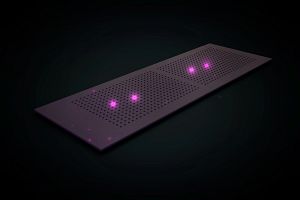
Webinar: Enabling Prenatal Microarray Testing to Aid Early Candidate Safety Confidence
Learn about how the Retrogenix® human protein library was expanded using bioinformatics to enable off-target screening for pregnant patients, and hear from industry leaders on how this data can be used to support successful IND applications.
Watch Now
Retrogenix® Cell Microarray Screening has an outstanding track record in producing IND-enabling data and informing the development of biotherapeutics during early discovery. The screening also offers on-site follow-on validation of results and bioinformatic analysis of results.
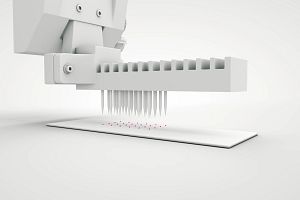
Poster: Off-target Assessment of Biotherapeutics for us During Pregnancy
Methodology for expanding the Retrogenix® Protein Screening Library to include >98% human prenatal proteins present at 8-10 weeks of pregnancy.
Read the Poster
Disclaimer: No human tissues were used to generate this screening library. Prenatal proteins were identified using bioinformatics and synthesized to represent human prenatal proteins present between weeks 10 - 18 of pregnancy.
REFERENCES:
Bausch-Fluck D, Goldmann U, Müller S, Oostrum Mv, Müller M, Schubert OT, Wollscheid B. The in silico human surfaceome. Proceedings of the National Academy of Sciences. 2018;115(46):E10988-E97. doi: doi:10.1073/pnas.1808790115.
Cao J, O'Day DR, Pliner HA, Kingsley PD, Deng M, Daza RM, Zager MA, Aldinger KA, Blecher-Gonen R, Zhang F, Spielmann M, Palis J, Doherty D, Steemers FJ, Glass IA, Trapnell C, Shendure J. A human cell atlas of fetal gene expression. Science. 2020;370(6518). Epub 2020/11/14. doi: 10.1126/science.aba7721. PubMed PMID: 33184181; PMCID: PMC7780123.
UniProt release 2020_04 2020 [cited 2022 March 3]. Available here.
Frequently Asked Questions (FAQs) About Prenatal Protein Library
-
Can I screen specifically against prenatal proteins?
All screens now carried out via the Retrogenix® Cell Microarray Technology will cover our full library of synthesized human surfaceome and secretome, including our prenatal protein profiles to provide a comprehensive understanding of on- and off-target interactions.
-
How is screening material generated?
Key prenatal targets have been identified using bioinformatic analysis. Screening material is synthesized in the laboratory and presented in the context of a human research cell line on the Retrogenix® Cell Microarray. No human tissues are used. Neonatal proteins were identified using bioinformatics and synthesized to represent more than 98% of human surfaceome and secretome present between weeks 10 - 18 of pregnancy.
-
What are the advantages of screening against prenatal proteins?
Early screening against prenatal proteins allows drug and vaccine developers to filter out unviable leads and de-risk candidates before clinic-based development begins. This helps to build a vital upfront understanding of how candidates will affect a human patient, prioritizing prenatal and maternal safety early in the discovery process.
-
Can this screen support a regulatory application which specifically requires a demonstration of safety for pregnant women?
This screening process has supported successful FDA applications specifying prenatal and maternal safety.
*No human tissues were used to generate this screening library. Prenatal proteins were identified using bioinformatics and synthesized to represent >98% of human surfaceome and secretome present between weeks 10 - 18 of pregnancy.