Discovery
|
Christoph Eberle, PhD
Fascination of Disease: Paroxysmal Nocturnal Hemoglobinuria
An often-studied rare disease inspired deeper understanding of our immune system
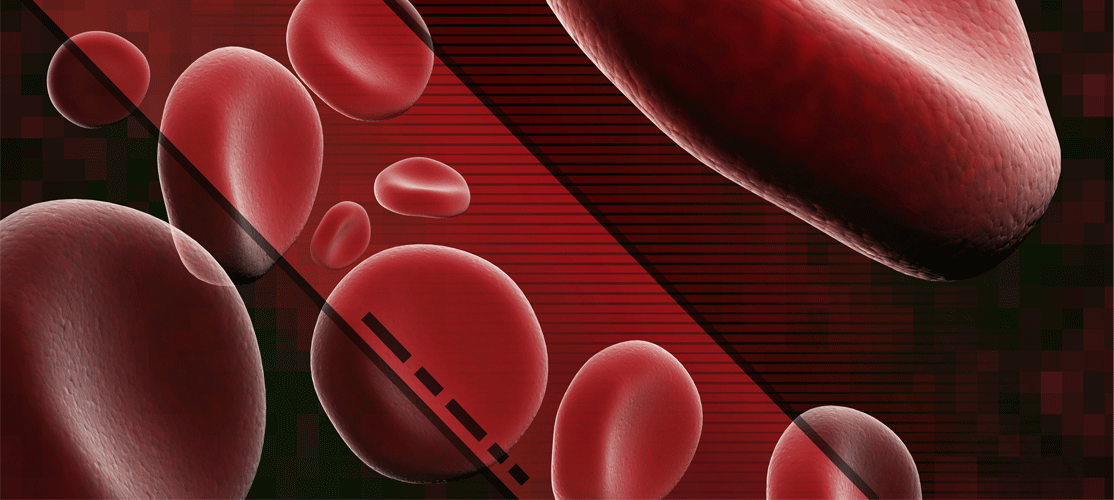
Platelets and erythrocytes, red blood cells without nucleus and mitochondria, make up more than 80% of all cells in the healthy human body estimated from 17 to 36 trillion depending on age and sex1. These erythrocytes within our blood help transport oxygen via hemoglobin from the lungs to tissues and organs. Typically, their life cycle spans over three months, but sometimes erythrocytes break down prematurely, a process called hemolysis, in which hemoglobin leaks into the blood stream resulting in the loss of affected red blood cells. Clinically, this manifests as anemia.
One of the consequences of this condition, known in the literature as acquired hemolytic, is paroxysmal nocturnal hemoglobinuria (PNH), a rare and life-threatening condition caused by a somatic mutation in hematopoietic stem cells. Those mutations do not get inherited from parents but manifest randomly over the span of the patient's lifetime. Statistically, very few people would ever be suspected of suffering from it until they develop symptoms.
Similarly, few people ever hear of flow cytometry. It employs lasers to rapidly collect a variety of information from suspension cells depending on their degree of fluorescence labeling after each cell is lined up, counted, and sorted. Flow cytometry is mostly utilized as research tool or pharmacodynamic endpoint detection technology in drug development.
Still, for diagnosing a rare disease like PNH this technology is accepted as benchmark because it reliably confirms the expected pattern of deficient cell surface structures. The flow cytometry-based laboratory test quantifies the proportion of cells in bone marrow and peripheral blood lacking glycosyl phosphatidylinositol-anchored proteins (GPI-APs). These lipid anchors hold proteins on the cell surface that are relevant for different physiological functions. As a result of the missing GPI anchor PNH patients have red blood cells without CD55 and CD59 on their membranes, both regulating the complement system.
Over time PNH leads mainly to the constant destruction of red blood cells and the abundance of abnormally formed blood cells. However, other symptoms may occur, such as potential blood clotting, easy bleeding, fatigue, and abdominal pain. Often only blood transfusions or a bone marrow transplant can bring relief for PNH patients. 35% may die within five years following the diagnosis2, though last year a new daily monotherapy was added to the arsenal that works by binding to a protein, known as Factor B, that helps the blood to clot.
There are maladies that remain with us, that still strike fear in us even if humans devised a cure. And there are maladies with seldomly spoken names whose fascination is a force for scientific discoveries. In trying to uncover its pathophysiology researchers have revisited PNH with different questions and hypothesis over a one hundred fifty-year period.
These efforts did not only elucidate the underlying disease mechanism, but among other insights also led to understanding the alternative complement pathway, which acts as a natural defense against infections. Charles J. Parker, an anemia expert with the University of Utah, who reviewed this research history deemed it “an inspirational reminder of the elegant complexity of nature, the rewards of curiosity and the power and beauty of science.”3
What is exemplary is the consequent execution of the scientific method free of conformism that yielded productive results serendipitously.
References:
1. Hatton IA, Galbraith ED, Merleau NSC, Miettinen TP, Smith BM, Shander JA. The human cell count and size distribution. Proc Natl Acad Sci U S A. 2023 Sep 26;120(39):e2303077120. doi: 10.1073/pnas.2303077120.
2. Chan RC, Leung RH, Posadas A, Lorey TS, Shaw AJ. High sensitivity 8-color flow cytometry assay for paroxysmal nocturnal hemoglobinuria granulocyte and monocyte detections. Biomed Rep. 2018 Mar;8(3):224-234. doi: 10.3892/br.2018.1047.
3. Parker CJ. Paroxysmal nocturnal hemoglobinuria: an historical overview. Hematology Am Soc Hematol Educ Program. 2008:93-103. doi: 10.1182/asheducation-2008.1.93