

Microbial Solutions
|
Jon Kallay
USP <71> Sterility Test: Advance Your Sterility Testing Method
Understanding the history behind the traditional 14-day USP <71> sterility test can help you develop a robust rapid method validation.
From 2008 to 2014, I worked in the micro lab for a large, sterile injectable manufacturer. This site was constantly under the watchful eye of the FDA. As part of the FDA’s observations, we needed to repeat the Method Suitability test per USP <71> “Sterility Tests” for most of the hundreds of products we made. I got to help!
The concept of this test is simple. You spike a small number of microbes into your product, filter the product, then place the filter into media. You could also directly inoculate the product into media. That media is incubated “for not more than 5 days.” After incubation, you confirm detection of the microbes through visual turbidity, and repeat the test for a panel of Gram-negative organisms, Gram-positive organisms, molds, and yeasts. If those organisms are present in your product during routine testing of a batch, you have evidence your test will detect them.
My lab followed the procedure of a 5-day incubation for this method suitability test. So why did our routine method require a 14-day incubation? Sure, USP <71> states incubation must be 14 days in the section “Test for Product to be Examined.” But what’s the scientific rationale for 14 days when method suitability supports recovery at 5 days?
Harmonizing sterility testing at 14 days
The agreement for an internationally recognized 14-day USP <71> sterility test has a long history. Prior to 2000, USP allowed for a 7-day incubation for membrane filtration tests. The rationale for the shorter time was membrane filtration neutralized growth-preventing properties of the product. Some researchers pushed for incubation times as long as 30 days to detect organisms that resist laboratory culturing. Ultimately, worldwide pharmacopeias used the available data to settle on 14 days.
The available data supported the strength of the 14-day sterility method to recover a variety of organisms:
- Pathogenic organisms of immediate concern to our health (E. coli , S. aureus)
- Stressed environmental isolates likely to be introduced during manufacturing (molds like Penicillium and spore formers like Bacillus)
- Culturable, yet slow growing organisms that need the full 14 days to visually detect (most notably, C. acnes)
- Organisms with minimal presence in the sample (1 CFU as opposed to <100 CFU outlined in <71> for method suitability)
As I understand USP <71>, the whole of data that exists for sterility testing using this traditional method supports the ability for the method to recover these organisms. Method Suitability testing simply calls out general issues a specific product poses to recovering viable microbes.
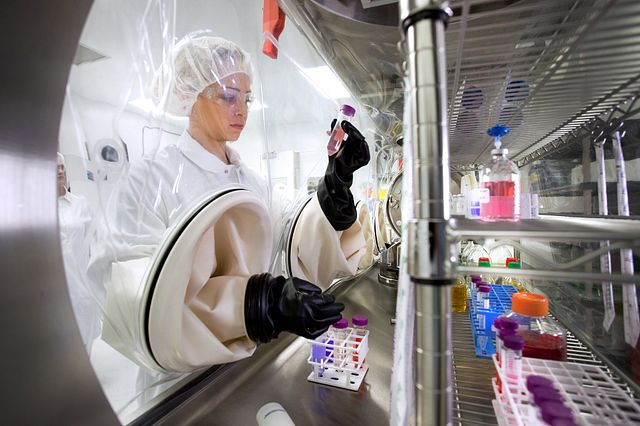
Regulatory Changes: USP 73 & 1071 Updates at a Glance
The latest chapters of USP <73> and <1071> introduce key updates impacting sterility testing and rapid microbiological methods (RMMs). Understanding these changes is crucial for compliance and optimizing your microbial testing strategy. Our expert guide breaks down what’s new and how Celsis® can help you stay compliant and efficient.
Explore the Guide
Validating Faster Results with a Rapid Microbial Method
The good news is that you don’t need to be wedded to the 14-day sterility test. There are actually Rapid Microbial Methods like Celsis that offer a great advantage in releasing product to patients quickly. You can cut your incubation period in half, or more! Is a USP <71> method suitability test sufficient to validate the technology? Unfortunately, no. But there are road maps to get your system up and running.
Rapid methods are held to a higher standard to prove acceptable for your laboratory. Those standards are outlined in documents like USP <1223>, Eur. Ph. 5.1.6, and PDA Technical Report 33. These documents outline criteria a rapid method must meet to be acceptable for use. Major examples include:
- Specificity – The ability for your system to detect a wide variety of organisms. The expectation is that you include more than the typical six organisms used for a USP <71> method suitability test. You want to use organisms that are known slow growers in the industry, stressed organisms, and organisms you have recovered at your facility.
- Limit of Detection – Can your system recover 1 CFU if it was present on test day? It needs to in order to be a sterility test. Again, this pushes the limit compared to the <100 CFU spike of a method suitability test.
- Equivalency – At the end of the day, you want to know your test can detect organisms at the same rate, or better, than the traditional method. This needs to be done with a wide variety of organisms at low counts and using statistical methods to show that this is truly the case (and not just luck).
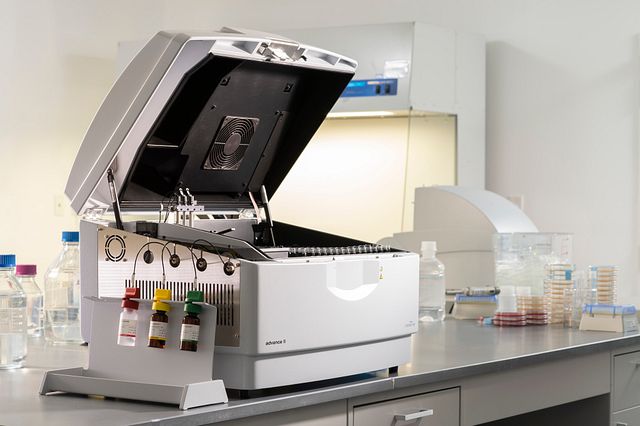
Webinar: Accelerate Sterility Testing with USP <73>
In this webinar, Labor LS and Charles River industry experts discuss how ATP-bioluminescence is shaping the future of short-life products. Explore real-world insights and validation strategies.
Watch the Replay
Microbial Method Validation & Implementation Support
This sounds like a lot of work. But it doesn’t have to be. Vendors like Charles River that are confident their technology can support you with contracted validation testing to get you up and running smoothly. Remember, successful implementation doesn’t just mean selecting and purchasing the instrument; it’s about actually using it confidently for routine use every day, backed up with sound validation data.

The Micro Keeps You in The Know
You don't need an agar plate to grow your microbial knowledge. Get industry updates, articles and other resources delivered straight to your inbox each month.
Subscribe