
Microbial Solutions
|
Sahil Parikh
What Happens When You Put 90 Microbiologists in a Room for Three Days
The 2026 QC Micro Summit proved that bigger is not always better
This March, we held the 2026 QC Micro Summit at the Cape Rey Hilton in Carlsbad, California. Ninety people showed up. Seventy-two client attendees and eighteen external speakers, representing pharma, biopharma, CDMOs, gene therapy companies, contract labs, and specialty manufacturers. Three days of sessions, demos, roundtables, and the kind of honest conversation that only happens when the room is the right size.
It was a record-setting year. And it reinforced something we've believed since the beginning: smaller rooms produce better conversations.
Kicking Things Off: The USP Five-Year Horizon
Tuesday morning, the Summit officially opened with a keynote from Edward Tidswell, Ph.D., Executive Director of Quality Assurance at Merck and Chair of the USP Microbiology Expert Committee. If there's anyone in this industry whose perspective sits at the intersection of regulatory policy and what actually happens in a working QC lab, it's Ed. His talk, The Five-Year Horizon for the USPMicrobiology Expert Committee, laid out where the committee is headed: emerging standards, regulatory direction, the modernization of microbiological methods, and the areas expected to shape microbiology testing over the next five years.
What the Faculty Actually Talked About
The 2026 agenda pulled from the themes currently shaping QC microbiology: contamination control strategy, recombinant endotoxin testing, rapid microbial methods, microbial identification, investigation quality, and the practical side of implementing change inside large organizations. Here's some of what got covered.
Contamination control strategy ran as a through-line all week. Liz Brockson, Aseptic Processing and Sterility Assurance Lead at Takeda, walked through how a global pharmaceutical organization applies Quality Risk Management principles to interpret EU GMP Annex 1 and build a unified Contamination Control Strategy (CCS) across sites. Her session was a useful case study in translating global expectations into something local sites can reasonably execute. Rebecca Michel, Director of Validation & Sterility Assurance at Tolmar, picked up the thread with a real-world view of developing and defending a CCS from initial planning all the way through a regulatory inspection. That kind of end-to-end implementation story is hard to find at larger conferences where most CCS sessions stop at the theory. And Patricia Igneczi, Senior Technical Services Specialist at Contec, tackled the part of contamination control that doesn't get enough airtime: the culture side. Her talk focused on how to move organizations beyond procedural GMP training and into real contamination control awareness through behavior-based training and role-specific engagement.
Endotoxin testing got a full week's worth of attention across multiple sessions. Sean Toler, Senior Technical Consultant in Design Quality Pharma at Baxter, presented how Baxter investigated high rates of invalid endotoxin test results across its global network. Ricky Patel, Senior Scientist at Bristol Myers Squibb, gave a microbiology-driven approach to defining alert and in-process limits for bacterial endotoxin testing, and Ben Claywell, Principal Scientist at Eli Lilly, walked through the evolution of recombinant BET reagents with a data-rich look at rCR, rFC, and traditional LAL side by side.
From there the topics ranged from the tangible to the more esoteric. Allison Whaley, Quality Associate at Elanco Animal Health, presented on the transition from traditional microbial identification methods like Vitek II to MALDI-TOF. Jamie Kaho'ohanohano, Senior Microbiology Consultant at Microrite, delivered one of the week's more pointed talks on environmental monitoring: Stop Guessing, Start Investigating: Common Mistakes in Root Cause Analysis for EM Investigations, walking through common EM failures.. Nina Moreno, Global Segment Director at Nelson Laboratories, and Scott Dimond, Principal Scientist at Nelson, co-presented on implementing alternative microbiological methods across different applications from the perspective of a contract lab that sees hundreds of clients at once.
On disinfectant validation, Alexis Stachowski, Associate Director of QA Microbiology at Regeneron Pharmaceuticals, and Jim Polarine, Senior Technical Service Manager at STERIS, co-presented on real-world validation of antimicrobial chemical agents in light of the updated TR 70 guidance. A practical, field-tested session that paired a working pharma QC leader with a technical expert on the disinfectant side — the kind of cross-industry pairing the Summit was designed to make easier.
Further talks covered environmental monitoring program design, regulatory response and remediation for sterile compounding environments, and even a session focusing on leadership strategies for expanding your influence beyond the lab. That last session from Laurie Boyd, Manager of QC Technical Services Microbiology and Chemistry at Alkermes and a member of the USP Microbiology Expert Committee, showcased her ability to speak both the lab language and the compendial language – a rare combination.
From Charles River, Doug Botkin and Sherri Hopple, both Scientific Portfolio Specialists, presented and moderated throughout the week, and Brice Chasey, Associate Director of Product Management for Celsis, brought the platform and product perspective on rapid microbial methods.
Beyond the Bench: A Conversation with Dr. Jack Levin and Dr. James Cooper
One of the highlights of the week was the return of Beyond the Bench, our informal fireside chat format. We introduced it to create space for the kind of candid, off-the-cuff conversation that doesn't happen in a standard presentation slot.
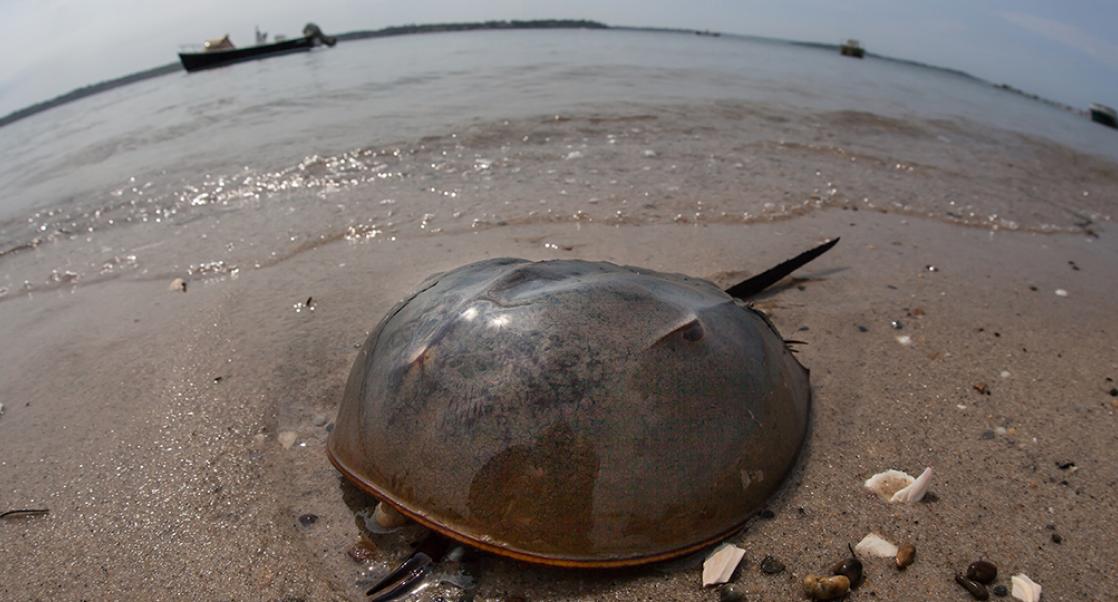
This year's session featured Dr. Jack Levin, Professor of Laboratory Medicine at UCSF, and Dr. James Cooper, Founder of Endosafe. Between them, these two are responsible for much of the foundational work on the Limulus Amebocyte Lysate test. LAL has protected patients for decades, and it's now at the center of a generational transition toward recombinant alternatives. The conversation was part science, part history, and part reflection on what it means to have spent a career building something that still matters fifty years later. It was one of those sessions that reminds you why we do this in the first place. Not for the slides. For the stories behind them.
Roundtables, Case Studies, and Hands-On Demos
The Summit has always been built for participation. This year's roundtable sessions included a Contamination Control challenge case study, which is basically a worked-scenario format where attendees hash through a realistic problem together and pressure-test each other's approaches.
These sessions consistently generate some of the best conversation of the week, and the reason is simple: no podium, no slides, just microbiologists talking to microbiologists about the problems they're actually dealing with. Daily panel discussions, moderated by Jon Kallay, Doug Botkin, Sherri Hopple, and Miriam Guest, gave attendees a structured way to push back on the day's content and surface the second-layer questions that always come up after a presentation ends.
Demo sessions gave attendees direct access to three Charles River platforms – the Endosafe Nexus 200 automated endotoxin testing system, the Celcis Advance II and Adapt rapid microbial detection system, and the Accugenix Tracking and Trending Portal for microbial identification data management. Attendees were able to use and ask questions about the products without getting a high-pressure sales pitch.
The Networking
This year's evening programming at the Cape Rey gave people the time and space on equal fotting that larger conferences just can't offer. By the second evening, it wasn't about business cards anymore. People were trading notes on shared problems, offering to send each other SOPs, and making plans to stay in touch after the week was over.
Mary Schultz, Principal Microbiologist at Eli Lilly, put it well in her post-event feedback:
"Over the course of three days, every person I met was eager to connect, ask thoughtful questions, and offer insights. The smaller attendee group created a unique opportunity to build genuine connections in a way that simply isn't possible at larger conferences. For microbiologists brand new to the industry as well as the seasoned professionals who have seen it all, I highly recommend attending this summit."
Seven years since we changed the format of this summit, we have succeeded in building the kind of meeting that QC microbiologists deserve. A place where you can really know the people sitting next to you, where you can compare notes with your real peers. If you're a QC microbiologist, whether you've been in the field for twenty years or twenty months, this event was built for you. We'll see you in 2027.
For more on the QC Micro Summit, visit www.QCMicro.com.
Sahil Parikh is the Associate Director of Strategic Marketing and Partnerships at Charles River Microbial Solutions. He has over 16 years’ experience in the pharmaceutical quality control industry, spending half of that time as a quality control microbiologist using, developing, and validating multiple rapid microbiological technologies.