
Toxicology Testing Services for Cosmetics, Personal Care, and Home Care Products
There are a number of cosmetic toxicology and safety tests, each of which is designed to assess a specific potential hazard. Some of the most common tests include skin irritation tests, skin sensitization tests, eye irritation tests, phototoxicity tests, and acute toxicity tests. We can test individual ingredients, mixtures, and/or final products using an in vitro method that meets both testing and compliance requirements:
- Skin irritation, corrosion, and sensitization are key in safety assessment testing for registration and labeling of agrochemicals and drugs which are topically applied.
- New in silico, in chemico, and in vitro assessment methods are available including 3D skin models, which can be effective solutions in replacing, reducing, and refining animal models where possible.
- Ocular irritation tests are essential for assessing the safety of products and chemicals that may come into contact with the eyes. With our in vitro alternatives to traditional animal models you can effectively assess your chemical’s potential for ocular irritation and serious eye damage while meeting regulations.
- Phototoxicity testing has been a core focus of our work since 1989, supported by the first GLP‑compliant, AAALAC‑accredited contract photobiology facility in the industry. We serve the chemical and agrochemical industries with in vivo and in vitro study designs that meet standard and specialized requirements for evaluation of any test material.
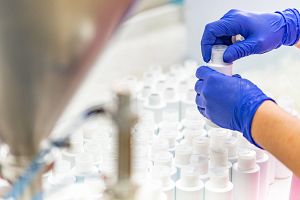
Cosmetic In Vitro Testing Strategy
Cosmetics must undergo a human safety assessment which is described in the Product Information File. This is focused on an in vitro testing strategy in accordance with the Cosmetics Products Regulation (EC) No 1223/2009.
Download the Technical Sheet
Cosmetic Safety Assessment
The Scientific Committee on Consumer Safety (SCCS) provides guidance on cosmetic toxicology testing that may need to be performed (SCCS/1564/15) for all substances intended to be incorporated in a cosmetic product. Our scientists have been involved in the shaping of many of these tests (e.g., advising on the skin penetration guidance [SCCS/1358/10]) and supporting the validation of new assays such as HCE ocular irritation.
In Europe, cosmetic ingredients, like colorants, preservatives, and UV filters, require a safety assessment to be submitted to the SCCS for evaluation. For cosmetic products, according to the Cosmetics Product Regulation (EC) No. 1223/2009, a full cosmetic safety assessment needs to be performed and included in a Product Information File kept at the company. This file also includes a description of the product, the product safety report, information about the manufacturing methods, and proof of effects claimed.
Agrochemical Toxicology and Safety Testing
As the global population grows, demand increases for safe and nutritious foods. Agrochemical products help by increasing yield and quality to reduce food shortfalls. Agrochemical testing services are required for pesticides which can also be known as crop protection products or plant protection products. For approval and authorization, safety for both humans and the environment must be demonstrated. With over 40 years of experience with simple to complex study packages and regulatory support, we are here to help.
Frequently Asked Questions About Cosmetic Toxicology Testing
-
What is cosmetic toxicology?
Cosmetic toxicology is the study of the potential harmful effects of cosmetics on human health. It encompasses a wide range of tests, including skin irritation, skin sensitization, eye irritation, phototoxicity, and acute toxicity. The goal of cosmetic toxicology is to ensure that cosmetics are safe for consumers to use.
-
What are the regulatory requirements for cosmetic toxicology testing?
The regulatory requirements for cosmetic toxicology testing vary from country to country. However, in general, cosmetics must be tested for safety before they can be marketed. The specific tests that are required will depend on the ingredients in the cosmetic and the intended use of the cosmetic.
-
What are the benefits of using in vitro testing for cosmetic toxicology?
In vitro testing is a type of testing that uses cells, tissues, or organs in a laboratory setting to assess the safety of a cosmetic. In vitro testing has a number of benefits over traditional animal testing, including that it is more humane, more efficient, and more cost-effective.
