
Featured News
Breakthrough LINE-1 Reverse Transcriptase Structure Published in Nature
High-resolution structure offers insight into developing therapies for immune diseases
Charles River protein scientists and crystallographers, as part of a global coordinated academic and industry effort led by ROME Therapeutics and Dr. Marty Taylor at Massachusetts General Hospital, have produced the first-ever high-resolution structure of LINE-1 reverse transcriptase (RT) using X-ray crystallography.
The crystal structure was paired with the work of renowned academic partners who performed cryo-electron microscopy and mechanism-of-action studies to produce a seminal publication on LINE-1 biology and its role in disease. Of particular interest was the observation that LINE-1 RT can create aberrant RNA-DNA hybrids in the cytoplasm – the first conclusive evidence of LINE-1’s ability to directly activate the innate immune system.
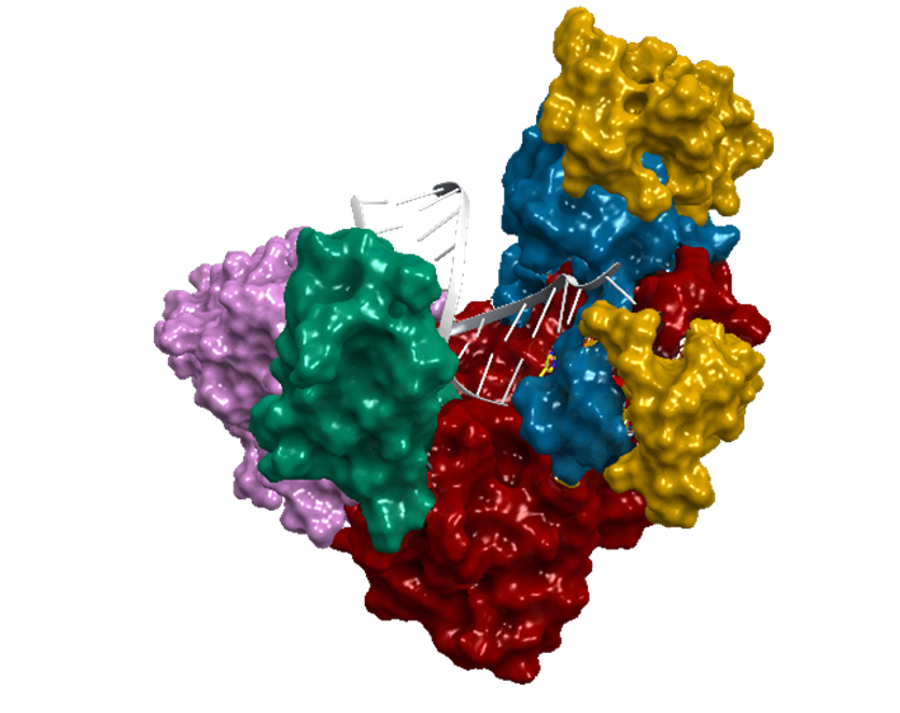
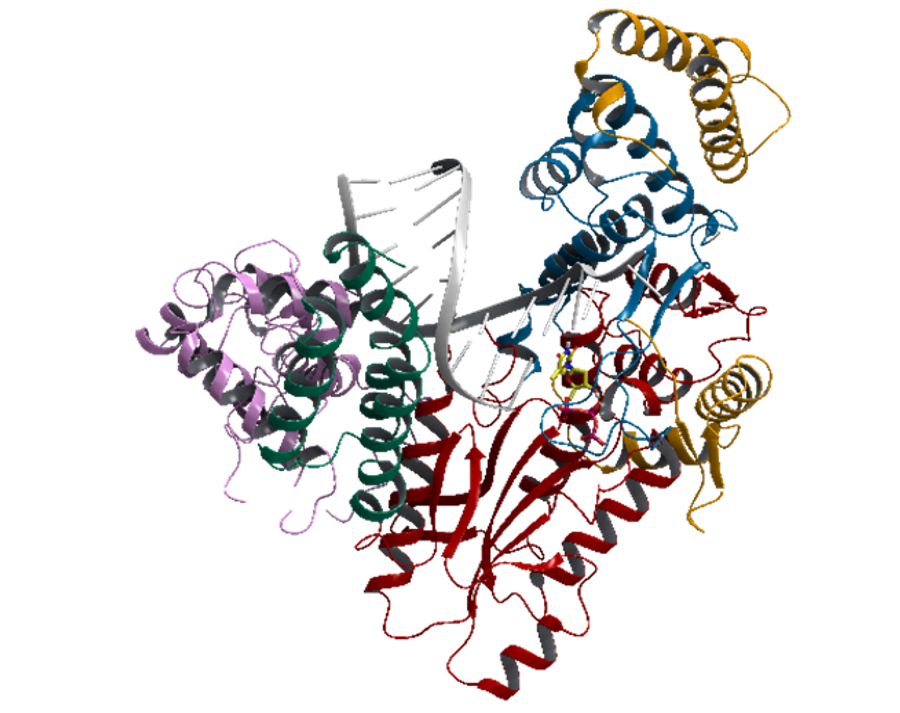
Crystal structure of LINE-1 bound to target duplex DNA (solid surface and cartoon depicted). Colors represent key domains (gold = tower, blue = fingers, red = palm, green = thumb, magenta = wrist).
LINE-1 activity has been implicated in driving autoimmune disease, cancer, and neurodegeneration. This work now paves the way for structure-based drug discovery targeting LINE-1 to generate new therapies to treat these diseases. And as we continue to expand our understanding of the mechanism of LINE-1 action, we can begin to unravel how it contributes to disease more clearly than ever before.
Structures, functions, and adaptations of the human LINE-1 ORF2 protein
Read about the first-ever high-resolution structure of LINE-1 reverse transcriptase (RT), produced using X-ray crystallography, as published in Nature.
Access the Paper
Cover image taken from MoA animation by, and used with the kind permission of, Visual Science, 2023