
Featured News
Advantages of an In Vivo Vivarium for Preclinical Studies
Discover a cost-effective alternative to running your own preclinical vivarium for in vivo research.
As a regulated facility designed for live animal research, an in vivo vivarium facilitates the discovery of new therapeutics and quickly scales early-stage drug development. In vivo research space is ideal for early-stage biotech companies and small research teams that need a turnkey solution. In these preclinical vivarium spaces, scientists run studies to evaluate how a drug, therapy, or biologic performs in a living organism, typically rodent models.
These facilities provide the infrastructure for regulated, ethical, and reproducible animal research: from animal housing and procedure rooms to biosafety containment and environmental monitoring.
In vivo vivarium lab space is where research leaves the petri dish and enters a complex, real-world biological system.
GUIDEBOOK
Plan Better, Launch Faster, and Resource Smarter
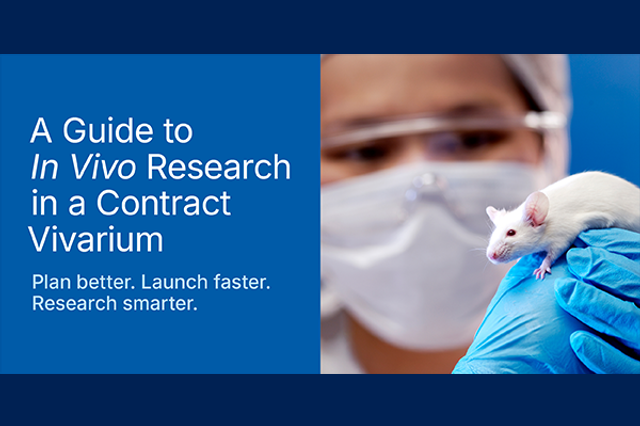
This comprehensive guide details how to plan for, transition into, and conduct reproducible, cost-effective studies within a contract vivarium.
Why Preclinical Vivaria Matter: Bridging the Gap Between Discovery and Clinical Trials
In the world of drug development, breakthroughs don't happen overnight. They evolve step-by-step, study-by-study, until one day a molecule shows enough promise to move toward helping real patients. One of the most critical, but often overlooked, parts of that journey happens within the walls of a preclinical vivarium. These facilities are proving grounds where drug efficacy, toxicity, and models of disease progression are evaluated under rigorously controlled conditions. They play a central role in answering critical questions, including:
• Does the drug reach its intended target?
• Is the target druggable based on structure, topology, and distribution?
• What is your desired mechanism of action when you inhibit or activate your target?
• Does the target have biochemical activity with accessible pockets?
• What are the potential side effects or safety risks?
In vivo studies offer insights that simply aren't possible in vitro. They help researchers understand how a drug behaves in a biological system by monitoring efficacy and safety in a real-time environment. A well-run in vivo vivarium helps generate critical data ethically, efficiently, and fully comply with regulatory codes.
Why Access to In Vivo Research Space is Often a Barrier
Building and maintaining a compliant vivarium isn't feasible for many small to mid-sized biotechs or academic spinouts. High costs and operational requirements can slow progress and divert attention and resources from core research goals. That’s where Charles River Accelerator and Development Lab (CRADL®) comes in.
CRADL: Purpose-Built In Vivo Vivarium Space, Ready When You Are
At Charles River, we are committed to providing state-of-the-art facilities that support researchers at every stage, from early-stage startups to established pharmaceutical and biotech companies. Our CRADL turnkey vivarium solutions are designed to align with your research goals and budget. We offer high-quality, flexible spaces and services so you can hit the ground running and accelerate your discoveries.
Located in key biotech hubs and emerging research locations, CRADL provides:
- Fully equipped, AAALAC-accredited programs that meet the highest standards in animal care, biosecurity, and compliance
- Flexible contracts (private or shared suites)
- Veterinary and technical support on-site
- Environmental monitoring and biosafety compliance
- Cage changes and daily operations
WEBINAR
In Vivo Study Paths Explained: Pros and Cons from CROs to Private Labs
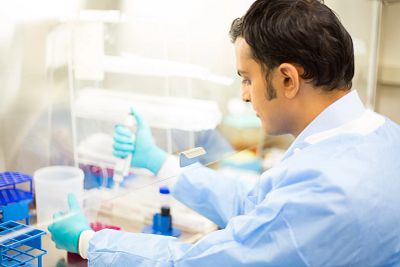
View this webinar to gain practical insights to sharpen your preclinical strategy and better use your in vivo resources.
A Smarter Approach to Preclinical Drug Development
With CRADL, early-stage startups can access a fully integrated in vivo research ecosystem with end-to-end support, not just a vivarium. Our infrastructure, equipment, and on-site scientific expertise help you generate the pharmacology data you need to validate drug efficacy and clinical viability, which is essential for your Investigational New Drug (IND) application.
Every aspect of a CRADL vivarium is built to support that mission, whether your teams are conducting early proof-of-concept work or scaling up for IND-enabling studies. This helps you to get one step closer to human clinical trials.
CRADL gives teams the flexibility to grow and pivot without being locked into lengthy and expensive builds and heavy capital costs. Flexibility also means starting studies sooner, adjusting protocols quickly, and staying focused on the science instead of the logistics, giving researchers a competitive advantage.
This level of flexibility is not possible if you're building your own in vivo lab space, because the pace of biotech innovation doesn't always align with construction and build-out timelines.
Choosing the Right In Vivo Vivarium Partner Matters
In preclinical research, time, data integrity, and compliance are everything. The in vivo vivarium you choose can make or break your study timeline. Whether you're an early-stage biotech advancing your first candidate or a pharma company scaling up preclinical programs, your vivarium partner is an extension of your research team.
Not all vivariums are created equally. Our vivarium readiness checklist will help you choose wisely.