
Featured News
Presentation Recap: A Look into Rapid Microbial Contamination Detection in Samples with Cells
Johannes Oberdörfer, an emerging scientist in the quality control microbiology industry, presented his experience with rapid microbiological testing of cell-containing products at the 2021 PharmaLab Congress. This study involved beta testing the Celsis Adapt™ sample concentrator system and included the benefits and challenges encountered.
Many drug manufacturers are relying on compendial methods because it is assumed that the presence of mammalian cells within a product would hinder the efficiency to detect bacterial and fungal cells. Taking upwards of 14 days to incubate before testing, the traditional growth-based method is not the most suitable test for contamination. What many QC microbiologists may not realize is that there are faster methods to obtain in-process testing results, and it’s easier than they may think. Johannes’ work evaluated this rapid method as an alternative sterility test, which would allow for faster response in the event of contamination and save time and resources in the early detection of potential contamination.
The presentation outlined the current challenges with testing cell-containing products, where cells induce turbidity upon initial preparation. As the compendial methodology requires microbiologists to manually check for turbidity to indicate contamination, this presents a fundamental challenge to the visual turbidity check. As mentioned previously, some alternative rapid microbial methods (ARMMs) are not suitable with these types of products, as tests may yield a positive result if the therapeutic cells (containing DNA, RNA, or ATP) are not first removed. These, as Johannes stated, become problematic when attempting to test upstream samples, intermediates, cell banks, and advanced therapeutic medicinal products (ATMPs).
Due to these challenges, it is imperative that laboratories obtain technologies that not only lyse these cells and remove cellular debris, but they must also preserve microbial cells for proof of contamination. As laboratories practice different types of sampling methods, it’s vital that these technologies are robust, repeatable, and compatible with different techniques as well.
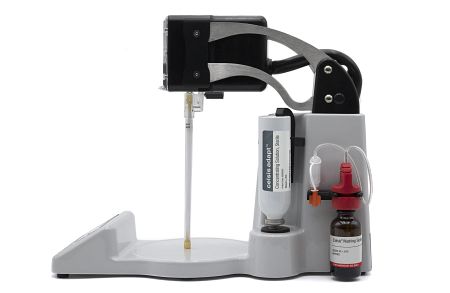
The beta testing program for this system comprised of feasibility, method suitability, and specificity studies both in presence and absence of product containing mammalian cells. In this study, a representative monoclonal antibody samples that contained Chinese hamster ovary (CHO) cells were used to challenge the Celsis Adapt™ and its suitability with samples containing cells. Challenge organisms, representing pharmacopeial and in-house isolates in fluid thioglycolate medium (FTM) and trypticase soy broth (TSB), were used on three lots of sample product.
The beta testing concluded that the system effectively concentrates samples to eliminate background adenosine trisphosphate (ATP) present in mammalian cell-containing products, leaving behind the contaminants to then be detected by the Celsis luminometer. This meant that the ATP-bioluminescence rapid microbial testing method not only has the potential to be used for in-process cell culture samples, but would also be suitable for cell banking, advanced therapeutic medicinal products, and other short shelf-life products.
As the development of modern manufacturing methods and new therapeutic technologies continue to progress, the use of sample concentrator-based rapid microbiological methods will improve the quality control laboratory’s ability to monitor the production process and ultimately release more batches safely. Experiences and contributions to the development of these methods, such as those shared by Johannes Oberdörfer, will continue to improve the ability of pharmaceutical manufacturers to improve efficiency, maintain control, and preserve patient safety.
Interested in learning more about the Celsis Adapt concentrator system?