
Accelerate Development, Reduce Risk, and Future-Proof Your Viral Safety Strategy
Next Generation Sequencing (NGS) is a revolutionary technology that enables the detection and sequencing of all types of nucleic acids. The sequence information can be used to detect and identify specific targets like viruses or genetic sequences without upfront information as it is needed for PCR approaches. This technology is pivotal in genetic characterization and identity testing of gene therapy-based medicinal products, and in detecting pathogens across all types of biologics. With its high throughput, scalability, and speed, NGS has transformed the landscape of genetic analysis and pathogen detection.
Charles River has enhanced its portfolio by incorporating Next Generation Sequencing services tailored for pharmaceutical, CDMOs and biotech companies. Our NGS services include viral contamination testing (Adventitious Virus Testing) and genetic characterization/identification of cell lines used for the production of biologics and cell and gene therapy products. We provide GMP-compliant solutions, ensuring high acceptance by regulatory bodies.
Unlike providers that offer sequencing alone, Charles River integrates NGS, in vitro testing, in vivo testing, microbial identification, and regulatory expertise into a unified viral safety strategy that supports programs from early development through commercialization across a wide range of modalities.
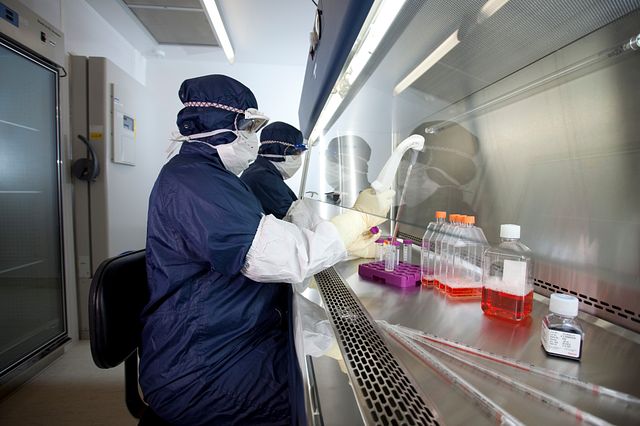
Next-level viral safety testing
Biologics are vulnerable to viral contamination, posing a risk to patient safety. This whitepaper discusses traditional detection methods and their limitations and demonstrates how validated NGS technology can enhance viral safety testing, ensuring reduced risk and expedited market access.
Read the whitepaper
Benefits of our NGS Services
As cell therapies, gene therapies, viral vectors, vaccines, and other advanced biologics become increasingly complex, traditional testing methods may not provide the breadth of information required to proactively manage risk.
- Accelerate development timelines with faster turnaround times than traditional animal-based viral safety methods, helping keep IND and clinical milestones on track.
- Detect known and unknown viruses, identify replicative viral contaminants with confidence through unbiased NGS analysis that provides broad viral detection.
- Improve sensitivity and coverage compared with conventional testing, enabling comprehensive adventitious agent detection and characterization.
- Strengthen regulatory readiness with data-rich viral safety characterization aligned with evolving expectations, including ICH Q5A(R2) considerations.
- Advance animal-free testing strategies by reducing reliance on in vivo methods while supporting 3Rs objectives and modern viral safety programs.
- Generate actionable insights from minimal sample volumes through robust bioinformatics and automated analysis pipelines.
- Streamline viral safety testing with a single, integrated approach that replaces multiple traditional assays while providing comprehensive characterization.
Comparison of Viral Safety Testing Approaches
| Capability | NGS | PCR | In Vitro Assays | In Vivo Assays |
|---|---|---|---|---|
| Detects known viruses | ✔ | ✔ | ✔ | ✔ |
| Detects unknown viruses | ✔✔ | Limited | Limited | Limited |
| Requires a predefined target | No | Yes | No | No |
| Broad contamination screening | ✔✔ | Limited | Moderate | Moderate |
| Genetic characterization | ✔✔ | Limited | No | No |
| Turnaround time | Faster | Fast | Moderate | Long |
| Animal-free testing | ✔ | ✔ | ✔ | No |
| Supports contamination investigations | ✔✔ | Limited | Limited | Limited |
| Generates genomic data for root-cause analysis | ✔✔ | No | No | No |
The optimal strategy often combines complementary testing approaches depending on product risk profile, regulatory expectations, and development stage.
Whether you are preparing an IND submission, evaluating manufacturing changes, or building a long-term viral safety strategy, NGS provides a scalable foundation for modern biologics testing
"Next generation sequencing (NGS) is the ultimate viral safety testing technology and is about replacing several standard testing tools. NGS should be applied for products without viral clearance capabilities and for cell therapy products specifically where the standards testing tools can fail to detect critical viral contaminants."
Horst Ruppach, Executive Director Scientific Portfolio Biologics
Enhanced NGS Platform: iDTECT® - Compliant, Faster, Animal-Free, and More Reliable Quality Control
iDTECT® is a NGS assay platform designed to support biopharma quality control. It enables comprehensive viral safety assessment through animal-free testing of raw materials, cell banks, and bulk harvests using iDTECT® Transcriptome and iDTECT® Virome solutions. In addition, iDTECT® provides robust genetic characterization capabilities, offering faster, simpler, and more confident analysis of cell banks, plasmids, and virus lots with iDTECT® Identity and iDTECT® Integration Site Analysis. Together, these applications help streamline quality control workflows while increasing confidence in product safety and integrity.
Our digital Quality Management System (QMS) and Document Management System (DMS) ensure excellence in laboratory procedures, reports, and certifications. Our digital systems cover all facets of our operations, providing an integrated approach to document management and quality standards. This ensures transparency, traceability, and compliance with regulatory requirements.
End-to-End NGS Services for Biologics Development
Our Next Generation Sequencing Services are designed to support critical decision points from early development through commercialization:
| Application | Role of NGS |
| Cell Banks | Viral detection and genomic characterization |
| Viral Vectors | Identity confirmation and sequence verification |
| Raw Materials | Adventitious agent screening |
| Bulk Harvests | Comprehensive contamination assessment |
| Cell Therapies | Genetic characterization and biosafety evaluation |
| Gene Therapies | Vector integrity and safety assessment |
| Manufacturing Investigations | Identification of unknown contaminants |
Our experts help determine the optimal combination of NGS, in vitro, and in vivo approaches to support regulatory objectives while minimizing development risk.
Viral Vectors
Our Next Generation Sequencing services provide comprehensive viral vector services, including viral safety testing and plasmid screening, to ensure the safety and quality of therapies. Viral vectors are used in various applications, such as in vivo gene delivery for genetic therapies and in vitro transduction for gene-modified cell therapies like CAR-T, as well as oncolytic applications. Manufacturing these viruses is complex and requires careful plasmid screening to verify the plasmids used in production.
Adventitious Virus Testing
Comprehensive viral detection across raw materials, cell banks, and production processes using NGS assays, enabling high-sensitivity identification of potential viral contaminants. By employing NGS, we can achieve a thorough analysis with enhanced sensitivity and specificity, significantly minimizing the risk of contamination. Watch the webinar: Next Generation Sequencing in Adventitious Agent Testing: Navigating Regulatory Acceptance
Cell Line Characterization
NGS-based approaches to cell line characterization offer several advantages, especially where traditional testing proves challenging. NGS can provide more detailed results much faster and is a viable alternative if there is a compatibility issue with the traditional approach (e.g., a lack of a neutralizing antibody or insufficient sample volume), particularly for cell sequencing to characterize genetic modifications or insertions into the cell line. Using an NGS testing strategy can provide a rapid way to screen and identify favorable candidates during the cell line selection process.
Cell and Gene Therapy
We provide GMP characterization and release tests for cell and gene therapies. Our NGS services address sample volume and compatibility issues with traditional testing. Our NGS offerings include quality control for cell therapy, iPSC and stem cell characterization, and CAR-T Release Testing, ensuring high safety and efficacy standards. Read the feature story: The future of Cell Therapies: Are you using the best tools for success?
Vaccines
An important step in vaccine testing is being sure each batch of vaccine meets all safety and efficacy standards. From established recombinant and inactivated vaccine technologies to emerging RNA and viral vector vaccine platforms, our GMP-level Next Generation Sequencing services include vaccine testing, characterization, release, and sequencing. These services are supported by industry-leading expert bioinformatic analysis. Read the Whitepaper: Unlocking Vaccine Potency: Bridging In Vivo, In Vitro, and Emerging Modalities
Monoclonal Antibodies (mAb) and Recombinant Proteins
mAb testing requires specialized QC testing and characterization within a regulated GMP environment. Our NGS services provide timely, sustainable results and eliminate animal testing from your product release requirements. Our expertise extends to mAb characterization, CHO cell line characterization, and mAb and recombinant testing.
Microbial Identification
Accugenix® Next Generation Sequencing service enhances viral safety programs by rapidly identifying bacterial and fungal contaminants in complex environments.
Regulatory Support for NGS Services
Replacing traditional assays with NGS often raises questions about regulatory acceptance. Regulatory agencies accept NGS as a viable alternative to in vivo virus testing because of its superior detection capabilities and its alignment with efforts to reduce animal testing. We address this challenge by providing exceptional regulatory expertise from R&D through to batch release. Our complete GMP-integrated services cover everything from precise sample preparation to actionable reports, all reviewed by expert virologists.
Our NGS services meet the highest regulatory standards in biotesting, ensuring accuracy, reliability, and compliance with GMP, FDA, EMA, and ICH Q5A and Q5B guidelines.
Choose us to elevate your assay capabilities and achieve regulatory peace of mind.
Frequently Asked Questions (FAQs) About Next Generation Sequencing Services
-
What is Next Generation Sequencing (NGS)?
There are many terms used to describe the technique in which millions of nucleotide sequences are deciphered simultaneously. Next Generation Sequencing is the same as massively parallel sequencing, high-throughput sequencing (HTS), and deep sequencing. These related terms describe a technology which has revolutionized genomic research. With Next Generation DNA Sequencing, an entire human genome can be sequenced within a single day. NGS allows for rapid sequencing of DNA and RNA much more quickly and cheaply than traditional methods like Sanger sequencing.
-
What is High-Throughput Sequencing?
While sequencing has traditionally been performed via a low throughput technique called Sanger sequencing, high-throughput sequencing (HTS) technologies are capable of sequencing multiple DNA molecules in parallel, enabling hundreds of millions of DNA molecules to be sequenced at the same time. High-throughput sequencing (HTS) is also known as Next Generation Sequencing (NGS).
-
Why Should Genome Sequencing Companies Use NGS?
The primary reason to use Next Generation Sequencing services vs. traditional methodologies is due to the decreased turnaround time that NGS offers. Furthermore, regulatory authorities are advancing support for NGS. It has the potential to replace existing in vitro/in vivo assays and molecular tests:
- It can be used in direct testing of cells, virus stocks, etc. and Bioassay readout
- Non-hypothesis driven
- A broad range of detection
- Differentiates live from inert viruses