
Affinity Selection Mass Spectrometry (ASMS) Screening to Detect Non-Covalent Binders
Affinity selection mass spectrometry (ASMS) screening is a technique used to discover small molecules that engage a specific target. While conventional ASMS approaches typically require sample processes that limit throughput, SAMDI ASMS benefits from a rapid workflow and compatibility with any buffer component to quickly generate high-quality data.
SAMDI ASMS screening is amenable to a broad spectrum of targets, including proteins, complexes, and oligonucleotides such as RNA, and is a leading assay to initiate drug discovery programs, including:
- Disrupting protein-protein interactions (PPI)
- Initiating targeted protein degradation (TPD)
- Chemically induced proximity (CIP)
- Molecular glues
- RNA binders
Compound Library Quick Guide
Obtain a breakdown of our collections, comprising over 1.4 million compounds, and learn about our processes for curation, QC, compound management, and screening set design.
Download Now
How Does SAMDI ASMS Screening Overcome the Challenges of Conventional Affinity Selection Mass Spectrometry?
Traditional ASMS workflows require multiple sample processes that limit throughput. While testing hundreds or thousands of compounds in a reaction speeds up the process, it creates opportunities for compound interference and higher false-positive rates. ASMS screening via the SAMDI platform eliminates the chromatography steps and overcomes the need to significantly compress the library. By screening in pools of eight compounds per reaction, SAMDI ASMS minimizes opportunities for compound misbehavior while enabling the screening of millions of compounds in days.
By overcoming the challenges associated with conventional affinity selection mass spectrometry, the SAMDI ASMS screening platform can generate rapid, reliable results with benefits including:
- Faster workflow by eliminating sample preparation steps
- Higher validation rates
- Lower reagent consumption
- Minimized compound misbehavior and false-positive results, while screening pools of eight to accelerate hit-identification research
- Parallel off-target screening to inform on compound selectivity
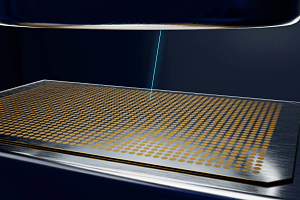
SAMDI ASMS: More Than Seeing What Sticks
A Q&A with Science Director Zack Gurard-Levin on how SAMDI technology is advancing and accelerating small molecule drug discovery.
Read now
Our hit identification team is experienced in assessing your project and making recommendations for the most effective and impactful approach to achieve your research goals. In addition to agile assay design, execution, and delivery, our scientists can also advise on the optimal next steps in your workstream as you progress lead candidates through optimization and IND-enabling studies.
Contact a member of our team today to discuss how we can support and accelerate your drug discovery project.
Frequently Asked Questions (FAQs) About SAMDI ASMS Screening
-
How does SAMDI ASMS differentiate itself from other ASMS screening approaches?
SAMDI ASMS screening enables a rapid workflow, screening compounds in pools of eight to minimize compound behavior while maintaining a high-throughput readout.
-
What target classes can I screen with SAMDI ASMS?
Any target can be screened by SAMDI ASMS, including proteins and oligonucleotides such as RNA.
-
How long does a SAMDI ASMS screen typically take?
SAMDI ASMS screening typically takes three to four weeks, but can vary depending on the number of compounds and targets screened.
-
Are screening libraries available to screen with SAMDI ASMS, and can I screen my own library?
Charles River offers over one million compounds available for screening. Contact us to learn more about our small molecule libraries or how to screen your own library.
-
How does SAMDI ASMS characterize compound selectivity?
SAMDI ASMS screening tests compounds in your optimized buffer in the presence and absence of your target in a similar manner to surface plasmon resonance (SPR) that utilizes the reference surface. In this manner, SAMDI ASMS can rule out non-specific binding compounds in the primary screen and progress only on the most encouraging compounds.
-
What data does SAMDI ASMS screening generate?
SAMDI ASMS will rapidly identify initial hits against virtually any target and can affinity rank binders based on the shape of EC50 curves. To determine KDs of compounds, Charles River offers SPR and a number of other biophysical approaches.
-
Can SAMDI ASMS screening detect other ligands binding to targets?
SAMDI ASMS screening can detect short peptides, oligonucleotides, and lipids, which can be informative in the presence of small molecules to perform competition studies to inform on binding site.