
BALB/c Mouse Details
The BALB/c mouse is among the most widely used inbred models used in biomedical research, and is particularly utilized in immunology and infectious disease research. Their ability to produce plasma cell tumors within soft tissue is important in the production of monoclonal antibodies (mAbs).
With BALB/c mice, Th2 cells are easily triggered by immunization, meaning this mouse strain is an exceptional responder to immunization. The BALB/c model can be used to identify genes that determine susceptibility to infectious and neoplastic diseases.
BALB/c mice is also known for being relatively resistant to diet-induced atherosclerosis, making them ideal for cardiovascular research. BALB/c 3T3 cell lines are highly disposed to transformation in tissue culture by the oncogenic DNA virus SV40 and murine sarcoma virus, making them a model of choice for carcinogenesis research.
Note: We also offer the BALB/c VAF/Elite® Mouse with a VAF/Elite health profile (bred in NA).
Origin
H.J. Bagg developed the “Bagg albino” in 1913 from stock from an Ohio pet dealer. Inbred in 1923 by McDowell. To Snell in 1932 at F26, then to Andervont in 1935. To NIH in 1951 from Andervont at F72. To Charles River in 1974 from NIH.
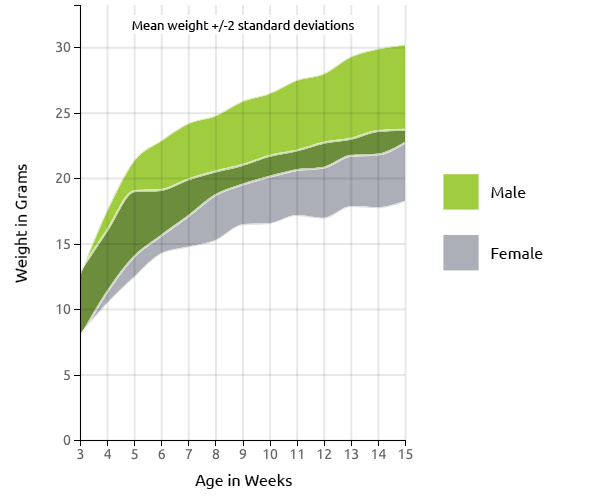
LOCATION: Hollister
UNIT: H44
Download the Report
LOCATION: Raleigh
UNIT: R07
Download the Report
➤ DOWNLOAD OUR CATALOG for instant access to Standard List Pricing
➤ TALK TO US to discuss organization or volume-based discounts
Already have an eCommerce portal account?* Login to order research models, obtain quotes, view organization-specific pricing, and see inventory. Processing time required to validate new eCommerce access requests.
*eCommerce is available in US, Canada, UK, France, Germany, Austria, Netherlands, Denmark, Finland, Norway, Sweden, Spain, Portugal, Belgium, Luxembourg, and Switzerland
BALB/c Mouse Details
The BALB/c mouse is among the most widely used inbred models used in biomedical research, and is particularly utilized in immunology and infectious disease research. Their ability to produce plasma cell tumors within soft tissue is important in the production of monoclonal antibodies (mAbs).
With BALB/c mice, Th2 cells are easily triggered by immunization, meaning this mouse strain is an exceptional responder to immunization. The BALB/c model can be used to identify genes that determine susceptibility to infectious and neoplastic diseases.
BALB/c mice is also known for being relatively resistant to diet-induced atherosclerosis, making them ideal for cardiovascular research. BALB/c 3T3 cell lines are highly disposed to transformation in tissue culture by the oncogenic DNA virus SV40 and murine sarcoma virus, making them a model of choice for carcinogenesis research.
Note: We also offer the BALB/c VAF/Elite® Mouse with a VAF/Elite health profile (bred in NA).
Origin
H.J. Bagg developed the “Bagg albino” in 1913 from stock from an Ohio pet dealer. Inbred in 1923 by McDowell. To Snell in 1932 at F26, then to Andervont in 1935. To NIH in 1951 from Andervont at F72. To Charles River in 1974 from NIH.
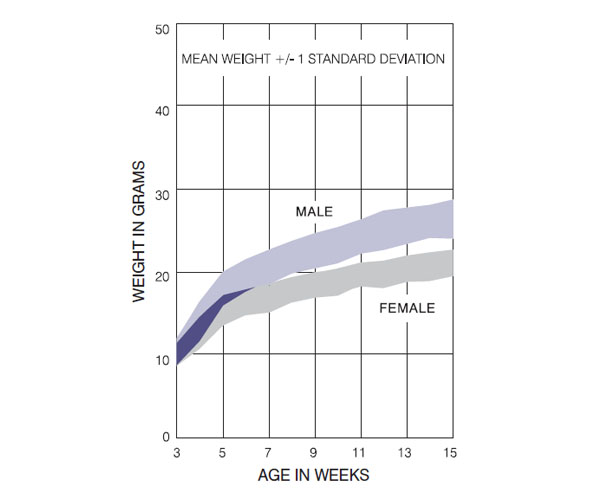
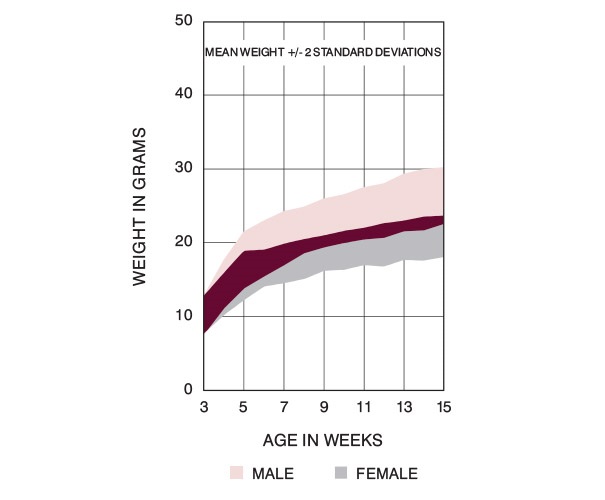
Growth chart data should be used as a guideline only.
The shaded areas on each chart are the mean weight plus or minus one standard deviation at a given age averaged across all production facilities. This represents approximately 67% of the population, with the remaining 33% falling outside of this weight range.
UNIT: 11
Download the Report
➤ DOWNLOAD OUR CATALOG for instant access to Standard List Pricing
➤ TALK TO US to discuss organization or volume-based discounts
Already have an eCommerce portal account?* Login to order research models, obtain quotes, view organization-specific pricing, and see inventory. Processing time required to validate new eCommerce access requests.
*eCommerce is available in US, Canada, UK, France, Germany, Austria, Netherlands, Denmark, Finland, Norway, Sweden, Spain, Portugal, Belgium, Luxembourg, and Switzerland
BALB/c Mouse Details
The BALB/c mouse is among the most widely used inbred models used in biomedical research, and is particularly utilized in immunology and infectious disease research. Their ability to produce plasma cell tumors within soft tissue is important in the production of monoclonal antibodies (mAbs).
With BALB/c mice, Th2 cells are easily triggered by immunization, meaning this mouse strain is an exceptional responder to immunization. The BALB/c model can be used to identify genes that determine susceptibility to infectious and neoplastic diseases.
BALB/c mice is also known for being relatively resistant to diet-induced atherosclerosis, making them ideal for cardiovascular research. BALB/c 3T3 cell lines are highly disposed to transformation in tissue culture by the oncogenic DNA virus SV40 and murine sarcoma virus, making them a model of choice for carcinogenesis research.
Note: We also offer the BALB/c VAF/Elite® Mouse with a VAF/Elite health profile (bred in NA).
Origin
H.J. Bagg developed the “Bagg albino” in 1913 from stock from an Ohio pet dealer. Inbred in 1923 by McDowell. To Snell in 1932 at F26, then to Andervont in 1935. To NIH in 1951 from Andervont at F72. To Charles River in 1974 from NIH.
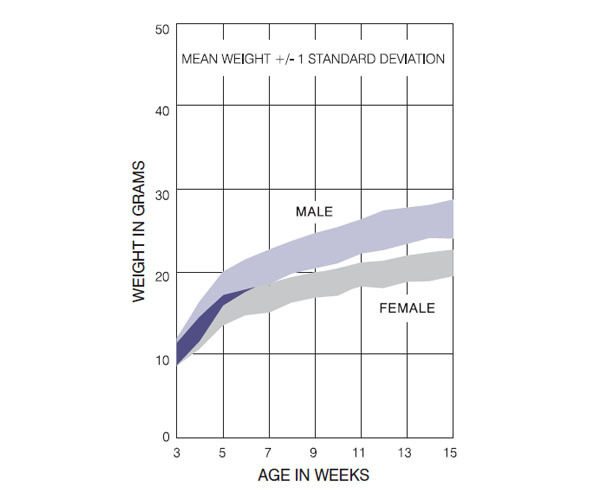
Growth chart data should be used as a guideline only.
The shaded areas on each chart are the mean weight plus or minus one standard deviation at a given age averaged across all production facilities. This represents approximately 67% of the population, with the remaining 33% falling outside of this weight range.
UNIT: A52
Download the Report
➤ DOWNLOAD OUR CATALOG for instant access to Standard List Pricing
➤ TALK TO US to discuss organization or volume-based discounts
Already have an eCommerce portal account?* Login to order research models, obtain quotes, view organization-specific pricing, and see inventory. Processing time required to validate new eCommerce access requests.
*eCommerce is available in US, Canada, UK, France, Germany, Austria, Netherlands, Denmark, Finland, Norway, Sweden, Spain, Portugal, Belgium, Luxembourg, and Switzerland
BALB/c Mouse Details
The BALB/c mouse is among the most widely used inbred models used in biomedical research, and is particularly utilized in immunology and infectious disease research. Their ability to produce plasma cell tumors within soft tissue is important in the production of monoclonal antibodies (mAbs).
With BALB/c mice, Th2 cells are easily triggered by immunization, meaning this mouse strain is an exceptional responder to immunization. The BALB/c model can be used to identify genes that determine susceptibility to infectious and neoplastic diseases.
BALB/c mice is also known for being relatively resistant to diet-induced atherosclerosis, making them ideal for cardiovascular research. BALB/c 3T3 cell lines are highly disposed to transformation in tissue culture by the oncogenic DNA virus SV40 and murine sarcoma virus, making them a model of choice for carcinogenesis research.
Note: We also offer the BALB/c VAF/Elite® Mouse with a VAF/Elite health profile (bred in NA).
Origin
H.J. Bagg developed the “Bagg albino” in 1913 from stock from an Ohio pet dealer. Inbred in 1923 by McDowell. To Snell in 1932 at F26, then to Andervont in 1935. To NIH in 1951 from Andervont at F72. To Charles River in 1974 from NIH.
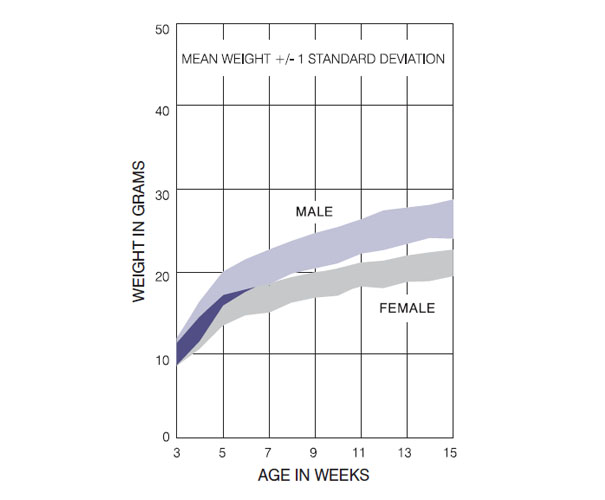
Growth chart data should be used as a guideline only.
The shaded areas on each chart are the mean weight plus or minus one standard deviation at a given age averaged across all production facilities. This represents approximately 67% of the population, with the remaining 33% falling outside of this weight range.
UNIT: 3
Download the Report
UNIT: 5
Download the Report
➤ DOWNLOAD OUR CATALOG for instant access to Standard List Pricing
➤ TALK TO US to discuss organization or volume-based discounts
Already have an eCommerce portal account?* Login to order research models, obtain quotes, view organization-specific pricing, and see inventory. Processing time required to validate new eCommerce access requests.
*eCommerce is available in US, Canada, UK, France, Germany, Austria, Netherlands, Denmark, Finland, Norway, Sweden, Spain, Portugal, Belgium, Luxembourg, and Switzerland
BALB/c Mouse Details
The BALB/c mouse is among the most widely used inbred models used in biomedical research, and is particularly utilized in immunology and infectious disease research. Their ability to produce plasma cell tumors within soft tissue is important in the production of monoclonal antibodies (mAbs).
With BALB/c mice, Th2 cells are easily triggered by immunization, meaning this mouse strain is an exceptional responder to immunization. The BALB/c model can be used to identify genes that determine susceptibility to infectious and neoplastic diseases.
BALB/c mice is also known for being relatively resistant to diet-induced atherosclerosis, making them ideal for cardiovascular research. BALB/c 3T3 cell lines are highly disposed to transformation in tissue culture by the oncogenic DNA virus SV40 and murine sarcoma virus, making them a model of choice for carcinogenesis research.
Note: We also offer the BALB/c VAF/Elite® Mouse with a VAF/Elite health profile (bred in NA).
Origin
H.J. Bagg developed the “Bagg albino” in 1913 from stock from an Ohio pet dealer. Inbred in 1923 by McDowell. To Snell in 1932 at F26, then to Andervont in 1935. To NIH in 1951 from Andervont at F72. To Charles River in 1974 from NIH.
➤ DOWNLOAD OUR CATALOG for instant access to Standard List Pricing
➤ TALK TO US to discuss organization or volume-based discounts
Already have an eCommerce portal account?* Login to order research models, obtain quotes, view organization-specific pricing, and see inventory. Processing time required to validate new eCommerce access requests.
*eCommerce is available in US, Canada, UK, France, Germany, Austria, Netherlands, Denmark, Finland, Norway, Sweden, Spain, Portugal, Belgium, Luxembourg, and Switzerland
BALB/c Mouse Details
The BALB/c mouse is among the most widely used inbred models used in biomedical research, and is particularly utilized in immunology and infectious disease research. Their ability to produce plasma cell tumors within soft tissue is important in the production of monoclonal antibodies (mAbs).
With BALB/c mice, Th2 cells are easily triggered by immunization, meaning this mouse strain is an exceptional responder to immunization. The BALB/c model can be used to identify genes that determine susceptibility to infectious and neoplastic diseases.
BALB/c mice is also known for being relatively resistant to diet-induced atherosclerosis, making them ideal for cardiovascular research. BALB/c 3T3 cell lines are highly disposed to transformation in tissue culture by the oncogenic DNA virus SV40 and murine sarcoma virus, making them a model of choice for carcinogenesis research.
Note: We also offer the BALB/c VAF/Elite® Mouse with a VAF/Elite health profile (bred in NA).
Origin
H.J. Bagg developed the “Bagg albino” in 1913 from stock from an Ohio pet dealer. Inbred in 1923 by McDowell. To Snell in 1932 at F26, then to Andervont in 1935. To NIH in 1951 from Andervont at F72. To Charles River in 1974 from NIH.

Please email us at [email protected] to request a health report for this model.
For additional information, including pricing details, please visit the BALB/c mouse page on the Vital River Laboratories website.
Note: We also offer the BALB/c-Elite Mouse with a VAF/Elite® health profile (bred in NA).

GUIDEBOOK
Rodent Model Genetic Quality Control
Learn the essentials of genetic QC programs: inbred/outbred colony quality control, transgenic rodent model creation, rederivation, and cryopreservation techniques. Download Now
Resources
- Inbred Mice
- Clinical Pathology Data for BALB/c Mouse Colonies in North America for January 2008 - December 2012
Frequently Asked Questions about BALB/c Mice Models
-
Where does the name "BALB/c" come from?
BALB refers to Bagg Albino. BALB/c mice are albino and have pink eyes and white hair. The "c" was added at F26 by Snell in 1932.
-
What is an inbred mouse?
Inbred mouse strains are produced by a minimum of 20 generations of brother-sister mating, traceable to a single founding pair. The result of this mating strategy is that inbred mice, including BALB/c mice, are genetically identical within each strain.
-
How do you ensure quality of genetic for inbred mice?
Our unique International Genetic Standardization (IGS) program is available to manage the health and genetic of your inbred mice. The IGS program ensures that animals bred at any production facility have the same genetic profile.
-
Where are BALB/c mice available?
BALB/c mice models are available globally through more than 20 breeding facilities.
-
What additional BALB/c mouse models are available?
We offer multiple BALB/c models, including:
- BALB/c Nude Mouse: Ideal for tumor biology and xenograft research
- BALB/c Heterozygous Mouse: Ideal as a control model for BALB/c nude mice
- BALB/c-Elite Mouse: Ideal for hybridoma development, mAb production, and infectious disease