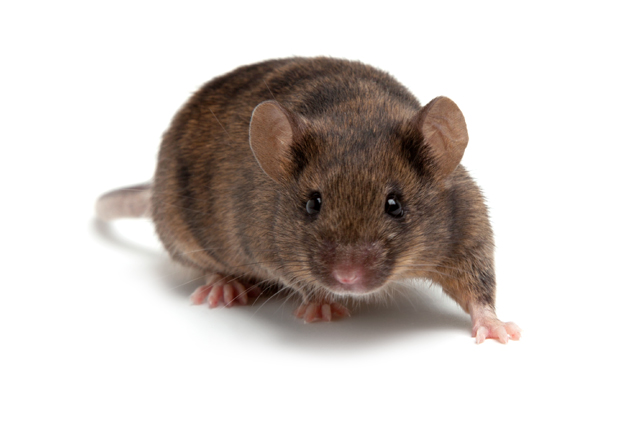
Generating Genetically Engineered Mice and Rats for Research
When deciding how to obtain genetically engineered mice and rats, there are many considerations to review. With decades of experience working with mutant rodent models and strategic partnerships with industry leaders, Charles River helps you generate highly relevant animal models for research programs and drug development.
Benefits of Working with Us
- Mouse and rat model creation
- Adherence to project timelines & tight project follow up
- Defined milestone invoicing
- Robust process with extensive QCs and full data transparency
- Genetically standardized, globally popular backgrounds
- SOPF (VAF Elite™) health status
- Access to Charles River's extensive team of scientific experts
- High throughput, high capacity embryology labs
- AAALAC-accredited facilities aligned with the 3Rs
- Worldwide, secure delivery
- Vast portfolio of complementary services that can provide cost and process efficiencies
Streamline Budget and Research Programs for Your Genetically Engineered Models with a Trusted Partner
Uncover how our innovative IVF technology and rapid quarantine services save you significant time, while tailored housing, breeding, and cryopreservation give you varied cost-effective options to advance studies while supporting 3Rs animal reduction. Watch the Webinar Series
Model Creation Services and Technologies
- CRISPR/Cas9* Gene Editing in Mice & Rats
- ES Cell Targeting in Mice
- Random DNA Transgenesis in Mice
- RNAi Mouse Models
- Microinjection/Electroporation Services
Discuss Your Project / Request a Quote
How to Select the Right Model for Your Genetically Engineered Mouse and Rat Projects
The table below represents some common project types, depending on your need/objective. Please contact us to discuss your project.
| Needs/Objectives | Genetic Modification / Model Type |
|---|---|
| Understand the role/mechanism of action of a specific gene | • Disruption of the gene of interest corresponding to a constitutive knockout if the gene is not embryonic lethal • Conditional knockout if the disruption must be targeted to a specific tissue or cell type or from a certain time point (i.e.: in case of embryonic lethality) |
| Generate a mouse model mimicking a disease linked to a specific point mutation of a specific gene | Insertion of a point mutation in a gene/sequence of interest => point mutant knockin |
| Track a protein expression | Insertion of a tag or a reporter to the targeted gene (infusion or using co-expression) => targeted knockin |
| Generate a mouse model to test therapeutics that could be used for human clinical studies | Mouse gene replacement with the human sequence (full gene sequence or minigene or only using coding sequence) => targeted knockin (standard or using BAC) |
| Decrease the expression of a specific gene in an inducible (and reversible) manner | Gene knockdown: Express siRNA specific of the gene of interest, targeting a permissive locus (Rosa26 or Col1a1), using an inducible system (Cre-lox and floxed-stop cassette, TetOn) |
| Generate a model overexpressing a protein of interest to study its effect | Random transgenesis could be proposed or conditional knockin (pCAG promoter and floxed-stop cassette) targeting the Rosa26 locus |
| Mimic a disease in which a gene is duplicated | Duplication of a specific gene => structural variant (CNV Dup) |
| Study the role of a cluster of genes | Deletion of a large genomic sequence containing the genes cluster => large constitutive knockout (CNV Del) |
Genetically Modified Models and Mutations
| Genetically Engineered Mice | Genetically Engineered Rats |
| • Knockout: constitutive, conditional • Knockin: reporter/tag, point mutation, humanization, Rosa26 or Hprt • Large knockin up to 150 – 200 kb • Knockdown (siRNA) • Structural variants including CNV (copy number variants) • Random DNA transgenesis for gene-overexpression | • Knockout: constitutive • Knockin: tag, point mutation • Structural variants including CNV (copy number variants) • Random DNA transgenesis for gene over-expression |
Other options, including 2-in-1 models (e.g.: conditional humanization and knockout) are available. Contact us to discuss your project.
Rodent Model Genetic Quality Control
Learn the essentials of genetic QC programs: inbred/outbred colony quality control, transgenic rodent model creation, rederivation, and cryopreservation techniques.
Download the Guidebook
Frequently Asked Questions (FAQs) About Genetically Engineered Mice and Rats
-
What are the risks of off-target effects when using CRSIPR/Cas9* technology?
In Vivo
It is now understood that when using CRISPR/Cas9 in vivo (i.e.: in embryos) off-target events are rare and not statistically distinguishable from the rate of de novomutations (Lyer et al., 2015 and 2018; Teboul et al., 2020). The careful design of RNA guides using powerful algorithms avoids or at least minimizes the risks of off-targets. In the worst case, it enables the identification of potential off-target(s).The recommendation is to focus on the off-target event(s) located on the same chromosome than on the genetic modification of interest, which would not be segregated during the breeding steps. Off-target event(s) located on different chromosomes will be naturally segregated.
In Vitro
In cells lines in culture (in vitro), the sustained CRISPR/Cas9 expression leads to a high frequency of off-target effects. Unlike cell lines in vivo, there won't be any allele segregation in in vitro cell lines. -
Who does Charles River partner with for model creation of genetically engineered mice and rats ?
Our key partnerships within the genetic engineering service industry ensure that you have the best resources to advance your research. We combine our expertise with that of PHENOMIN-ICS and Mirimus to develop a wide range of custom genetically engineered rodent models.
-
What is the health status of the genetically engineered mice and rats that Charles River ships?
We are committed to providing you with high quality models. By default, all generated mouse lines are SOPF/VAF Elite (Specific Opportunist Pathogen-Free). Rat lines are SPF/VAF Plus (Specific Pathogen-Free) but can be SOPF upon request. Custom health monitoring could further help with importation to your animal facility.
-
What are the risks and limits associated with random DNA transgenesis?
Random DNA transgenesis relies on
- The microinjection of a transgene in the pronucleus of single-cell rodent embryos and
- The random integration of the transgene as concatemers in the rodent genome in order to generate lines overexpressing the transgene.
This model of transgenesis, developed in the 1990s, is infrequently used today because of limits linked to random integration and the uncontrolled number of copies of the transgene and its consequent instability. For this model, the recommendation is to generate several F1 lines and to characterize each of them and determine the one displaying the expected phenotype. There is no guarantee that bit will be found. Furthermore, this type of line is difficult to maintain. The recommendation is to perform breeding with wild-type animals to maintain hemizygosity. Regularly checking the transgene copy number and the expected phenotype is also recommended.
For these reasons, depending on your objectives, it could be more advisable to develop a knockin model (only for mice) targeting the permissive Rosa26 locus, using the strong and ubiquitous CMV-chicken beta actin promoter to drive the expression of your sequence of interest.
* CRISPR/Cas9 used under licenses to granted and pending US and international patents from The Broad Institute and ERS Genomics Limited.
