NIH-III Nude Mouse Details
Most commonly called the NIH-III, it was developed at NIH. In addition to the nude gene, which results in the absence of thymus and T-cell function, this mouse has two other mutations important in regulating the function of the immune system. These are designated as x-linked immune defect (xid) and beige (bg). The xid mutation affects the maturation of T-independent B lymphocytes. It has been demonstrated that bg homozygotes have defective natural killer (NK) cells that are cytotoxic in vitro to tumor cells. However, the extent of the T-independent B lymphocyte and NK cell deficiencies in the NIH-III have not been established.
The control model for the NIH-III nude mouse is the heterozygous NIH-III-HE mouse.
Not available
LOCATION: Raleigh
UNIT: R04I
Download the Report
➤ DOWNLOAD OUR CATALOG for instant access to Standard List Pricing
➤ TALK TO US to discuss organization or volume-based discounts
Already have an eCommerce portal account?* Login to order research models, obtain quotes, view organization-specific pricing, and see inventory. Processing time required to validate new eCommerce access requests.
*eCommerce is available in US, Canada, UK, France, Germany, Austria, Netherlands, Denmark, Finland, Norway, Sweden, Spain, Portugal, Belgium, Luxembourg, and Switzerland
Try out the NIH-III Nude mouse with our animal evaluation program
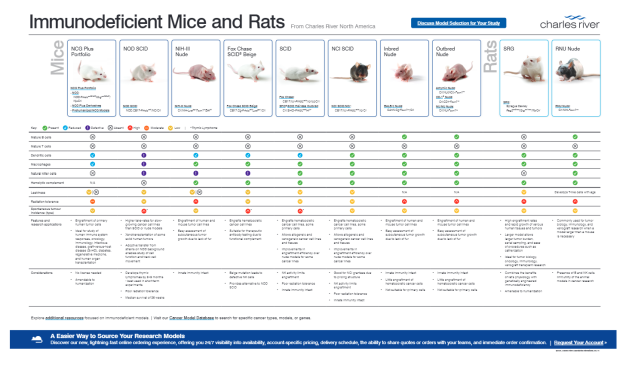
Immunodeficient Model Selection Poster
Compare immune cell deficits (T/B/NK), engraftment applications, and practical study considerations (e.g., leakiness and radiation tolerance) side-by-side across multiple immunodeficient mouse and rat models. Download Poster
Did You Know We Deliver Drug Discovery Services from Day One?
Charles River offers a range of translational oncology studies, including in vitro assays and in vivo models, that mirror human cancers. Whether you want to test your therapy in a cell biology assay consisting of the elements of the tumor microenvironment or in models using real patient tissue, we can help.
Learn More
