
SRG Rat Details
The SRG (Sprague Dawley, Rag2, Il2rg- "SRG") is a severely immunodeficient inbred rat created through knockout mutations in the Rag2 and Il2rgamma genes, resulting in a deficiency in mature B, T, and NK cells. This severe immunodeficiency, combined with a larger organism size, makes the SRG rat an ideal alternative research model to mice in certain preclinical applications.
Origin
The SRG rat was transferred from Transposagen to Hera Biolabs in 2016. To Charles River from Hera Biolabs in 2021.
Benefits of the SRG Rat for Preclinical Oncology Research
- High engraftment rates and rapid growth of a variety of human tissues and tumors (for example: VCaP, H358, and HCT116)
- Severe immunodeficiency ensures high engraftment rates and is amenable to humanization
- Larger organism size allows larger tumor burden and reduces difficulty of procedures such as catherization and blood collection
- Larger tumor sizes (up to 10x larger compared to mice) allow for serial tissue sampling throughout the treatment routine from the same animal (more robust sample analysis)

This weight chart is to be used as reference only. The SRG rat is not sold by weight.
LOCATION: Raleigh
UNIT: R161
Download the Report
➤ DOWNLOAD OUR CATALOG for instant access to Standard List Pricing
➤ TALK TO US to discuss organization or volume-based discounts
Already have an eCommerce portal account?* Login to order research models, obtain quotes, view organization-specific pricing, and see inventory. Processing time required to validate new eCommerce access requests.
*eCommerce is available in US, Canada, UK, France, Germany, Austria, Netherlands, Denmark, Finland, Norway, Sweden, Spain, Portugal, Belgium, Luxembourg, and Switzerland
Try out this model with our animal evaluation program (North America)
Try out this model with our animal evaluation program (Europe)
SRG Rat Details
The SRG (Sprague Dawley, Rag2, Il2rg- "SRG") is a severely immunodeficient inbred rat created through knockout mutations in the Rag2 and Il2rgamma genes, resulting in a deficiency in mature B, T, and NK cells. This severe immunodeficiency, combined with a larger organism size, makes the SRG rat an ideal alternative research model to mice in certain preclinical applications.
Origin
The SRG rat was transferred from Transposagen to Hera Biolabs in 2016. To Charles River from Hera Biolabs in 2021.
Benefits of the SRG Rat for Preclinical Oncology Research
- High engraftment rates and rapid growth of a variety of human tissues and tumors (for example: VCaP, H358, and HCT116)
- Severe immunodeficiency ensures high engraftment rates and is amenable to humanization
- Larger organism size allows larger tumor burden and reduces difficulty of procedures such as catherization and blood collection
- Larger tumor sizes (up to 10x larger compared to mice) allow for serial tissue sampling throughout the treatment routine from the same animal (more robust sample analysis)
Not available
Location: Sulzfeld
Unit: A018
Download the Report
➤ DOWNLOAD OUR CATALOG for instant access to Standard List Pricing
➤ TALK TO US to discuss organization or volume-based discounts
Already have an eCommerce portal account?* Login to order research models, obtain quotes, view organization-specific pricing, and see inventory. Processing time required to validate new eCommerce access requests.
*eCommerce is available in US, Canada, UK, France, Germany, Austria, Netherlands, Denmark, Finland, Norway, Sweden, Spain, Portugal, Belgium, Luxembourg, and Switzerland
Try out this model with our animal evaluation program (North America)
Try out this model with our animal evaluation program (Europe)
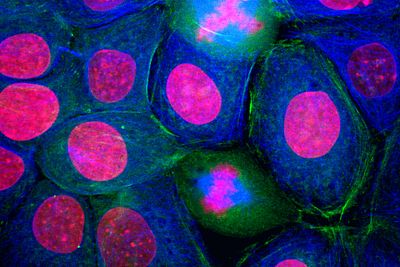
In Vivo Modeling of Breast Cancer Dissemination with the SRG Rat
Hear how researchers have analyzed the dynamics and molecular mechanisms of breast cancer dissemination with this triple-immunodeficient model.
Watch the Webinar
Resources
-
Publications
2022
Metastasis from the tumor interior and necrotic core formation are regulated by breast cancer-derived angiopoietin-like 7
Yamamoto A., Huang Y., Krajina B.A, Cheng K. et alCell Biology
February 2023
120 (10) e22148881202020
Development of Humanized Mouse and Rat Models with Full-thickness Human Skin and Autologous Immune Cells
Agarwal, Y., Beatty, C., Ho, S. et alSci Rep 10, 14598 (2020)
2020
The SRG Rat, a Sprague-Dawley Rag2/Il2rg Double-knockout Validated for Human Tumor Oncology Studies
Noto FK, Sangodkar J, Adedeji BT, Moody S, McClain CB, et al
PLOS ONE 15(10): e0240169
2019
Orally Bioavailable Androgen Receptor Degrader, Potential Next-Generation Therapeutic for Enzalutamide-Resistant Prostate Cancer
Suriyan Ponnusamy, Yali He, Dong-Jin Hwang, Thirumagal Thiyagarajan, Rene Houtman, Vera Bocharova, Bobby G. Sumpter, Elias Fernandez, Daniel Johnson, Ziyun Du, Lawrence M. Pfeffer, Robert H. Getzenberg, Iain J. McEwan, Duane D. Miller, Ramesh NarayananClin Cancer Res
15 November 2019
25 (22): 6764–67802019
Local Injection of Submicron Particle Docetaxel is Associated with Tumor Eradication, Reduced Systemic Toxicity and an Immunologic Response in Uro-Oncologic Xenografts
Maulhardt, H. A., Hylle, L., Frost, M. V., Tornio, A., Dafoe, S., Drummond, L., Quinn, D. I., Kamat, A. M., & diZerega, G. S.Cancers, 11(4), 577
- Posters
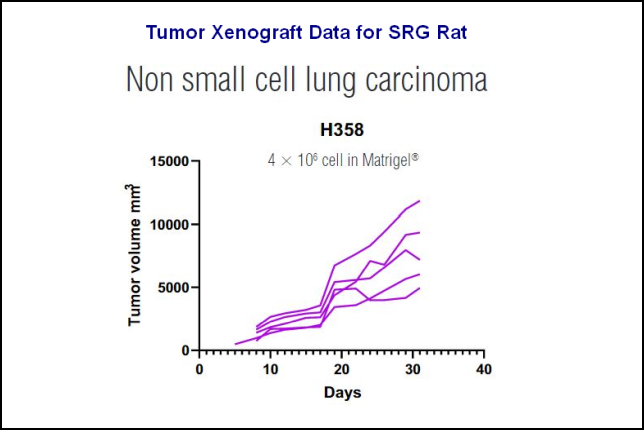
Learn about oncology applications for the SRG rat, its immune phenotype and tumor growth kinetics data.
Download now
Frequently Asked Questions
-
How is the SRG different than the nude rat?
Compared to the athymic nude rat which is only T-cell deficient, the SRG lacks T-, B-, and NK cells, resulting in an immunodeficient phenotype similar to the NCG mouse.
-
How many tumor cells do I need for my xenograft studies?
Hera Biolabs suggests performing a quick tumor growth pilot study with a couple of different cell numbers to determine cell number and concentration needed for optimal engraftment. But for robust tumor types, using a starting inoculation cell concentration/amount typically used in mice would work well.
Up to 10 million cells/animals can be used for difficult or slow growing tumors. For implantation of solid tissue, it is recommended that the starting tissue piece be 2mm x 2mm x 2mm (8mm3).
-
How large can a tumor grow?
Please refer to your institution's animal care and use committee for guidance on humane endpoints regarding tumor burden. Based on Hera Biolabs’ experience, tumors can reach larger than 20,000 mm3 in volume.
-
Can SRG rats be humanized?
Yes. SRG rats can be humanized. In a recent study, researchers were able to transplant full-thickness human skin and autologous lymphoid tissue into SRG rats and demonstrate humanized lymphoid tissue in the transplant-bearing rats.Development of Humanized Mouse and Rat Models with Full-thickness Human Skin and Autologous Immune Cells
Agarwal, Y., Beatty, C., Ho, S. et alSci Rep 10, 14598 (2020)
-
Are there any licenses or conditions for use to consider when using the SRG rat?
Please refer to Hera BioLabs' Conditions of Use. -
How was the SRG rat created?
The SRG rat was created with an 8bp and 16bp deletion in the Rag2 (recombination activating 2) and Il2ry (interleukin 2 receptor gamma) genes respectively in a Sprague Dawley rat. The combined mutations resulted in a loss of mature B, T, and NK cells. -
Do SRG rats require a special diet or housing conditions?
SRG rats should be housed in IVC cages or barrier facilities with standard provisions and precautions given to other similarly immunodeficient strains. Irradiated or sterilized rodent chow should be used. The immunodeficient phenotype of the SRG rat leads to a susceptibility to opportunistic pathogens which should be taken into consideration, as is the case with any immunodeficient strain. Other than that, the SRG does not require any special diet or care and maintenance procedures once housed in a suitable facility.
-
Are there any known health conditions that one would need to be aware of for SRG Rats?
SRG rats may develop bilateral corneal opacities at a low frequency. Upon gross examination, the opacities appear white and may be accompanied by mild vascularization. The overall health of animals does not seem to be impacted.
SRG rats have also been observed to develop esophageal impaction and megaesophagus in approximately 5% of animals. Clinical signs of megaesophagus are acute in nature and ante-mortem clinical signs include open mouthed breathing and porphyrin staining. On necropsy, the esophagus is generally dilated and impacted with ingesta. There are no known mitigation strategies currently during regular husbandry. When shipping animals, aspen bedding is used and environmental enrichment such as nestlets or tissues in cages should be avoided. In addition, a mixture of DietGel®, HydroGel® and feed pellets is provided to the shipping cage to ensure the animals have enough sustenance during shipping.
V.2.0 – This information was updated on 04/17/2023.
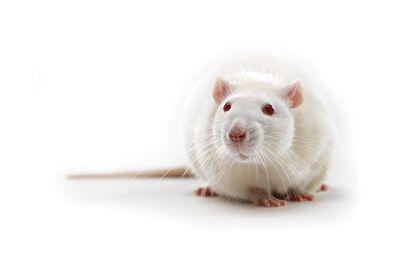
Advancing Preclinical Research with the Rat Model
This presentation will explore how the unique physiological characteristics of rats provide translational value across multiple therapeutic areas, as well as best practices for husbandry that optimize both welfare and experimental reproducibility.
Watch the Webinar