
Setting the Standard for High-Sensitivity ddPCR Services
qPCR has long been considered the gold standard for measuring changes in gene expression and can detect between 5 and 10 copies for our most sensitive assays. This approach lends itself well to scenarios involving a small number of targets across large sample sets or vice versa. Digital droplet PCR (ddPCR) represents the latest and most sensitive evolution of PCR‑based analysis for companies developing cell and gene therapies, biomarkers, and oligonucleotides.
Why Use ddPCR for Preclinical and Clinical Programs?
ddPCR provides the sensitivity and precision required for studies where detecting low‑abundance targets or subtle gene‑expression changes is critical. Because each reaction is physically partitioned into thousands of droplets and scored as positive or negative, ddPCR delivers highly reproducible, absolute quantification with less variability than traditional qPCR. This makes it well-suited for cell and gene therapy applications, biomarker monitoring, and oligonucleotide development.
In regulated settings, ddPCR also offers operational advantages, including shorter validation timelines, greater tolerance to sample inhibitors, and easier multiplexing. These attributes help streamline study execution and reduce analytical risk. Supported by validated Bio‑Rad QX One™ systems and harmonized workflows, ddPCR enables high‑quality, sensitive bioanalysis suitable for both early‑ and late‑stage trials.
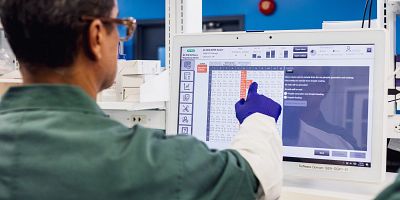
dPCR Services and Evaluations
Our experts operate a fully validated, large commercial fleet of QX One™ instruments for ddPCR services and evaluations. This ensures access to the most sensitive and precise techniques for programs developing cell and gene therapies, oligonucleotides, or biomarkers.
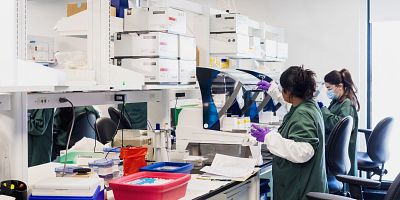
ddPCR for Gene Therapy and Biomarkers
ddPCR uses the same chemistries as real‑time PCR while enabling more sensitive readouts. Each partition is individually classified as positive or negative based on fluorescent signal, resulting in higher‑quality data and decreased variability. This makes ddPCR ideal for gene therapy dose‑formulation analysis and biomarker‑driven studies.
ddPCR Platform for Gene Expression Profiling
Our ddPCR services leverage validated Bio‑Rad QX One™ systems and harmonized workflows. The platform partitions reactions into droplets for end‑point PCR detection, delivering sensitive and precise readouts using the same chemistries as qPCR while reducing variability.
ddPCR Assay Capabilities
- Physical partitioning within the same plate as PCR
- Droplet (oil‑emulsion) digital partitioning
- End‑point PCR detection
- Each individual partition scored as positive or negative
- Easier multiplexing
ddPCR Services and Evaluations
Fully validated QX One™ instrument fleet supporting comprehensive ddPCR services and evaluations with sensitive, precise techniques for cell and gene therapies, oligonucleotides, and biomarkers.
Assay Validation and Workflows
- Harmonized validation approaches aligned with industry expectations
- Shorter validation timelines enabled by partition technology
- Greater tolerance to sample inhibitors
- Streamlined multiplexing

eGuide: Biomarker Solutions from Discovery to Clinical Trials
Learn how strategic biomarker integration can accelerate research and de-risk pipelines to bring life-saving therapies to patients faster. This guide helps you uncover smarter ways to de-risk studies and accelerate timelines without compromising scientific rigor.
Read the Guide
Benefits of ddPCR in Regulated Bioanalysis
ddPCR supports more confident decisions by delivering absolute quantification with reduced variability and strong performance in challenging matrices. Operationally, it enables faster validation and robust multiplexing to accelerate program timelines.

Higher‑Quality, More Precise Data
ddPCR delivers high‑quality data with reduced variability by scoring each droplet as positive or negative, enabling absolute quantification and more sensitive readouts than traditional qPCR.

Shorter Validation Timelines
Partition-based ddPCR methods require fewer parameters because it provides direct absolute quantification, allowing regulated studies to move from assay development to execution more quickly.

Greater Tolerance to Sample Inhibitors
ddPCR is less sensitive to inhibitors commonly found in complex biological matrices, increasing reliability and reducing analytical risk during preclinical and clinical studies.

Easier Multiplexing for More Efficient Studies
The ddPCR platform supports easier multiplexing than standard qPCR, enabling simultaneous measurement of multiple targets without compromising assay performance.
Partitioning and End‑Point Readouts in ddPCR
ddPCR partitions each reaction into thousands of droplets and uses end‑point PCR with fluorescence to classify each partition as positive or negative. The approach relies on the same chemistries as real‑time PCR while enabling more sensitive readouts and absolute quantification.
Frequently Asked Questions (FAQs) for ddPCR Platform for Nonclinical and Clinical Services
-
What sample types can be analyzed using ddPCR assays?
Cultured cells, whole blood, PBMCs, tissues, FFPE samples, and cell‑free matrices such as cell culture supernatants, plasma, and CSF for cfDNA.
-
How sensitive is ddPCR?
ddPCR can detect very low copy numbers per reaction. For accurate quantitation, laboratories typically establish limits appropriate to the study.
-
Is ddPCR more sensitive than qPCR?
Yes. ddPCR uses the same chemistries as real‑time PCR but enables more sensitive readouts with absolute quantification through droplet partitioning.
-
What is the throughput difference between ddPCR and qPCR?
Typical qPCR runs use 384‑well plates, while ddPCR commonly uses 96‑well plates and can process a stack of five plates per run.