
Quantitative Mass Spectrometry Solutions
In the dynamic and evolving field of bioanalysis, relying solely on traditional methods may result in gaps in your research. At Charles River, we utilize our formidable quantitative mass spectrometry services alongside either gas or liquid chromatography. Recognized as one of the most effective methods for detecting drugs and chemicals across various industries, our approach ensures precise and sensitive detection of compounds throughout the entire development spectrum of pharmaceutical, industrial chemical, and agrochemical products.
Quantitative LC-MS/MS is particularly essential for achieving selective and sensitive detection, but not all solutions are created equal. Our advanced quantitative mass spectrometry solutions enable rapid and precise identification, facilitating critical analysis that aid in timely milestone achievements. Avoid potential delays and inaccuracies by opting for our proven techniques, which offer fast and accurate identification that assists in driving your decision-making processes to stay on schedule.
eGuide: Bioanalysis from Early-Stage to Clinical Drug Development
Accounting for modality complexity, evolving regulatory expectations, and the critical importance of upfront planning, this eGuide explains how to identify risks early and align your bioanalytical strategy with the needs of your compound, your timeline, and your team.
Learn More
Our extensive background in bioanalytical mass spectrometry testing services equips us to handle even the most difficult and distinctive challenges that arise during method development, validation, and execution in a regulated environment. To best leverage our scale and scope and to ensure consistency of experience across each of our nine quantitative mass spec sites our Global Laboratory Council (GLC) meets every six weeks to ensure you get the best experience possible from working with our global network. We have various GLC sub teams concerned with specific topics such as regulatory and documentary alignment, bioanalytical method development, and protein bioanalysis by mass spectrometry. We can effectively analyze a diverse array of products, such as:
- Fusion proteins
- Monoclonal antibodies
- Biomarkers
- Oligonucleotides
Regulatory Compliance: Adherence to ICH M10 Standards
We prioritize compliance with international regulatory standards, including ICH M10 guidelines, which sets the global benchmark for bioanalytical method validation. Our bioanalytical mass spectrometry operations undergo rigorous validation processes to ensure that every analysis meets the stringent criteria, guaranteeing high precision, accuracy, and reproducibility. This compliance not only enhances the quality and reliability of our results but also aligns with the ethical standards required in drug development.

eGuide: Biomarker Solutions from Discovery to Clinical Trials
Learn how strategic biomarker integration can accelerate research & de-risk pipelines to bring life-saving therapies to patients faster. This guide helps you uncover smarter ways to de-risk studies and accelerate timelines, without compromising scientific rigor.
Read the Guide
At Charles River, we bring extensive experience across all types of studies. Our team understands and anticipates potential challenges from a bioanalytical perspective, ensuring robust and reliable results. We're passionate about developing innovative methodologies and applying insights from previous studies to enhance efficiency and drive improvement. What makes our work truly rewarding is the collaboration—everybody steps up when needed."
Nicolas Deagon, Senior Research Scientist, Senneville, Canada
Biological Sample Preparation for Mass Spectrometry
From a basic "dilute and shoot" approach to various prevalent techniques, it is crucial to select an appropriate biological sample preparation method that aligns with your project objectives. An intelligent study design considers ways to enhance method development specifications, expedite analysis, and yield exceptional outcomes while adhering to regulatory standards. Effective bioanalytical mass spectrometry services prioritize assay sensitivity, assay duration over time, sample complexity, productivity improvement, and automation for high volumes of samples as needed.
Plasma or serum samples are commonly used for pharmacokinetics, analysis, drug clearance, half-life calculation, and bioavailability assessment. In addition, other matrices such as urine and tissue, can help determine the fate of a compound.
Chromatographic Separation
Developing robust chromatographic separations is crucial for the effectiveness of quantitative mass spectrometry bioanalytical methods. The objective of this process is to isolate the targeted analyte(s) from interfering with naturally occurring substances and drug byproducts. If endogenous metabolites or other external compounds coelute, it can lead to ion suppression or ion enhancement, both are detrimental to the development of a bioanalytical assay.
Selecting the optimal conditions necessitates understanding retention behavior, resolution, gradient slope, and metabolite(s) retention profile. This knowledge, along with insights from in vitro and animal studies, serves as the basis for well-informed decisions. Through regular communication, our worldwide team of bioanalytical experts can collaborate to enhance your method using all available resources.
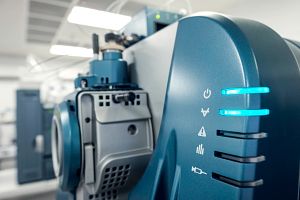
Mass Spectrometric Detection
To optimize conditions for the mass spectrometry detection of desired compounds, we must evaluate the MS response and develop a multiple reaction monitoring (MRM) methodology. This involves asking several key questions:
- Is there a need for chemical modification to detect these compounds?
- Which ionization mode is best suited for detection, for example, atmospheric pressure chemical ionization (APCI) or electrospray ionization (ESI)?
- Which polarity yields the most effective response?
This process can be demanding and can require several iterations to achieve the ideal combination of concentration and sensitivity for a specific assay. As a result, many companies choose to outsource their mass spectrometry projects, regardless of their size. We continue to keep pace with developments in this field and have invested heavily in maintaining world-class facilities for our global fleet of mass spectrometers, allowing us to continue to offer quality mass spectrometry solutions.
Platforms
- Liquid chromatography-tandem mass spectrometry (LC-MS/MS)
- Liquid chromatography-high resolution mass spectrometry (LC-MS, HRMS)
- Liquid chromatography (HPLC, UHPLC) with UV, fluorescence, ELSD and radiolabelled detection*
- Gas chromatography (GC) with MS, MS/MS, FID and EC detection
- Inductively coupled plasma (ICP-OES, ICP-MS)
Ionization Techniques
- Atmospheric pressure chemical ionization (APCI)
- Electrospray ionization (ESI)
- Electron impact (EI)
- Chemical ionization (CI)
Equipment
- SCIEX API 6500, 5500, 5000, 4000, and 7500 (x3)
- Waters Xevo® TQS
- Waters SYNAPT G2S
- Thermo Q Exactive™ Plus
- Thermo Exploris™ 240
- Shimadzu IT-TOF
- HPLC/UHPLC (Thermo Aria, Waters Acquity and Shimadzu Nexera) with UV, fluorescence, ELSD and radiolabelled detection*
- ICP-OES, ICP-MS, ICP-MS/MS
- Gas chromatography with MS, MS/MS, FID and EC detection
- 96-well plate robotic liquid handlers (Tecan, Hamilton Nimbus and MicroStar, Tomtec)
*Additional detections available
Software
- Sciex Analyst v1.7
- Sciex OS v3
- Thermo Watson LIMS v7
- Hamilton Venus v4
- Sciex MultiQuant v3
- Watson Empower
- Thermo Chromeleon v7
Innovating Bioanalytical Mass Spectrometry Services with Microsampling Technology
In our pursuit of ethical and efficient bioanalysis, we integrated microsampling techniques in our bioanalysis services through ultra-sensitive mass spectrometry. This innovative approach allows the responsible collection of minimal sample volumes, significantly reducing the impact on study animals and aligning with the 3Rs (Replacement, Reduction, Refinement) of animal research. Microsampling not only supports ethical research practices but also enhances the efficiency of sample processing, allowing for broader study designs and increased sampled throughput without compromising data integrity.
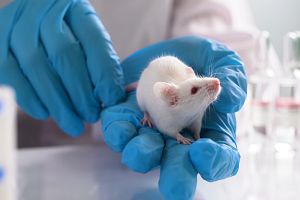
10 Years of Preclinical Microsampling: A Commitment to 4Rs
In this webinar, we share over a decade’s worth of in vivo data and laboratory learnings of CMS application, as well as look towards the future of preclinical and clinical microsampling.
Watch Now
Unparalleled Expertise in Bioanalytical Mass Spectrometry Solutions
Our specialization in sample preparation, chromatographic separation, and mass spectrometric detection guarantees the effectiveness of our highly sensitive bioanalytical techniques. Through our extensive network of experienced bioanalytical experts and over 200 advanced mass spectrometers we can provide you with extensive support for your early discovery pharmacokinetics and toxicology studies. We offer a comprehensive range of services, including method development, validation, and analysis of nonclinical to clinical biological samples, all conducted within a Good Laboratory Practice (GLP) setting.
Frequently Asked Questions (FAQs) About Bioanalytical Mass Spectrometry Services
-
What is mass spectrometry?
The analytical laboratory technique known as mass spectrometry is used to separate components of a sample (drug, chemical, agrochemical) by their mass and electrical charge. The mass spectrometer produces a mass spectrum that plots the mass-to-charge (m/z) of compounds in a mixture and its three main parts are the ion source, mass analyzer, and the detector. As an analytical tool, it is used for both quantitative and qualitative analysis.
-
What are matrix effects in mass spectrometry?
Matrix effects can impact both the identification and quantification analysis of an analyte of interest. This alteration of ionization efficiency by the presence of coeluting substances can cause mass accuracy deviation and both ion suppression false negatives and positives. The two most common ways to assess matrix effects are by a post extraction addition or post column infusion method.
-
What are the key criteria for the development of a mass spectrometry bioanalytical method?
A highly sensitive MS/MS method for detection of compounds of interest in a biological matrix must meet the following criteria and encompass all parameters using a systematic approach to develop optimal conditions quickly and efficiently.
- Accuracy
- Specificity
- Robustness
- Precision
- Detection and quantitation limit
- Linearity
- Range
Charles River’s mass spectrometry services team consistently develops and validates such methods for the pharmaceutical, biotech, chemical and industrial, and agrochemical industries.
-
What’s the differences between using LC-MS/MS and LC-HRMS for quantitative analysis, and in which scenarios each method is preferred?
The main difference between using LC-MS/MS and LC-HRMS for quantitative analysis lies in their respective capabilities. LC-MS/MS, or liquid chromatography-tandem mass spectrometry, is known for its high sensitivity and selectivity, often making it the preferred method for quantification. LC-HRMS, or liquid chromatography-high resolution mass spectrometry, offers significant selectivity gains and the opportunity to quantify intact large molecules with a high degree of precision.
-
What is liquid chromatography-tandem mass spectrometry service?
Liquid chromatography-tandem mass spectrometry (LC-MS/MS) and high-resolution mass spectrometry (LC-HRMS) are advanced techniques used in the field of bioanalysis. These methods allow for highly sensitive and precise measurement of both small and large molecules, making them ideal for quantitative analysis in areas such as pharmaceuticals, biologics, and industrial applications. Our team of expert scientists utilize state-of-the-art equipment and their extensive knowledge to provide rapid and accurate results through our LC-MS/MS and LC-HRMS services. With our advanced technology and experienced team, you can trust us to deliver reliable bioanalytic data for all your research needs.