High-throughput Cytokine Analysis for Immune Response Profiling in Early-Phase Trials
Our multiplex cytokine assays provide a sensitive and scalable solution for measuring multiple immune biomarkers in a single sample. Leveraging technologies like Luminex® xMAP® and electrochemiluminescence, these assays enable simultaneous detection of up to 100 analytes, supporting immune monitoring, mechanism-of-action studies, and assessing therapeutic impact.
Designed for use in first-in-human (FIH) clinical trials, our validated platforms help sponsors evaluate immune modulation, reduce patient burden through low-volume sampling, and accelerate decision making across a range of therapeutic areas, including immuno-oncology, autoimmune disease, and inflammation.
Supporting Immune Monitoring and Therapeutic Evaluation with Multiplex Cytokine Assays
Multiplex cytokine assays are essential for evaluating immune modulation in FIH clinical trials. By enabling simultaneous measurement of up to 100 analytes from a single sample, these assays help assess the complexity and dynamics of inflammatory responses, support mechanism-of-action studies, and provide critical data to guide therapeutic development.
Our platforms, including Luminex® xMAP® and electrochemiluminescence, are validated for clinical use and designed to minimize variability, reduce patient burden, and accelerate decision making in several disease areas, including immuno-oncology, autoimmune, and cardiovascular.
Comprehensive Immune Profiling from a Single Sample
Measure dozens of cytokines, chemokines, and growth factors simultaneously to capture a complete picture of immune response dynamics without increasing sample volume or patient burden.

Accelerate Go/No-Go Decisions in Early-Phase Trials
Rapid, high-throughput data generation supports faster evaluation of therapeutic impact, enabling confident decisions that can optimize your program.

eGuide: Bioanalysis from Early-Stage to Clinical Drug Development
Accounting for modality complexity, evolving regulatory expectations, and the critical importance of upfront planning, this eGuide explains how to identify risks early and align your bioanalytical strategy with the needs of your compound, your timeline, and your team.
Learn More
Advanced Multiplex Cytokine Analysis for Immune Profiling and Therapeutic Evaluation
Our multiplex cytokine assay platforms offer a sensitive, scalable solution for immune biomarker detection from discovery through to the clinic. Designed to support immune monitoring, mechanism-of-action studies, and therapeutic impact assessment, these assays combine high-throughput capabilities with broad analyte coverage and validated performance across diverse sample types.
Our technologies, including Luminex® xMAP® and electrochemiluminescence, enable confident decision-making through robust, reproducible data generation.
High-Throughput Multiplexing
Our multiplex cytokine platforms enable simultaneous detection of up to 100 analytes in a single sample. This high-throughput capability supports immune profiling in early-phase trials, allowing sponsors to generate robust data quickly while minimizing patient burden. Technologies like Luminex® xMAP® and electrochemiluminescence provide scalable solutions for both exploratory and regulated studies.
Validated Assay Platforms
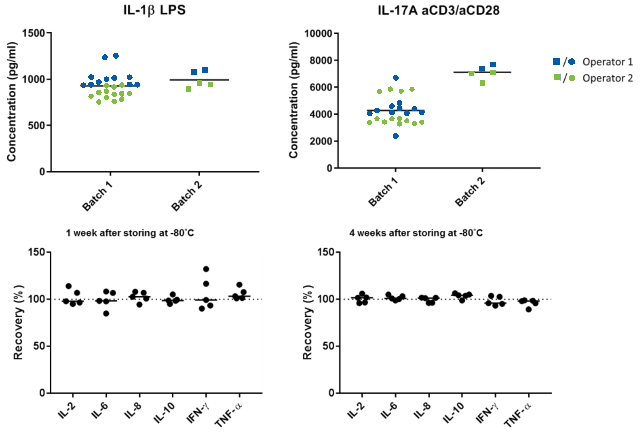
Our platforms are validated for clinical use with fit-for-purpose plans tailored to trial logistics. Validation includes sample stability, inter-assay variability control, and batching strategies to ensure robust, reproducible data. These protocols support both GLP and non-GLP studies, enabling flexibility across development stages.
Broad Sample Compatibility
Multiplex cytokine assays are compatible with serum, plasma, cell culture supernatants, and activated whole blood. Immune cells can be stimulated ex vivo to reveal cytokine changes not detectable in direct measurements, expanding the scope of immune profiling.
Mechanism-of-Action Support
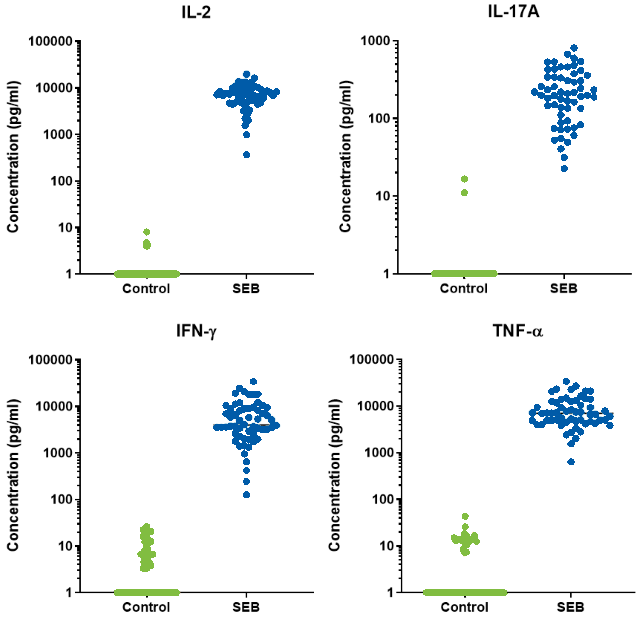
Multiplex cytokine data support evaluation of immune modulation and mechanism-of-action for immunotherapies. Specific antigens like LPS, SEB, or anti-CD3/anti-CD28 can be used to assess innate and adaptive immune responses, providing insight into therapeutic impact.
Complementary Technologies
Enhance cytokine data with flow cytometry, intracellular cytokine staining, NanoString, or qPCR to identify cell-specific responses and downstream pathway engagement. These technologies provide a multidimensional view of immune activity.
Disease-Relevant Panels
Panels can be customized for autoimmune, immuno-oncology, cardiovascular, and autoinflammatory indications. Focused panels of 6–10 markers are recommended to ensure measurable range and relevance to disease biology, improving interpretability and clinical utility.

eGuide: Biomarker Solutions from Discovery to Clinical Trials
Learn how strategic biomarker integration can accelerate research and de-risk pipelines to bring life-saving therapies to patients faster. This guide helps you uncover smarter ways to de-risk studies and accelerate timelines, without compromising scientific rigor.
Read the Guide
Advantages of Multiplex Cytokine Assays for Immune Profiling and Therapeutic Evaluation
Multiplex cytokine assay services offer distinct advantages for sponsors seeking fast, reliable immune data in early-phase clinical trials. These benefits help reduce patient burden, accelerate timelines, and improve confidence in therapeutic decision-making. Whether supporting exploratory research or regulatory submissions, our platforms deliver the sensitivity, scalability, and flexibility needed to advance your program.

Reduced Patient Burden
Multiplex assays require minimal sample volume, allowing for comprehensive immune profiling without excessive blood draws. This is especially valuable in early-phase trials where patient comfort and retention are critical.

Accelerated Decision-Making
Rapid, high-throughput data generation enables sponsors to evaluate therapeutic impact early, supporting faster go/no-go decisions and reducing development timelines.

Broad Analyte Coverage
Detect up to 100 cytokines, chemokines, and growth factors in a single run, providing a multidimensional view of immune response across disease areas.

GLP and Non-GLP Flexibility
Services are available under both GLP and non-GLP conditions, supporting regulatory submissions or exploratory research with the same level of scientific rigor.
Frequently Asked Questions (FAQs) About Multiplex Cytokine Analysis
-
What is multiplex cytokine analysis?
Multiplex cytokine assay technology allows the measurement of numerous analytes in a single sample, increasing speed and throughput in comparison to traditional ELISA techniques. Luminex multiplex immunoassays utilize fluorescently labelled magnetic microspheres conjugated to specific-capture antibodies to detect up to 100 different analytes simultaneously. This technology is routinely applied to the quantitation of inflammatory cytokines in biological samples.
While the simultaneous measurement of a large number of analytes is possible via a multiplex cytokine assay, we would typically recommend the selection of a more focused cytokine panel of 6-10 markers relevant to the disease or antigen of interest to increase the chances that the majority of these are within the measurable range.
-
What sample types can be analyzed via Luminex multiplex immunoassay?
The starting material for Luminex analysis is typically liquid biological samples, including serum/plasma, supernatants of cultured cells, or activated whole blood.
-
How sensitive are multiplex cytokine assays?
For multiplex cytokine assays, the lower limit of quantitation of the standard curve for many cytokines is ~1pg/ml. To investigate the effect of a therapy on the immune response in humans, immune cells present in whole blood can be stimulated ex vivo to monitor changes that may not be apparent using direct measurement of serum/plasma.
Specific antigens can be selected to measure different arms of the immune response with LPS commonly used to look at innate responses and SEB or anti-CD3/anti-CD28 to monitor adaptive responses.
-
How are multiplex cytokine assays validated for clinical use?
-
What does cytokine data look like in early-phase trials?