
Defining Needs When Shifting to Automation
Determining which rapid automated endotoxin testing solution is best for your lab can be complex, but your criteria should at a minimum include increasing efficiency, accuracy, and quality without sacrificing time and patient safety. To simplify your selection journey, we've mapped out some critical elements to consider when selecting the most appropriate solution for not only your organization, but your lab and team as well.
Are Your Current Methods and Processes Protecting the Integrity of Your Data?
 As manufacturing and technology evolve, regulators expect organizations to adopt technologies and processes, such as automated endotoxin testing, that have been designed to reduce risk, such as human error. So, how are you addressing methods that are heavily dependent on human intervention? Reducing the risk for human error in testing processes by implementing automation leads to greater confidence in product quality, setting a standard of excellence patients and regulators expect.
Traditional bacterial endotoxin tests using a duplication (i.e., repeating the same task or effort to identify or avoid error) method to mitigate human risk, such as the "four eyes principle," are the least effective at preventing human error. Meanwhile, automated endotoxin testing effectively eliminates subjective data. Automation strengthens a firm’s stance on data integrity compliance while reducing human error, increasing traceability via searchable audit trails, and streamlining the review process as the robot performs and records all endotoxin testing.
Auditors are looking to ensure data are attributable, legible, contemporaneous, original and accurate, the key ALCOA Principles. Automation helps by accurately and reliably recording every step of your data trial to ensure you are complying with data integrity requirements.
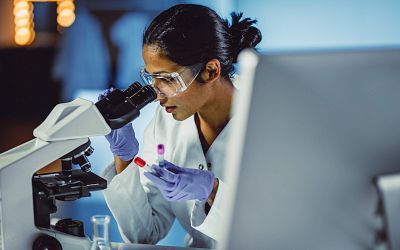
Process Workflows In The QC Lab Of The Future: An Endotoxin Assay Story
GSK recently discussed how they achieved better traceability with audit trails and business continuity since implementing the Endosafe Nexus.
See How
Additional Resources
FAQ: Conquering Data Integrity through Eliminating Human Error
PDA Letter: The House of Data Integrity Compliance
Data Integrity: Eliminating Risk & Human Error in Endotoxin Testing
Are Your Current Testing Processes Manual, Repetitive, and Inhibiting Productivity?
 Automation minimizes variation, time, and resources of performing both laboratory and out of specification investigations. Manual processes, or those with numerous manual steps, often lead to inefficiencies within the lab, which can lead to costs in terms of both time and money, as well as pose a risk to product quality. Having highly educated lab technicians performing hours of serial dilution steps and creating standard curves is not an efficient use of their skills and can lead to increased rates of human error and staff turnover due to lack of satisfaction in their work.
Reducing time spent on low-value tasks allows your team to focus on research while automation handles the manual steps—helping you stay ahead of the competition. By automating repetitive tasks, you free up your subject matter experts to perform higher-value work such as interpreting data, analyzing trends, and proactively addressing risks. That benefits your bottom line.
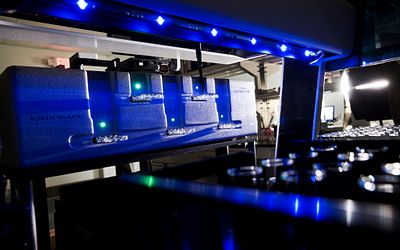
Lessons Learned and Benefits Gained from the Global Implementation of an Automated Endotoxin Testing Solution
Astra Zeneca recognized $350K/year savings in reagent cost when they globally implemented the Endosafe Nexus and switched from the 96 well plate method.
Watch the Webinar
Additional Resources
An Assessment for Implementation of the Endosafe® Nexus™
AstraZeneca’s Lessons Learned and Benefits Gained from the Global Implementation of an Automated Endotoxin Testing Solution
PDA Letter: Pfizer see’s success with Robotic Endotoxin Testing System
Are You Spending Countless Hours in Training and Testing?
 Both traditional kinetic and gel-clot testing are error-prone, have lengthy turnaround times, and carry risks of invalid results and OOS results due to analyst variability and the various steps and accessories required for assay preparation. To make matters worse, an invalid test result can potentially cripple your manufacturing timelines.
The FDA-licensed LAL cartridge is designed to optimize the LAL test by eliminating daily preparation of reagents and a standard curve. All necessary components are included in the self-contained disposable cartridge, including precise amounts of LAL reagent, chromogenic substrate, and control standard endotoxin (CSE). They are manufactured in accordance with rigid QC procedures and have been approved by the FDA for in-process and final product release testing. The cartridges contain four channels: two channels with CSE and LAL, which serve as the positive control channels, and two channels with LAL for testing of samples.
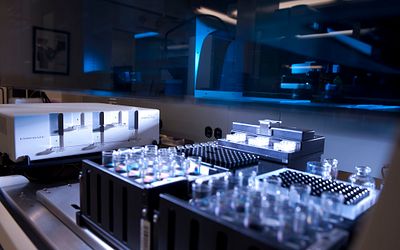
Pfizer Evaluation of the Endosafe® Nexus™ System: A Robotic Endotoxin Testing Solution
Pfizer increased laboratory throughput and efficiency while reducing potential pipetting variability and data entry errors with its sample bar code reader and ability to communicate with Labware LIMS.
Watch the Webinar
Additional Resources
Webinar: The Advantages of Cartridge Technology
Endosafe® LAL cartridge Technology & Regulatory Requirements
Reduce Supporting Materials, Equipment, and Waste
 With sustainable methods being at the forefront of manufacturers’ minds, many QC laboratories are looking for ways to embrace this trend without introducing risk. How is your lab making the shift to being more environmentally conscious? If there was a way to make your lab more sustainable while not just maintaining, but improving your QC processes while reducing risk, would you seize it?
Automation offers significant benefits. For example, invalid tests generated by standard curve preparation errors are removed; reagent reconstitution errors are also removed, which results in fewer repeat tests and therefore reduces waste of both accessories and reagents. Fewer repeat samples add to the already significant reduction in the amount of lysate utilized per test, which increases the benefit of reducing the burden on the horseshoe crab.
Sustainability is further enhanced with the introduction of Endosafe® Trillium™ recombinant cascade reagent (rCR). By integrating Trillium into cartridge technology, QC laboratories can move toward an animal-free, sustainable solution while maintaining the accuracy and reliability needed for bacterial endotoxin testing. The transition eliminates reliance on horseshoe crab-derived LAL, streamlining compliance with regulatory trends favoring recombinant methods.

Leading with Health
Astra Zeneca reported in their corporate Sustainability Report a reduction in their annual lysate usage from approximately 7.5 liters to just a few hundred milliliters by implementing cartridge technology via Endosafe Cartridge Technology.
Read the Report
Simplified Data Generation and Management
 Implementing automated endotoxin testing improves result quality, enhances workplace productivity, and streamlines data collection, organization, and evaluation.
With flexible solutions available, Endoscan-V™ software can export data ready for integration into customer LIMS systems. It contains all the tools to allow the user to become fully data integrity compliant. From built-in digital signatures, fully searchable audit trails, and data stored within a secure database, ESV allows easy setup of automated assays and simple access to results.
Our client manager package allows access to data to review and sign from outside the laboratory. With Charles River Cortex™ included, users can securely consolidate, query, and analyze all real-time endotoxin test data for necessary internal QA and FDA trending reports.
Additional Resources
EndoScan-V Endotoxin Testing & Measurement Software
Charles River Cortex: Endotoxin Analysis Software for Investigative Evaluation & Process Monitoring
Available Solutions
With multiple different techniques available for bacterial endotoxin testing, determining which rapid, compendial, and automated method aligns with your organization’s goals can be challenging. Our suite of rapid, flexible Endosafe® endotoxin testing systems, paired with our LAL-powered, FDA-licensed cartridge technology, provides fast, accurate, and reproducible results, streamlining your manufacturing process and keeping your lab at the forefront of biomedical advances.
For laboratories prioritizing sustainability and regulatory alignment, Endosafe® Trillium™ rCR presents a validated alternative to traditional LAL-based methods. It integrates seamlessly into the same cartridge technology, eliminating the need for additional equipment or extensive retraining while significantly reducing reliance on lysate-based reagents.
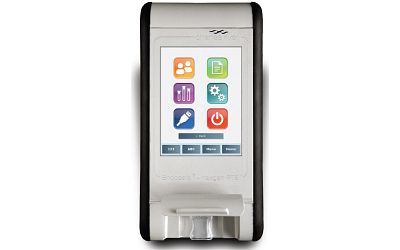
Endosafe® nexgen-PTS™
Rapid, point-of-use handheld spectrophotometer that utilizes USP/BET-compliant disposable LAL cartridges for precise, convenient, and real-time endotoxin testing.
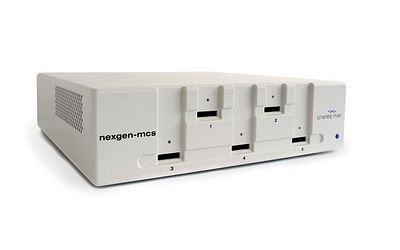
Endosafe® nexgen-MCS™
This multi-cartridge benchtop LAL test system is proficient at concurrently testing up to five samples within 15 minutes for rapid, quantitative, and accurate endotoxin results.
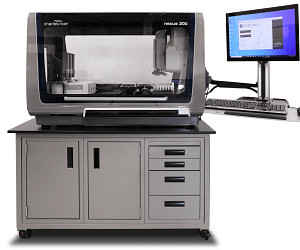
Endosafe® Nexus 200™
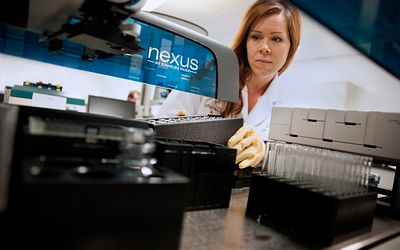
The next generation of our data integrity compliant, walkaway automated robotic instrument, capable of testing up to 120 samples per run and performing serial dilutions via Endosafe® cartridge technology in a fully enclosed system.
Build Your Case
Now that you know the success of your lab lies in optimized workflows and lab automation, the next step is to justify the proposed investment to management. So, what is the value you would gain through technology and automation over time? Can you quantify the cost of your inhibited productivity?
Automate Your Lab