Bacterial Endotoxins Test (BET)
While Limulus amebocyte lysate (LAL) is recognized as the most sensitive, reliable, and specific detection method for pyrogen producing Gram-negative bacterial endotoxins, the evolution of new technologies and techniques has enabled accelerated progression of the endotoxin test. Over the years, our purposefully built Endosafe® portfolio has transformed the way we approach endotoxin detection, evolving alongside our customers’ needs for fast, simple, robust, and sustainable methods.

Rethink your Endotoxin Testing Program
With so many options available, how do you determine a suitable yet sustainable endotoxin detection method for your lab, your team, and ultimately for your organization?
Discover which BET solution is best for you
Our BET Portfolio
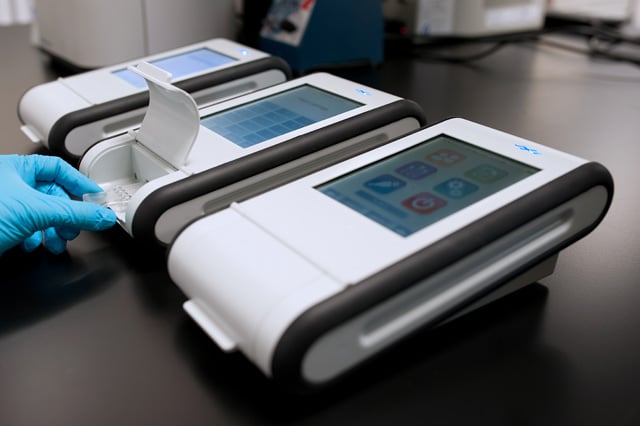
Endosafe Endotoxin Testing Systems
Our suite of scalable Endosafe® platforms support a variety of testing techniques, regardless of sample type, volume, or industry, from traditional kinetic methods, real-time single samples, to high-throughput fully automated instruments. All systems support both Endosafe LAL and Trillium™ rCR to provide testing flexibility and efficiencies.
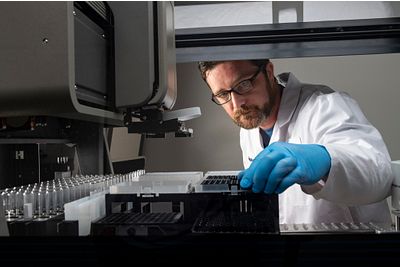
Endosafe Endotoxin Testing Cartridges
This technology was designed to streamline and optimize testing by consolidating all the essential components into a single disposable cartridge, to provide real-time, quantitative endotoxin analysis. Available in Endosafe LAL and in 2024 Trillium rCR, we further embrace our commitment to the 3Rs by reducing and or replacing the usage of horseshoe crabs.
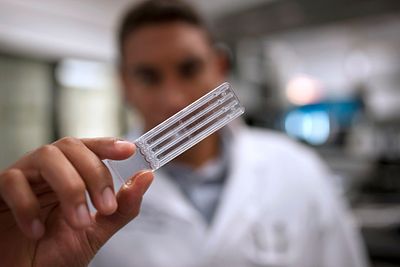
Endotoxin Testing Reagents and Accessories
Our complete and optimized portfolio of extremely precise and reliable LAL and rCR formulations provide increased sensitivity, greater linearity, and superior interference resistance. From raw materials, in-process, through final product release, our extensive offering of Endosafe reagents and accessories can support your testing program.
The Micro Keeps You in The Know
You don't need an agar plate to grow your microbial knowledge. Get industry updates, articles and other resources delivered straight to your inbox each month with this microbiology newsletter.
Subscribe
Frequently Asked Questions (FAQs) for Bacterial Endotoxin Testing
-
What is endotoxin testing?
Endotoxin testing or bacterial endotoxin test is an in vitro assay used to detect bacterial endotoxins. This can be accomplished through several methods such as the use of Limulus amebocyte lysate (LAL), the lysate in blood cells from horseshoe crabs to detect bacterial contamination in products and a recombinant cascade reagent (rCR) which simulates the natural LAL reaction without the use of blood cells from horseshoe crabs.
-
What is bacterial endotoxin?
A bacterial endotoxin is a type of pyrogen (a fever-causing agent) and is found in the cell wall of Gram-negative bacteria. If certain amounts of endotoxin are introduced into the bloodstream or spinal fluid via a parenteral drug or medical device, fever, septic shock, organ failure, or death can occur. Due to the possibility of serious illness or death, all injectable pharmaceutical products and implantable medical devices that come into contact with the bloodstream or spinal fluid are tested for endotoxins to ensure patient safety.
These products and devices are tested for endotoxins with a bacterial endotoxin test. We offer reliable and accurate BET methods that utilize either LAL or recombinant cascade reagent (rCR) to detect bacterial endotoxins in final product water from pharmaceutical water systems and raw materials. These solutions include gel-clot, kinetic turbidimetric, kinetic chromogenic, cartridge kinetic chromogenic technology, and recombinant cascade reagent (rCR).
-
What products need to be tested for endotoxins?
All injectable pharmaceutical products, cell and gene therapy products, implantable medical devices, dialysis products, nuclear medicine, and compounded parenterals need to be tested to ensure there is no presence of endotoxins.
-
What is a rabbit pyrogen test?
The Rabbit Pyrogen Test (RPT) is performed to check for the presence of pyrogens in products that could contain a Gram-negative or Gram-positive bacteria. Rabbits are used because their body temperature increases when they are injected with a pyrogenic product. From 1942 to 1983, the rabbit pyrogen test was the standard for pyrogen testing; however, it was labor-intensive, lengthy, and expensive. In 1983, the FDA and US Pharmacopeia (USP) adopted the bacterial endotoxin test utilizing LAL.
-
What is the difference between a pyrogen test and a bacterial endotoxin test?
As an endotoxin is a type of pyrogen, both assays test for harmful Gram-negative bacteria that can produce life-threatening symptoms if introduced into the bloodstream or spinal fluid. The rabbit pyrogen test is an in vivo (performed inside of a living organism) test to detect pyrogens. If a rabbit is injected with a pyrogenic product, its body temperature will increase making it possible to determine the presence of pyrogens. However, the RPT is prone to errors and can result in the rabbit’s death.
A Bacterial Endotoxin Test, such as LAL or recombinant cascade reagent (rCR), is an in vitro (performed outside of a living organism) assay used to detect bacterial endotoxins. As the BET is performed outside of a living organism and not a destructive assay, the 3Rs principle of Replace, Reduce, and Refine was a primary consideration when developing the test.
-
Where do I find more information?
You may find more information on our Endosafe technical resources page.
Microbiology Seminars and Workshops
Experience and participate in hands-on demos, connect with thought leaders, and get the full picture on the latest advancements in automation, data-driven quality, and sustainable practices.
Find Out More