

Cell & Gene Therapy
|
Matt Hewitt
The Age of Cell and Gene Therapy is Here
There are complications but the field is constantly working to innovate our way to success
We haven’t yet grown tired of hearing about cell and gene therapies redefining treatment paradigms across oncology, rare diseases, regenerative medicine, and other indications to patients hope who previously had little to no other therapeutic options.
Since Kymriah’s approval in 2017—the first commercially-approved chimeric antigen receptor-T cell (CAR-T) therapy—and Luxturna—an AAV in vivo gene therapy approved for an ocular indication—there has been a steady uptick in new commercially available cell and gene therapy products. By the end of 2022 13 cell and gene therapies were on the US market. In 2023 we are expecting up to 12 new cell and gene therapies to be approved in the US. There are separate commercial approvals for Europe by the end of 2023, according to the Alliance for Regenerative Medicine and In Vivo Pharma Intelligence.
While it took the field over 5 years to reach 13 approved cell and gene therapies in the US, that number may almost double in a single year. The field is maturing and may approach the 10-20 new approvals per year as predicted by former FDA head Scott Gottlieb in 2017. There are more than 2,000 active clinical programs worldwide for cell and gene therapy with 43% having sites in North America. Recently the FDA reorganized the Office of Tissues and Advanced Therapies (OTAT) into the Office of Therapeutic Products (OTP). As part of this reorganization OTP became a Super Office, enabling it to hire additional resources (132 new staff in FY 2023 alone) so it is adequately staffed to deal with upwards of 200 Investigational New Drug (IND) applications per year.
So, it appears that the Age of Cell and Gene Therapy is here. The next question is are therapeutic developers and CDMOs prepared? Here we examine three challenges the industry is facing.

Webinar: Navigating Cell Therapy Commercial Readiness
Discover insights gained from the experience of being the first North American CDMO to gain EMA approval for commercial production of an allogeneic cell therapy drug product and explore approaches to streamline and accelerate cell-based therapy commercialization.
Watch On Demand
The Expanding Skills Gap and Labor Shortage
The commercial approvals of cell and gene therapy products led to rapid investment sparking the birth and expansion of companies in the space. This is in response to reports showing a significant market developing. By one estimate, the global cell and gene therapy market size was around US$18.6 billion in 2022 and is projected to hit around $94 billion by 2030. There has been a steady increase in the number of investments in cell and gene therapy companies over the last decade. In the last 18 months, the funding environment has become more challenging but this may be a return to fiscal discipline for the industry.
Even with the current headwinds growth is continuing and it means the workforce must expand to meet demand. A recent survey conducted by the Georgia Institute of Technology and published last year in Nature Biotechnology found that the number of CAR-T job advertisements placed by three top drug developers more than doubled between 2019 and 2020—from 123 to 203—despite the ongoing COVID-19 pandemic. Most of the advertisements were for technical positions, the survey found. These jobs postings represent a small snapshot of the industry as a whole. The recent ARM Workforce Report estimates the industry could employ 32,000 people just in manufacturing and R&D positions by 2025.
%20-%20Block%2050%20(2).jpg?crop=true&keep=c&q=80&color=ffffffff&u=atq9fr&w=640&h=426)
Cell and Gene Therapy CDMO Facilities
Discover our integrated global network of contract development and manufacturing organization (CDMO) facilities and testing sites.
Explore Our Sites
A portion of this talent crunch is being caused by expansion efforts among cell and gene therapy developers and within contract development and manufacturing organizations. Arguably a bigger reason is finding people with the right skillset, this includes both hard and soft skills.
For instance, within cell therapy, many positions require technical skills gained in a two-year technical degree program, says John Balchunas, the workforce director for the US National Institute for Innovation in Manufacturing Biopharmaceutics, in an interview with the trade organization AABB (Association for the Advancement of Blood and Biotherapies.) “But if you talk to some of the big companies in cell therapy, they're predominantly hiring people with bachelor's degrees,” he says. “While this makes sense in startup mode, these same employees are getting bored as companies shift gears and ramp up production. These are jobs that are beautiful for folks with less than a bachelor's degree, but I don't think the industry has fully embraced that yet.”
At CRL we are navigating multiple routes to address the workforce gap. We participate in several consortiums which have groups focused on workforce development such as the Alliance for Regenerative Medicine (ARM) and BioPhorum. We also have representatives on the International Society of Cell Therapy’s (ISCT) workforce development committee. Additionally, CRL is examining where we can lower degree requirements and increase our on-the-job (OTJ) training programs.
Our internal teams are working with multiple states and universities writing curriculum to train students. CRL has also invested into a local high school technical center near one of our CGT CDMO sites to bring this training to students earlier. If student can begin learning other trades at the high school level, then we should start considering good manufacturing practices training as a trade.
The Manufacturing Space Conundrum
Labor is one obstacle challenging this burgeoning industry. As demand in the cell and gene therapy field continues to grow, it is straining cell and gene therapy manufacturing capacity which leads companies to question whether to build or not to build their own internal manufacturing capacity. While this is generally specific to each company, it is something the industry at large struggles to answer.
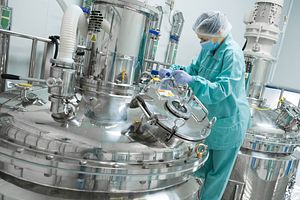
Some cell and gene therapy companies choose to manufacture internally and are building out existing facilities or creating new ones to meet anticipated demand for new products. In the Georgia Tech survey referred to above, two of the cell and gene therapy companies whose labor needs had grown exponentially were also in the throes of expanding their manufacturing space.
Cell and Gene Therapy CDMO
We have supported the development of 10 FDA-approved cell and gene therapies and have conducted more than 900 studies in this field over the past year. Our focus is on accelerating and achieving your critical development goals from discovery to commercialization.
The downside to building additional space is it is time consuming and expensive. Once the build is complete companies have to properly staff these facilities. Staffing is complex from multiple perspectives, you have to find people at various levels (associates, managers, supervisors, directors), train them, and retain them. Further complicating matters is determining how many people to hire, especially if manufacturing demand is not predictable, especially during clinical trials.
An alternative option is to outsource manufacturing and testing to contract manufacturers who can help smooth a company’s manufacturing demand. If a company completely outsources manufacturing, they will not have to carry the full load of maintaining a manufacturing facility and workforce. A hybrid approach at commercial of having some internal manufacturing capacity coupled with an external manufacturing partner (for surge capacity) may offer a best-fit option.
For companies choosing to build or expand their own plants, there are a myriad of factors, some of them unexpected, to consider. According to CBRE, a global leader in real estate investment, a confluence of events, including soaring construction demand, inflation, pandemic-related restrictions, supply chain disruptions, labor shortages and the war in Ukraine, are sparking rising costs and uncertainty across the construction industry.
At the same time, prices for materials—from computer chips and gypsum to glass and concrete—have surged 35.7% since January 2020, although 80% of the increase has occurred since January 2021, according to BLS & Co., which advises companies on commercial projects.
I am an employee of a contract research, development, and manufacturing organization, so I may be seen as being biased, but it makes sense for therapeutic developers to partner with experienced groups in the development and manufacturing space. The portfolio of expertise we bring as a partner includes taking a product candidate from discovery through manufacturing and commercialization. In having a single partner for all activities, therapeutic developers can cut significant time from their development plans and reduce bottlenecks. We are preparing for increased demand ourselves, two of our CGT CDMO sites (one in the UK and one in Memphis, Tennessee) recently completed capacity expansion projects to meet future demand.
Starting Materials for Allogeneic Cell Therapies
The first commercially approved CAR-T therapies were developed for lymphomas and other B-cell cancers and relied on a patient’s own cultured cells. We now have clear durability data on these autologous therapies. There are patients who received autologous CAR-T therapies still cancer free 10 years after being dosed, according to data reported last year by the University of Pennsylvania.
Some believe the cell therapy field should move to predominantly allogeneic cell therapies in an effort to simplify manufacturing and logistics along with lowering manufacturing costs and increasing patient access to these therapies. To realize this vision would require a pool of potentially dedicated, recallable donors.

Video Series: Driving CAR-T Forward
Ex vivo gene therapies such as CAR-T and TCR-T have emerged as promising cancer therapies and more continue to move into the clinic. Join Ulrike Herbrand, Julia Schüler, and Sophie Vermond to learn how to drive CAR-T cell therapies from early-stage development to clinical filing and lot release.
The process of building and maintaining diverse donor pools is complex and getting more difficult as more allogeneic cell therapy programs continue to enter clinical development. The bioproduction demand for allogeneic therapies is projected to increase fifteen to twenty-fold in the next 4-5 years.
As providing a reliable supply of dedicated, reliable cellular material becomes a limitation for allogeneic cell therapy program, therapeutic developers are working with proven cell supply partners for donor identification as well as management to develop sustainable donor campaigns and relationships to meet manufacturing needs from clinical to commercial. At CRL, we employ digital products to make the process of recruiting and retaining donors more efficient and make it easier for a donor to donate cells.
While there are current headwinds in the cell and gene therapy space related to funding, we are continuing to see a number of therapeutics being submitted for approval. At the same time the field now has multiple products which have attained blockbuster status, Yescarta ($1.16B 2022 revenue) and Zolgensma ($1.37B 2022 revenue). As more therapies move into larger patient populations, we expect this trend to accelerate and more funding opportunities to open up.