
Featured News
Challenging Structures: LINE-1 RT
Charles River structure-based drug design experts discuss their contribution to solving the first LINE-1 RT crystal structure as part of a global initiative led by ROME Therapeutics.
In a landmark paper published in Nature, a global collaboration led by ROME Therapeutics revealed the first high-resolution structure of the LINE-1 reverse transcriptase (RT). The research uncovered key findings around LINE-1 RT activity and its incitement of innate immune responses within the body.
ROME Therapeutics is dedicated to enabling breakthrough treatments for autoimmune disorders and other serious diseases through investigation of the "dark genome," the uncharacterized portion of the human genome that includes long stretches of DNA derived from ancient integrations of viruses and transposable elements. ROME Therapeutics previously worked with Charles River structural biologists to solve the first crystal structure of HERV-K RT.
Charles River scientists were part of this large and diverse team, which brought together multiple organizations to investigate and solve the LINE-1 RT structure. We talked to protein science and structure-based drug design experts Paul Wan and Charlie Nichols about their experiences and contributions to this seminal scientific breakthrough.
What are the implications of resolving this structure for the first time for drug developers and patients?
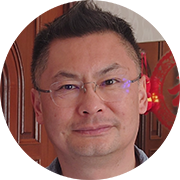 Paul: Solving the structure of LINE-1 RT has improved our understanding of how LINE-1 works and opened up the possibility of rationally designing drugs to target the enzyme for cancer, autoimmune disease, neurodegeneration, and other diseases of aging.
This collaboration also revealed new aspects of LINE-1 RT’s mechanism, including its involvement in innate immune activation, supporting the rationale for using LINE-1 RT inhibitors for autoimmune and other inflammatory diseases. As we build up a better picture of how LINE-1 works mechanistically, we hope further studies will help us uncover additional roles it may play in disease and new opportunities for treatment.
What made LINE-1 such a challenging structure to resolve?
 Charlie: LINE1-RT was a challenging protein to work with because it is large, floppy, and highly susceptible to degradation during expression. It also co-purifies with a lot of nucleic acid already bound. A lot of work was therefore required to design a construct and develop a purification system that would yield homogeneous protein at sufficient scale and purity to enable crystallography.
When we resolved these issues and obtained crystals, it was still difficult to solve the structure as the crystals natively only diffracted to around 4 Å (angstroms) and exhibited a high level of anisotropy. Obtaining high resolution data required extensive optimization of crystal growth and the development of a complex dehydrating cryo-protection system once the crystals had grown.
How did you solve the crystal structure for LINE-1?
Charlie: LINE-1 RT is part of the LINE-1 ORF2p protein. The first step to obtaining its structure was to screen a wide range of expression constructs based on structure predictions. From this, we identified a core region that gave good expression of soluble protein. We then had to develop a series of purification steps to produce full-length LINE-1 RT of crystallization-grade quality.
Once we had protein in hand, we set up wide-ranging crystallization screens with different duplexes, protein concentrations, and incubation temperatures. The hit rate was very low, with just three hits from more than 10,000 drops set up.
One of the hits was a huge low-resolution lattice with native diffraction to a resolution of around 4 Å. To improve these crystals, we started by optimizing pH and precipitant concentration, then optimized mixing ratios and additive screening. This improved crystal size and quality, yielding 2.9 Å data, which then allowed us to get an initial structure using the AlphaFold predicted model. That predicted structure still had a lot of poorly defined regions, so we developed a complex cryo-protection system, which further boosted the resolution. We ultimately merged data from six of the best crystals into a single dataset, yielding the final high resolution, 2.1 Å model.
What made this research so exciting to work on?
Charlie: I started my crystallography career working on the structure-based design of HIV-1 reverse transcriptase inhibitors to overcome resistance mutations. Getting the opportunity to work on another reverse transcriptase 25 years later, with similar potential to impact human health, has been very exciting. The project was also technically very challenging and overcoming the difficulties was a team effort with a really strong sense of accomplishment when we finally achieved success!
Paul: The fact that so much of our genetic makeup is unknown (the "dark genome") and that a significant portion is made from repeated viral and transposon insertions made this instantly an exciting area to explore with ROME Therapeutics. What started as a lone structure-based drug discovery program exploded into a large multi-organization/cross-disciplinary project. The open collaboration with so many teams (both academic and commercial) across the world made this project fun to work on. It was invaluable having not only the expertise of global key opinion leaders at hand but also the enthusiasm and passion that team members brought to the project. Personally, I have never had the pleasure to work with a group like this before, but I hope it is the first of many for Charles River, my team, and myself.
Our Structural Biology team is experienced in assessing research parameters and designing tailored, flexible programs using the best methods to meet your discovery goals. We offer standalone structural or biophysical projects and can also work as part of an integrated drug design team, providing a seamless discovery experience.
Paul Wan, PhD, leads the Protein Sciences, Biophysics, and Structural Biology Group at Charles River Discovery. He has over 25 years of experience working in the field of drug discovery in both an academic and commercial setting.
Charlie Nichols is a research leader in the Structural Biology department at the Charles River Laboratories Chesterford Research Park, UK. His principal areas of expertise are crystallizing difficult targets, developing crystallization platforms suitable for medium-throughput structure-based drug design projects, and X-ray based fragment screening. Charlie has been with Charles River for two years; prior to joining the company he worked in academia for 25 years with a wide range a targets. Charlie has a PhD in X-ray crystallography from The Wellcome Trust Centre for Human genetics, Oxford UK (OU sponsoring establishment scheme) and a Masters in biochemical engineering from UCL, London, UK.
Cover image taken from MoA animation by, and used with the kind permission of, Visual Science, 2023 (doi 10.1038/s41586-023-06947-z)