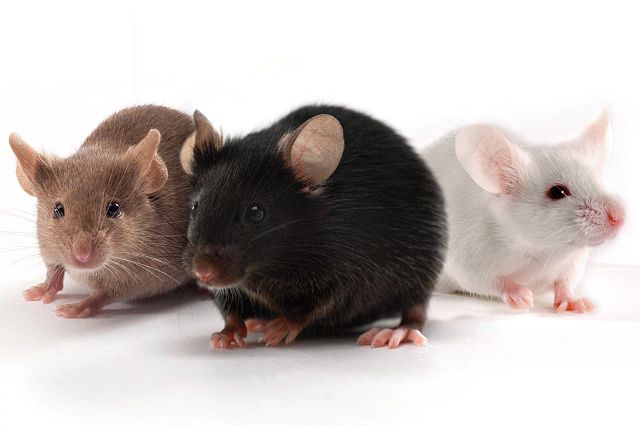
Lab Mice and Scientific Breakthroughs
With cutting-edge genetic engineering and genome sequencing, today's researchers can utilize model creation techniques to generate mice that have the right mutation required to study human conditions. With a lab mouse, scientists around the world can use their findings to aid in drug development for preclinical research.
Lab Mice for Biomedical Research
- All mouse models
- Inbred mice
- Outbred mice
- Hybrid mice
- Immunodeficient mice
∘ Humanized mice
∘ Triple-immunodeficient mice
∘ SCID mice
∘ Nude mice - Cryopreserved mice
Download the Charles River Guidebook Series
Our popular guidebook series is now digital. Receive essential guidance on everything from colony management to genetic testing, health surveillance, clinical signs, and more.
Download Now
Services for Transgenic and Mutant Lab Mice
- Lab mouse and rat contract breeding
- CRISPR/Cas9* genome editing
- ES cell mutagenesis
- Genetic testing services
- Embryology (including cryopreservation and rederivation)
- Rapid colony development
- Animal quarantine
- Line rescue
*CRISPR/CAS-9 used under licenses to granted and pending US and international patents from The Broad Institute and ERS Genomics Limited.
Frequently Asked Questions about Lab Mice
-
What are some reasons lab mice are used for biomedical research?
- The lab mouse can be inbred through brother/sister mating to yield genetically uniform strains for more accurate and reproducible experiments.
- Lab mice can be genetically engineered to model virtually any human disease or condition.
- Lab mice have an accelerated lifespan. One mouse year equals approximately 30 human years, making it faster to study a life cycle and age-related conditions.
- They are well characterized and widely utilized by the biomedical research community.
- They are small, quick to reproduce, and relatively easy to handle and transport.
Read More
Why Do Medical Researchers Use Mice?, LiveScience, 2010 -
With computer models for biology and sophisticated in vitro options for experiments, why do we still need lab mice?
Computer systems are crucial for research as they allow for mathematical modelling and simulations of historical experimental data to guide experimental design. However, computer modelling is only as good as the information that is entered in the system. In order to find this information, we need to look into a living organism.
In vitro experiments, which are done with molecules (proteins, DNA, etc.) or cell cultures, are useful to discover mechanisms that happen inside the cell but are not always so useful to explore how different cells, tissues, and organs interact in the body.
-
Where can I find out more about your commitment to the humane care and wellbeing of laboratory animals?
Visit our Animals in Research web page to learn about our commitment to animal welfare and it’s importance to the accuracy, reliability, and translatability of research.
-
Why is it important to cite precise lab mice nomenclature in scientific publications?
Almost all scientific peer-reviewed journals require researchers to be as precise as possible in order to bring about the reproducibility of results. Mouse nomenclature allows researchers to choose the right mouse phenotype for the right study. Read our blog to learn more about mouse nomenclature.
-
How do you maintain the genetic quality of both inbred and outbred lab mouse and rat strains?
Our International Genetic Standardization (IGS) program manages both the health and genetics of your inbred/outbred mice and rat strains to ensure high quality and uniformity, regardless of where they are bred in the world.
-
Is there a way I can test a particular strain of lab mice to ensure it’s appropriate for my research?
Yes. Our Animal Model Evaluation Program is a risk-free program that allows you to assess the quality and compatibility of our animal models before making a commitment. The program includes many of our animal models, but not all. Learn more
