LPS/ATP-induced Peritonitis Model of NLRP3 Inflammasome Activation
Inflammasomes are defined as cytosolic multi-protein complexes that mediate activation of caspase-1 leading to the maturation and secretion of IL-1β and IL-18 and pyroptosis, a bacterial infection-induced form of cell death. Many autoimmune pathologies such as rheumatoid arthritis and lupus have been linked to dysregulation of caspase-1 activation and IL-1β secretion, strengthening the need for animal models to study the efficacy of compounds targeting the inflammasomes in vivo. Nucleotide-binding oligomerization domain-like receptor family pyrin domain containing 3 (NLRP3) is the best characterized and most clinically implicated inflammasome and is activated in the presence of two specific signals. The first of these signals (priming signal) activates the pathway that leads to upregulation of NLPR3 proteins, pro-IL-1β and pro-IL-18. The second signal is necessary for the assembly of the inflammasome and caspase-1 activation.
Charles River has characterized a clinically relevant acute in vivo model to study the NLRP3 pathway using a combination of LPS and ATP. LPS acts as the priming signal leading to an increase in pro-IL-1β synthesis, but limited increase in mature IL-1β. ATP acts as the second signal and leads to the NLRP3 inflammasome activation that, together with the increased in pro-IL-1β, results in maturation and release of the pro-inflammatory cytokine IL-1β. The increase in IL-1β in peritoneal wash and serum can be reversed by administration of the corticosteroid Dexamethasone and NLRP3-inhibitor compounds. The increase in serum IL-18 can be reversed by NLRP3-inhibitor compounds.
NLRP3 Inflammasome Pathway Study Endpoints
- Cytokine analyses in serum and peritoneal wash
- PK/PD blood analyses
- Clinical chemistry
NLRP3 Inflammasome Activation Model Validation Data
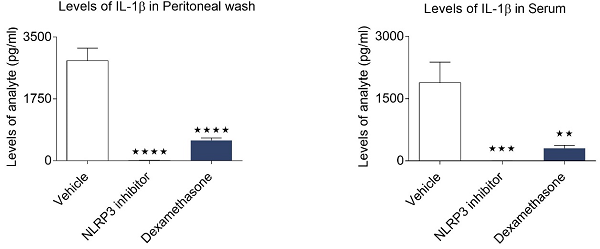
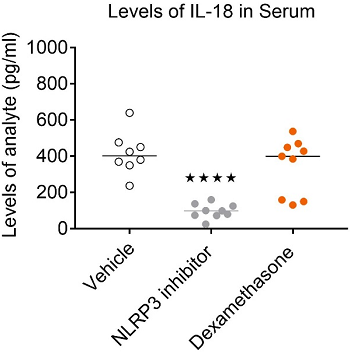
A NLRP3 inhibitor and Dexamethasone inhibit the inflammasome-induced release of IL-1β in peritoneal wash and serum. Only NLRP3 inhibition results in a significant reduction in serum IL-18.