
GLP and non-GLP Studies Conducted in Reno
Founded in 1992, Sierra Biomedical was acquired by Charles River in 1999, then relocated from its Sparks, Nevada site to a purpose-built facility in Reno in 2007. Over 800 employees maintain the 465,000 square foot CRO facility and operate 150 animal rooms for both small and large animal models.
23
study directors
56
scientists
9
board-certified veterinary pathologists
5
board-certified clinical pathologists
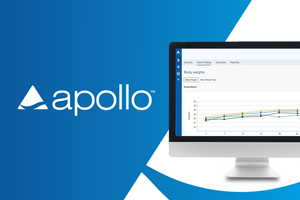
Welcome to Apollo™
This new and secure cloud-based platform gives you real-time access to view your study data and visualize your program milestones, all in one place. Apollo™ removes barriers and empowers your safety assessment journey.
Explore Apollo™
Laboratory Specifications
- GLP and non-GLP studies conducted
- Species: rat and large animal
- 465,000 square feet
- 43,200 square meters located on 30 acres
- 24-hour security and fire monitoring
- 150 animal rooms
- Laboratories of expertise
- Test article formation
- Analytical chemistry
- Clinical pathology
- Necropsy
- Histopathology
- Immunohistochemistry
- Molecular biology
- Immunology
Services and Study Types
- Discovery Support
- Toxicology
- Subacute to chronic general toxicology studies
- Standard and specialty routes of administration
- Large animal developmental and reproductive toxicology
- Juvenile and neonatal studies
- Immunotoxicity
- Ocular toxicology
- Safety Pharmacology
- Cardiovascular telemetry (including jacketed external telemetry and intraventricular implantation)
- CNS assessments
- Respiratory telemetry
- Drug metabolism and pharmacokinetics (DMPK)
- Toxicokinetic analysis
- Analytical services
- Immunobiology
- Immunogenicity
- Preclinical and clinical large molecule bioanalysis
- Immunophenotyping
- Immunoassays
- Molecular biology
- Preclinical and clinical Flow cytometry
- Biomarkers
- Pathology and support services

Investigational New Drug Planning Considerations
Growing pressure in the market is changing drug development, requiring researchers to accelerate early phases to create late-stage pipeline growth. Our Investigational New Drug eGuide will help you understand how and when to plan your preclinical IND-enabling studies to meet specific milestones and submit your investigational new drug application successfully and efficiently.
Explore eGuide
Compliance and Accreditations
Our Reno facility operates in compliance with the requirements of the following regulatory agencies or accredited organizations:
- U.S. Food and Drug Administration (FDA)
- U.S. Department of Agriculture, BSL2 Certified (USDA)
- Association of Assessment and Accreditation of Laboratory Animal Care (AAALAC)
Humane Care
Charles River is a worldwide leader in the humane care of laboratory animals. We work hand-in-hand with the scientific community to understand how living conditions, handling procedures, and stress play important roles in the quality and efficiency of research.