Digital Pathology Solutions and Slide Scanning Services
Discover how Charles River is leading the digital pathology revolution with our specialized digital pathology services:
Time-saving Digital Pathology Solutions
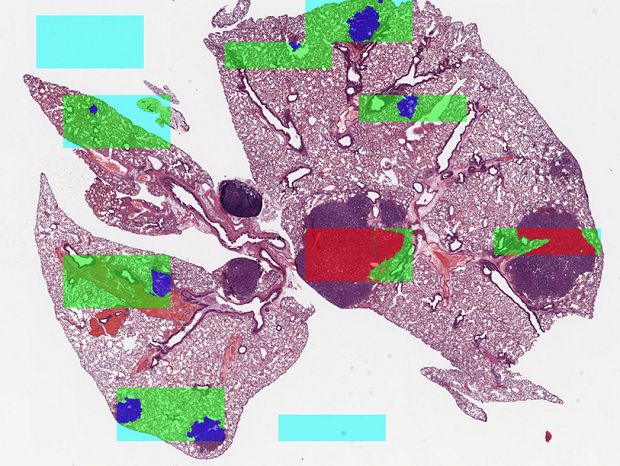
We are continually developing innovative digital pathology solutions to accelerate discovery and safety programs around the globe. The average toxicology program involves the assessment of 30,000 slides, consuming considerable time and effort. With the application of advanced digital pathology solutions, including software and equipment, tasks that once took hours have been reduced to minutes, with the added advantage of enhanced collaboration and peer review.
Integrated Pathology Slide Scanning Services
We’ve deployed a suite of digital slide scanners paired with an integrated slide management system to connect our team of nearly 150 pathologists with each other and you, their clients. These scanners produce whole-slide images (WSI) of microscopic slides at a range of magnifications, allowing fit-for-purpose use for diverse activities such as diagnostic primary and peer review, machine learning and deep learning-based image analysis.

10 Regulatory Truths for Biotech Founders
Do not leave your breakthrough to chance; download this complimentary infographic as a concise checklist to help you stay on track and reach your milestones.
Download infographic
Digital Pathology Software Partnerships
Charles River is engaged in a partnership with Deciphex and utilizes the Patholytix Preclinical software platform as a complete digital pathology solution, including image management, primary digital pathology evaluation, and digital peer review.
GLP-validated Digital Image Analysis
Charles River offers 21 CFR Part 11-compliant custom algorithm development for quantitative digital image analysis. Highly trained and experienced image analysis scientists across several sites within our global network (Edinburgh, Mattawan, Evreux, Senneville, and Laval) are available to assist you in the design of your study in order to extract the most meaningful data possible from your digital samples. If you think there may be a need for image analysis in your work, contact us early to maximize the value of these critical endpoints.
Advance Your Translational Research with High-Plex Spatial Profiling
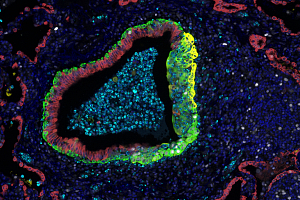
This webinar will help you reveal deeper biological insights that accelerate decisions. Discover high‑plex spatial profiling and how it strengthens your translational research.
Watch now
Digital Primary and Peer Review
Our digital primary and peer review capabilities allow you to interact virtually with our team, and consultant pathologists. Digital primary slide review can be done anywhere in the world using Patholytix through a secure interface. Digital peer review is already in place for all study types, adding flexibility for this critical toxicology best practice. We continue to develop relationships with our clients who are fully digital. Our partnership with Deciphex further advances capabilities in both digital primary and peer review with the full integration of Patholytix Preclinical software into the histopathology workflow. This innovative slide management system was built with the pathologist in mind, with an outstanding ergonomic and user-friendly experience.
The exclusive integration of Patholytix into Charles River’s operations represents a transformative step in our mission to revolutionize digital pathology. This partnership exemplifies our commitment to delivering innovative solutions that enhance efficiency, drive collaboration, and ultimately accelerate safer drug discovery.”
Donal O’Shea, Chief Executive Officer, Deciphex
Machine and Deep Learning-Based Tissue Image Analysis
Charles River has also deployed the Deciphex Patholytix Preclinical and Visiopharm platforms to further enhance our existing WSI capabilities with machine and deep learning image analysis. Our global working group of pathologists and scientists has expertise in developing algorithms that can drive your scientific discoveries and safety evaluations, while in-house and partnering computer scientists, statisticians, and other specialists contribute to study design, development, and testing. These sophisticated image analysis algorithms can be applied as decision support tools for pathologists or for producing primary data for nGLP and GLP studies.

Your Essential Guide to Digital Pathology
Our Digital Pathology Services and Solutions interactive eGuide will help you understand the transformative power of our digital solutions to your pathology needs—because every moment matters.
Download your copy
Frequently Asked Questions (FAQs) About Digital Pathology Services and Peer Review
-
What is digital pathology?
Digital pathology involves the secure, GLP-validated, and SOP-driven acquisition, management, and interpretation of pathology information generated from a digitized glass slide, or whole-slide image (WSI).
-
What is a digital pathology peer review?
A digital pathology peer review is a SOP-driven review of the study pathologist’s evaluation of tissue changes by a qualified peer-reviewing pathologist using digital whole-slide images (WSIs).
-
Can WSIs be generated from GLP studies?
Yes. WSIs can be generated for any type of study (Discovery, non-GLP, GLP).
-
Can these WSIs be used for GLP digital pathology peer review?
Yes. We have procedural controls in place to support non-GLP and GLP peer review. Charles River completed the validation of the Deciphex Patholytix Preclinical platform for GLP peer review in 2021 and GLP primary review in 2022. The full chain of custody of the images and metadata was covered as part of the validation strategy to ensure the entire workflow, from image capture (through scanner and image repository validation) to actual upload and download of images/metadata, is addressed from a security, functionality, and compliance standpoint. To ensure full compliance under current regulations, the sponsor hardware and software must also be covered by a validation cycle of its own, using the sponsor processes for these activities in completing the end-to-end validated state of this particular application. Charles River and Deciphex can provide guidance to sponsors in the approach and elements required to ensure that GLP compliance can be claimed for the entire chain of custody.
-
What slide scanning capabilities exist at Charles River?
We have a global fleet of integrated whole-slide scanners and offer comprehensive quantitative pathology services, including GLP. Our slide scanner fleet is composed predominantly of Leica Biosystems (Aperio) GT450 and Hamamatsu Nanozoomer S360 slide scanners. We have the capability to directly digitize glass slides at all of our Safety Assessment sites globally.
Note that several sites also have the capability to digitize fluorescent slides (using Axioscan from Zeiss, S60 from Hamamatsu, PhenoImager from Akoya).