
Safeguarding Your Biologics through Bulk Harvest Testing
Testing services are available for unprocessed bulk harvest materials supporting biologics from early development through commercial production. Unprocessed bulk harvest testing ensures the safety and quality of the harvested material (cells, media, and product) before further processing. We provide adventitious virus, mycoplasma testing, sterility/bioburden, electron microscopy, and in-process testing to assess upstream quality. These services are critical for ensuring batch release readiness and supporting CMC regulatory filings across all phases.
Unprocessed Bulk Harvest Testing
Biomanufacturing processes with human or animal cells are at risk for adventitious agent contamination. Viruses and microorganisms can be introduced into the manufacturing process, for example, via contaminated raw and starting materials or the production environment. The unprocessed fermenter harvest represents the most relevant process intermediate for adventitious agent testing. At this stage, potentially present contaminants had the chance to accumulate and are not yet removed or inactivated by the following downstream process. Unprocessed bulk harvest samples offer the highest probability of detecting adventitious agents, if present. It is, therefore, a regulatory requirement that each production batch must be tested prior to further processing and purification.

The Role of Unprocessed Bulk Harvest Testing in Biomanufacturing
Uncover why Unprocessed Bulk Harvest (UBH) testing should be a proactive part of your manufacturing approach. From identifying contamination risks at the earliest stages to enhancing regulatory compliance, effective UBH testing can shape the future of your operations.
Read The Whitepaper
Bioburden Testing
Bioburden testing plays a critical role in the quality assessment of unprocessed bulk harvests but must adhere to defined microbial limits to ensure process integrity. We conduct compendial bioburden testing in GMP-compliant laboratories to quantify viable microbial contaminants such as bacteria and fungi. This data supports upstream process control, informs risk mitigation strategies for downstream purification, and contributes to the overall safety and consistency of biologic manufacturing workflows.
Sterility
Sterility testing must be performed at various phases of product development, including raw materials, cell banks, viral seed stocks, unprocessed bulk harvest materials, and final products. Our compendial sterility tests, performed in GMP-compliant cleanroom environments and isolators, help ensure your unprocessed bulk harvest testing meets regulatory requirements and are safe for downstream processing. This reduces the risk of batch failure, supports lot release, and safeguards product integrity during scale-up and commercialization.
Mycoplasma Testing
We help clients avoid delays in the development, manufacturing and release of their products by offering screening assays for mollicutes, including mycoplasmas and spiroplasmas. Our clients have access to all compendial mycoplasma test methods including the culture method, the indicator cell culture method, and validated rapid NAT-based methods. Rapid NAT-based methods for mycoplasma detection offer several advantages, including increased sensitivity and reduced turnaround time, enabling quicker responses to contamination and shorter investigation periods. It boasts a broad detection range for various mycoplasma species, making it particularly suitable for applications in cell and gene therapies, as well as products with short shelf lives.
Viral Safety
Unprocessed bulk harvests can harbor adventitious viruses introduced via raw materials, cell lines, or bioreactor environments. We offer a robust viral safety testing panel including:
- Cell-based in vitro adventitious virus assays to detect a broad spectrum of unknown viruses.
- Transmission Electron Microscopy (TEM) for direct visualization and enumeration of viral particles.
- Targeted PCR-based assays such as Minute Virus of Mice (MVM) PCR for specific viral contaminants.
These methods are generically validated and performed under GMP. They are designed to identify both known and unknown threats early in production, supporting viral clearance strategies, reducing regulatory risk, and ensuring the safety of your biologic product.
By integrating molecular and next generation sequencing technologies, alongside traditional methods, we ensure product safety and efficacy while navigating the complexities of these innovative therapies. These methods are performed under GMP and contribute to early threat identification, regulatory compliance, and overall product integrity.

Determining the Right GMP Safety Testing Plan for Your Biologic
The risk of viral and microbial contamination is a feature common to all biological products derived from cell lines. In order to comply with regulatory agencies like the FDA and EMEA, all cell banks, raw materials of animal or human origin, bulk harvest samples, and final drug products are subjected to various safety tests to ensure that they are free of any possible contaminants.
Learn More
Streamline Your Unprocessed Bulk Testing in CHO-Based Manufacturing
We can help you streamline your testing strategy for unprocessed CHO cell substrates by reducing the duration of the in vitro adventitious agent test from 28 days to 14 days, using three cell lines combined with virus-specific PCR for MVM detection. This approach, supported by a risk assessment acknowledging the safety profile of CHO substrates and the absence of animal-derived materials, also includes mycoplasma PCR and bioburden tests. Transmission Electron Microscopy (TEM) is utilized to quantify retrovirus-like particles, required only for the first three batches, facilitating a quicker turnaround time for reports—21 days post-sample receipt instead of up to 35 days with the traditional testing. The proposed strategy aligns with ICHQ5A(R2) guidelines, and engagement with regulatory agencies is advised before implementation.
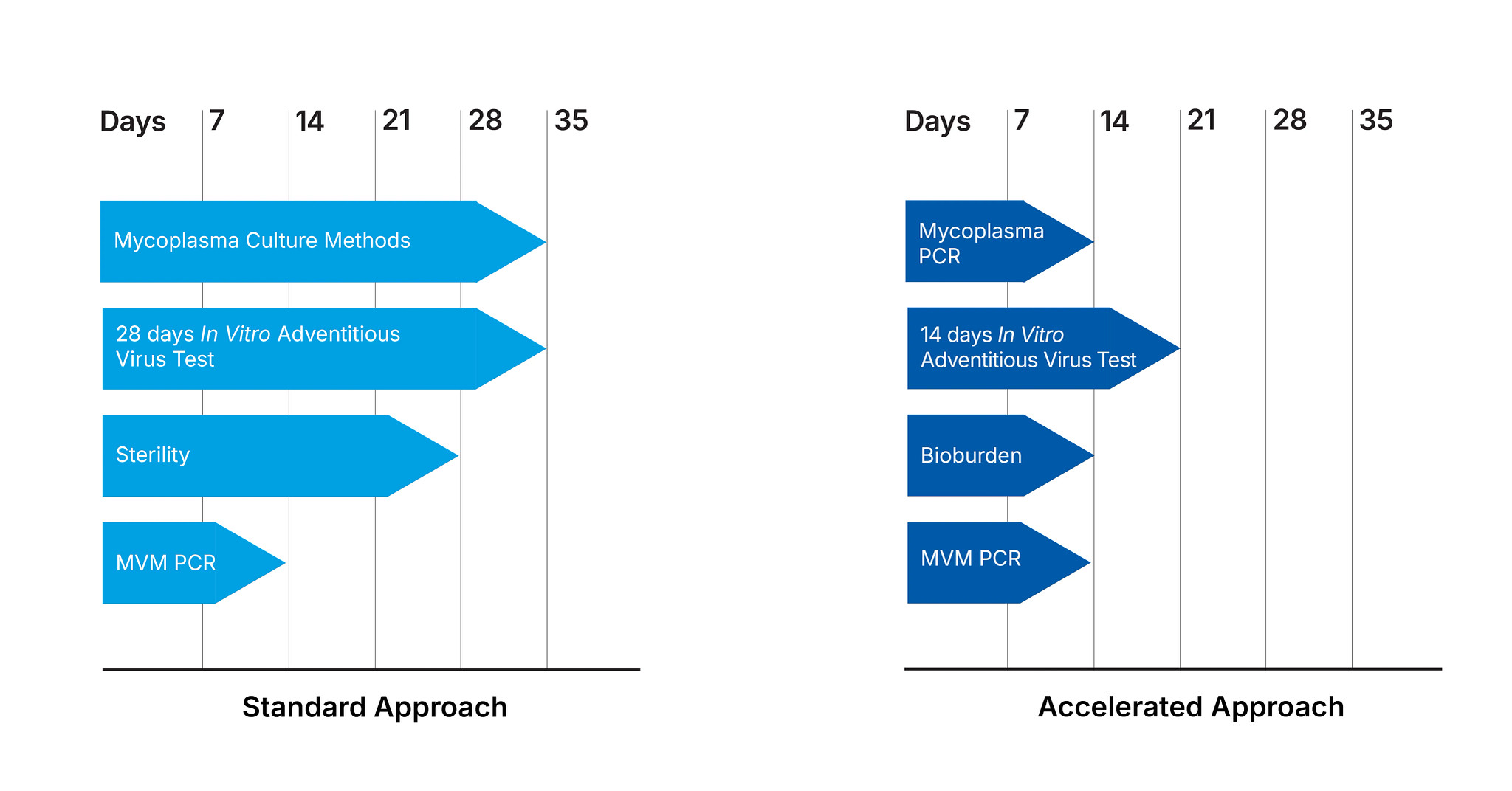
Chart: Accelerating CHO bulk harvest testing requires a full set of rapid methods. Timelines reflect the minimum total assay turnaround times.
Where Safety Starts
Our unprocessed bulk testing services combine speed, reliability, and deep expertise to help you advance with confidence. We help you stay on track and on budget and prepare for every milestone from early development to final submission.
Reliable and Timely
Our unprocessed bulk harvest testing services are designed for speed and consistency. We deliver results within 21 to 35 days. With reliable turnaround times and transparent updates, we help you stay on track and meet critical milestones.
Proven Quality from 25+ Years of GMP Testing Experience
Our unprocessed bulk services are built on a foundation of proven quality. Clients trust our rigorous standards, skilled teams, and regulatory alignment to deliver safe, consistent results.
Dedicated Project Management from Start to Submission
Rely on expert program oversight to stay on budget, on time, and aligned with evolving regulatory expectations. Our team collaborates closely with you throughout the lifecycle of your therapy.
Accelerated Tracking and Turnaround with Apollo™
Our innovative Apollo™ platform provides secure, cloud-based, real-time access to sample data, milestones, and documents for biologics, including information gathered during unprocessed bulk harvest testing. This platform offers a centralized site for submitting sample submission forms, tracking samples, and exchanging documents related to your biologics. This streamlines workflows and ensures accuracy and can be used for various types of data related to unprocessed bulk harvest testing. Apollo™ aims to improve efficiency in the drug development process by providing quick access to study data and supporting informed decision-making.
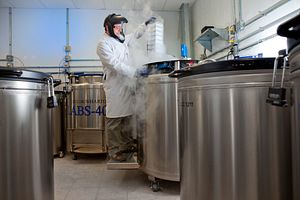
Manufacturing & Virus Safety Testing of HEK293 Cells for Viral Vector Production
Whether you're in the early stages or near commercialization, it's important to understand HEK293 cells' potential for CGTs and what you need to consider when banking them. Learn what manufacturing and viral safety testing you should consider to meet regulatory guidelines.
Watch the Webinar
Frequently Asked Questions (FAQs) About Bulk Harvest Testing
-
Why is bulk harvest testing important?
Biomanufacturing processes with human or animal cells are at risk for adventitious agent contamination. For example, viruses and microorganisms can be introduced into the manufacturing process via contaminated raw and starting materials or the production environment. The unprocessed fermenter harvest represents the most relevant process intermediate for adventitious agent testing. At this stage, potentially present contaminants have the chance to accumulate and are not yet removed or inactivated by the following downstream process. Unprocessed bulk harvest samples offer the highest probability to detect adventitious agents, if present. It is, therefore, a regulatory requirement that each production batch must be tested prior to further processing and purification.
-
Is it accepted by regulators to use the 14-day test turnaround time for CHO?
According to ICH Q5A(R2), it is compliant to use it with justification; the FDA expects a justification for why a potentially less sensitive assay doesn't compromise patient safety. We recommend you discuss any move to shorter assay test methods with your regulatory reviewer beforehand.
-
Where can biologics unprocessed bulk harvest testing regulatory guidelines be found?
Here are some regulatory guidelines for ensuring the safety of your products:
- FDA
- EMA
- ICH