

GI Partners Acquires CDMO and Cell Solutions
As Rose BioSolutions, the established CDMO and Cell Solutions businesses continue to support the biotechnology ecosystem with cell sourcing capabilities and CDMO services to accelerate your advanced therapy from development to delivery.
Learn More
What are Human-Induced Pluripotent Stem Cells?
Human-induced pluripotent stem cells are stem cells that are generated by reprogramming adult somatic cells (typically skin or blood cells) back into an embryonic-like pluripotent state. Human iPSCs retain the genome of the donor, can regenerate indefinitely, and can undergo differentiation into virtually any cell type of interest. iPSCs can also be manufactured at scale in suspension bioreactors.
For those reasons, they are a powerful tool to support your research needs in the areas of developmental biology, stem cell differentiation, cell therapy development, tissue and genetic engineering, regenerative medicine, as well as drug screening and toxicity studies.
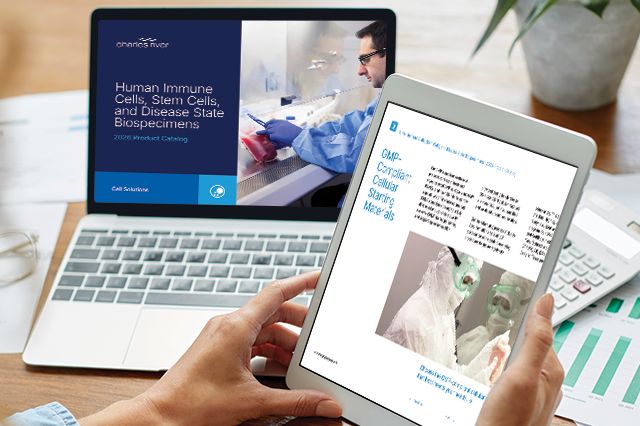
Human Immune and Stem Cells Product Catalog
Charles River is a trusted provider of research-use and GMP-compliant human immune cells and stem cells for advanced therapies and basic research. Our portfolio also includes disease state biospecimens for disease-focused research.
Download Catalog
Which Human iPSC Line is Best for You?
We have partnered with Pluristyx as an exclusive distributor for several of their wild-type human iPSC lines procured under current Good Tissue Practice (cGTP) and conform to Global Ethical Standards and Clinical Cell Regulations. The iPSCs are intended for research use only (RUO) and shall not be developed for diagnostic or therapeutic use.
-
Wild-type Human iPSCs
We offer several wild-type human iPSC lines for RUO, which are available in two different vialing formats and are cryopreserved in 1.2 mL threaded cryogenic vials with a 1 mL fill volume:
- A standard bank vial size of 1 million cells per vial.
- A high-density, Ready-to-Differentiate® vial size with either 25 or 100 million cells per vial. iPSCs frozen at high density can be differentiated immediately after thawing, thus eliminating the need for time-intensive and expensive pre-differentiation expansions.
Please contact us for availability, pricing, and lead times for the full list of wild-type iPSC lines that we offer for research use only.
Your company or academic institution may be eligible for pricing discounts. Government labs located in the United States are also eligible for GSA MAS discounts. Request a quote to find out more.
-
High Quality Wild-Type iPSC Lines
QC Metric Test Specification Out-of-freeze test Cell viability ChemoMetec NC-200 ≥ 70% At-freeze test Viable cell number ChemoMetec NC-200 ≥ 1 million viable cells Pluripotency Flow cytometry OCT-4 + SOX2 + SSEA-4 ≥ 70% Karyotype G-banding 46, XX or 46, XY normal Karyotype CS-digital PSC 24-probe by StemGenomics No detected copy number variations Karyotype FISH 20p11 – BCL2L1 Normal chromosome 20 copies Sterility Biologics sterility profile and mycoplasma spp. PCR assay Negative Identity Human cell STR profiling 100% match to donor at 17 sites Your company or academic institution may be eligible for pricing discounts. Government labs located in the United States are also eligible for GSA MAS discounts. Request a quote to find out more.
-
iPSC Catalog Summary, Wild Type
Wild-type iPSC lines Somatic cell of origin Karyotype Reprogramming technology Reprogramming factors RUO/GMP Cells/vial Ready-to-Differentiate® (RTD®) Format PSX11 Adult skin fibroblast 46, XX Stemloop® mRNA OSKM + Nanog, Lin28 RUO 1.00E+06; 2.50E+07;
1.00E+08Yes TC1133 Cord-blood derived CD34+ 46, XY Episomal reprogramming OSK + L-Myc, Lin28 RUO 1.00E+06; 2.50E+07;
1.00E+08Yes PSX1 Neonatal foreskin fibroblast 46, XY Stemloop® mRNA OSKM + Nanog, Lin28 RUO 1.00E+06; 2.50E+07;
1.00E+08Yes PSX5 Adult skin fibroblast 46, XX Stemloop® mRNA OSKM + Nanog, Lin28 RUO 1.00E+06; 2.50E+07;
1.00E+08Yes PSX13 Adult skin fibroblast 46, XY Stemloop® mRNA OSKM + Nanog, Lin28 RUO 1.00E+06; 2.50E+07;
1.00E+08Yes PSX17 Adult MSCs 46, XY Stemloop® mRNA OSKM + Nanog, Lin28 RUO 1.00E+06; 2.50E+07;
1.00E+08Yes Your company or academic institution may be eligible for pricing discounts. Government labs located in the United States are also eligible for GSA MAS discounts. Request a quote to find out more.
REQUEST A QUOTE/ORDER SPEAK TO AN EXPERT
Leukopaks or iPSCs? Determining Your Ideal Cellular Starting Material
In this webinar, our experts tackle this important question by comparing these two different cellular starting material sources and providing impactful data to help you make an informed decision.
Watch Now
Frequently Asked Questions About Human-Induced Pluripotent Stem Cells (iPSCs)
-
How are somatic cells reprogrammed to iPSCs?
In 2007, Dr. Kazutoshi Takahashi was the first person to report generation of induced pluripotent stem cells (iPSCs or iPS cells) from adult human dermal fibroblasts using four factors: Oct3/4, Sox2, Klf4, and c-Myc. Since then, there have been several advancements in the reprogramming technology and the transcription factors used to produce iPSCs.
iPSCs from Charles River are produced by reprograming somatic cells with three factors OSKM + Nanog + Lin28 using either Stemloop® mRNA technology ( PSX1, PSX5, and PSX11 iPSC lines) or Episomal reprogramming technology (TC1133 iPSC line).Takahashi K, Tanabe K, Ohnuki M, Narita M, Ichisaka T, Tomoda K, Yamanaka S. Induction of pluripotent stem cells from adult human fibroblasts by defined factors. Cell. 2007 Nov 30;131(5):861-72. doi: 10.1016/j.cell.2007.11.019. PMID: 18035408.
-
What is the somatic cell of origin for the iPS cell lines from Charles River?
- The PSX11 and PSX5 iPSC lines originated from adult skin fibroblast
- The PSX1 iPSC line originated from neonatal foreskin fibroblast
- The TC1133 iPSC line originated from cord blood-derived CD34+ stem cells
-
What is the advantage of using Ready-to-Differentiate® (RTD®) iPSC products?
Ready-to-differentiate® (RTD®) iPSC products are frozen at a high-density with either 25 or 100 million cells per vial and using a proprietary freezing method to preserve cell viability and quality. The value of RTD® iPSCs is that these cells can be differentiated immediately after thawing, thus eliminating the need for time-intensive and expensive pre-differentiation expansions.
-
Are the induced pluripotent stem cell lines offered by Charles River for clinical use?
All the iPSC lines we offer are for research use only (RUO) and shall not be developed for diagnostic or therapeutic use.
Of note, the original seed banks for PSX11 and TC1133 iPSC lines were procured under current Good Tissue Practice (cGTP) and conform to Global Ethical Standards and Clinical Cell Regulations which give them a path to the clinic. -
What is the cell passage of the iPSCs at shipment?
Charles River ships the iPSC master cell bank, or a close cell passage to the master cell bank, which is around cell passage 9. The exact cell passage will be listed in the CoA for each iPSC lot.
-
What documents are sent with each iPSC shipment?
Each iPSC shipment will include our comprehensive Instructions for Use document as well as the COA.
-
At what density should the iPSCs be plated?
We recommend plating the iPS cells at a density of 20,000 cells/cm2 unless otherwise specified with the iPSC line.
-
Do the media need to be changed daily for the iPSCs?
Yes, the media should be changed daily and the iPSCs should be passaged when at 70 – 80% confluency using non-enzymatic dissociation reagents.
-
Which media are recommended for culturing the iPSCs?
We recommend using Essential 8 culture media from ThermoFisher Scientific (catalog A1517001). Media should be kept in the dark and used within two weeks of addition of the supplement. Complete media should ideally be kept cold and added cold (at 4 °C) for cell feeding. Aliquots may be warmed for no more than 15 minutes, for feeding, or to recover cells in cryomedia at time of thaw.
-
Which cell counter is recommended for counting iPSCs?
We recommend using the Viability and Cell Count – A100 and B Assay on the NC-200 automated cell counter from ChemoMetec.
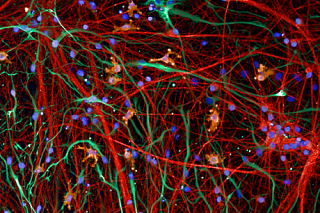
iPSC-Derived Cells for Drug Discovery
Combining our expertise in drug discovery and phenotypic screening assays with iPSC-derived wild-type and disease cells from our partner, bit.bio, provides physiologically relevant and innovative models for your therapeutic development. Learn more