Mouse Models of DSS-Induced Colitis
Dextran sulfate sodium (DSS) is a sulfated polysaccharide with variable molecular weights. Administration of DSS in mice causes human ulcerative colitis-like pathologies due to its toxicity to colonic epithelial cells, which results in compromised mucosal barrier function. Clinical observations similar to human pathologies, such as weight loss, diarrhea and occult blood in stool, are commonly observed and measured in the DSS-induced colitis mouse model. Importantly, studies suggest that acute DSS colitis mostly involves activation of neutrophils and macrophages, while lymphocytes are also activated in chronic DSS-induced colitis.
Acute and Chronic Colitis Mouse Model Study Data and Endpoints
Charles River offers both the acute and chronic DSS-induced colitis model in mice, which includes in-life clinical evaluation, histopathological evaluation of colon sections and optional cytokine and myeloperoxidase (MPO) activity analysis.
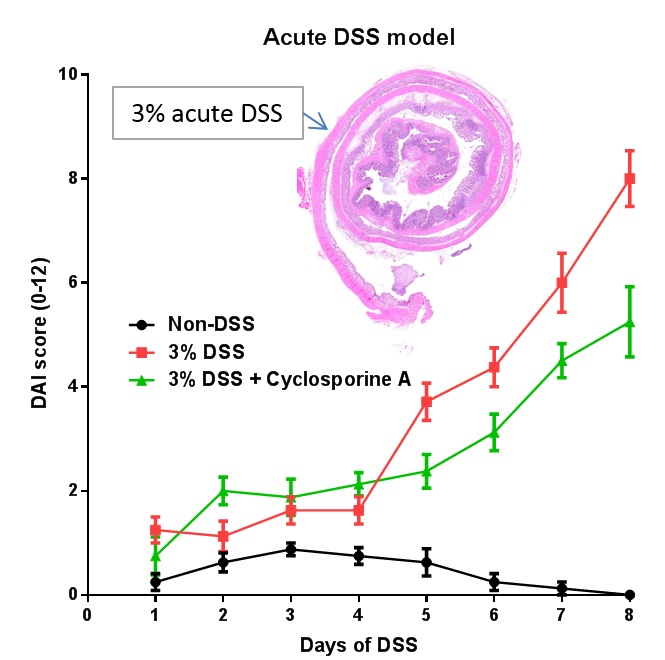
3% DSS in drinking water induced clinical signs of IBD such as body weight loss, diarrhea and occult blood in stool, which are summed to report as disease activity index (DAI) score. Inset picture shows the H&E stained section of colon with typical colonic histopathological changes in crypt loss with severe ulceration, edema, mucin depletion and infiltration of inflammatory cells.
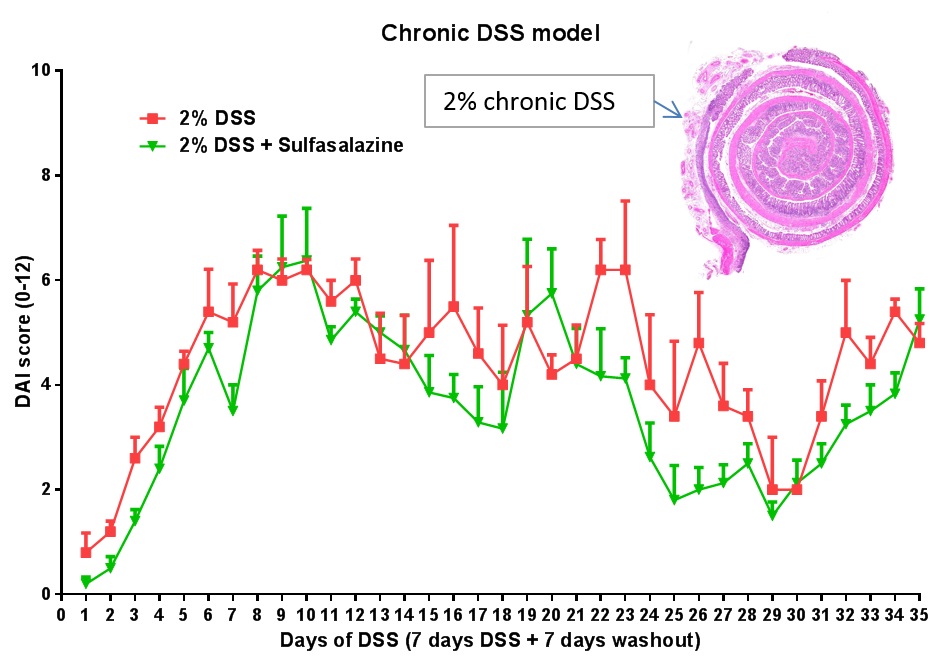
Three cycles of alternating 2% DSS and washout period induced clinical signs depending on the presence or absence of DSS. Inset picture shows the H&E stained section of colon with typical colonic histopathological changes in infiltration of plasmacytoid cells into the submucosal layers and squamous metaplasia.
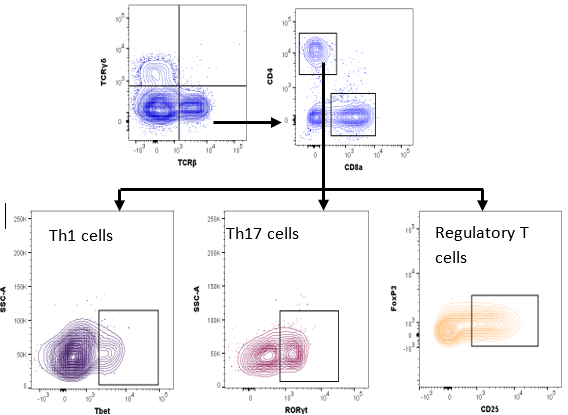
Flow cytometric analysis of T cell subsets within the lamina propria at d11 (repair phase) in DSS colitis treated BALB/c mice.
Study Endpoints
- PK/PD blood collections
- Cytokine/chemokine analysis
- Clinical chemistry
- Histopathological evaluation
- Immunohistochemistry
- Myeloperoxidase (MPO) activity assay
- Immunophenotyping