Mouse Lung Neutrophilia Studies
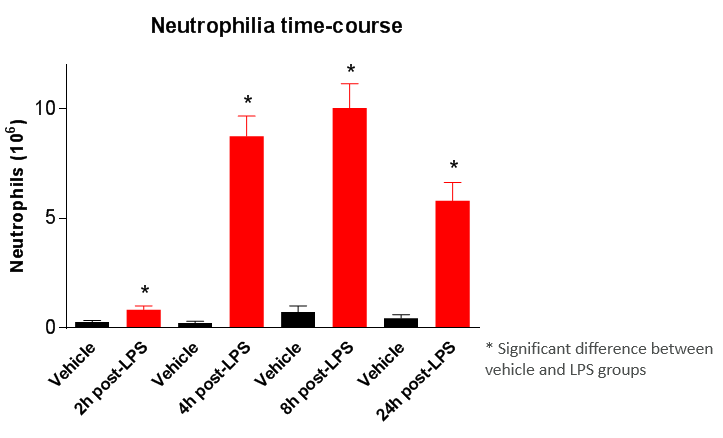
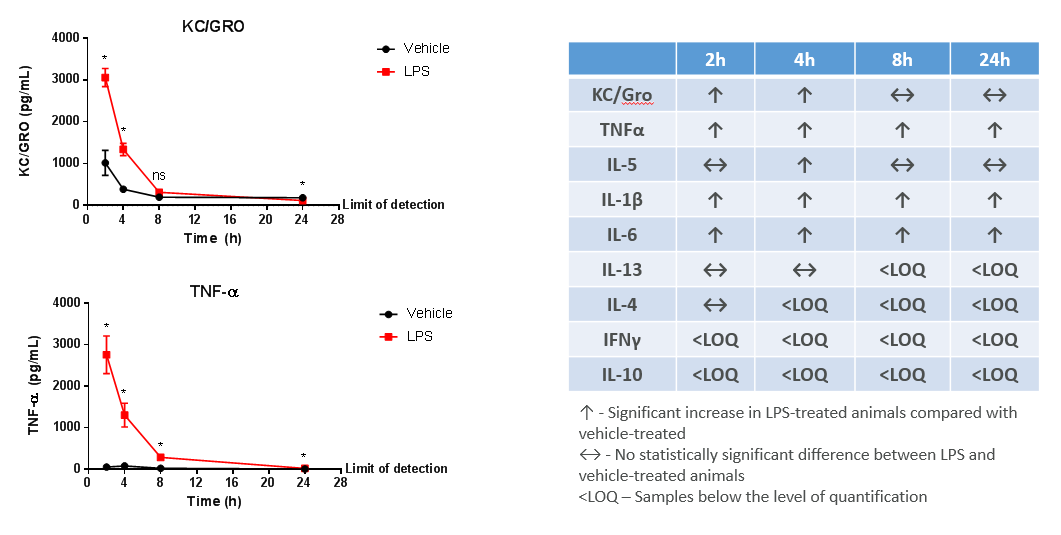
By exposing mice to an airway challenge of lipopolysaccharide (LPS) via the intranasal route, a marked neutrophilia in the bronchoalveolar lavage (BAL) fluid is induced, which attains statistical significance within 4 hours and then remains elevated for over 24 hours. There are also increases in inflammatory mediators (e.g., TNF) in the BAL fluid. The inflammation is sensitive to steroids, both oral and inhaled.
Rat Lung Neutrophilia Studies
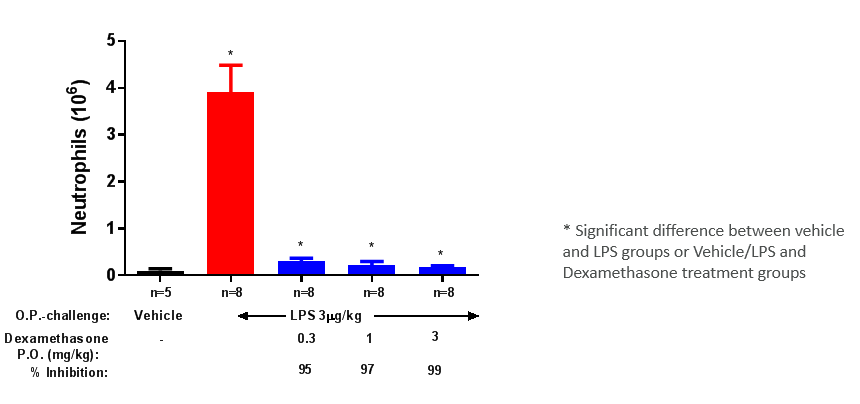
Charles River has developed a rat LPS-induced lung neutrophilia model and has profiled reference items to confirm the pharmacological tractability of the model. LPS is administered by oropharyngeal aspiration.
We have the capability to deliver test items by multiple routes (e.g., oral or inhaled to assess compound potency and efficacy).
The primary readout for this model is neutrophil recruitment to the lung, however, cytokines could be assessed at a suitable time-point after LPS challenge. Blood collection for PK analysis can also be included to support PK/PD calculations.
Systemic Inflammation
To compare the activity of compounds or mechanisms of interest in the lungs versus the systemic compartment, models of systemic inflammation in response to LPS challenge have been established in the rat and mouse.