Mouse & Rat Model of Bleomycin-Induced Lung Fibrosis
Bleomycin-induced pulmonary fibrosis is the most common experimental study model of human lung fibrosis. Our scientists have developed both a mouse and rat model of bleomycin-induced lung fibrosis and established time courses of effect over a 28-day period post-bleomycin administration.
We have the capability to administer compounds by multiple routes (e.g., oral, inhalation, intravenous, subcutaneous), and efficacy is then monitored by a number of methods:
- Histopathology and qualification via a modified Ashcroft score (n=10)
- Collagen quantification (directly or via image analysis of lung sections)
- Bronchoalveolar fluid (BALF) analysis (separate group of n=10) with leukocyte differential counts
- Biomarker analysis (gene, protein expression patterns)
WEBINAR: Secure Regulatory Approval of Complex Lung Models Through Collective Momentum
Regulatory agencies are increasingly embracing in vitro lung models. By integrating these advanced models, you can generate more human-relevant data, helping you streamline regulatory approvals and improve decision-making.
Watch the Replay
Pulmonary Fibrosis Studies in Mice
-
STUDY PARAMETERS
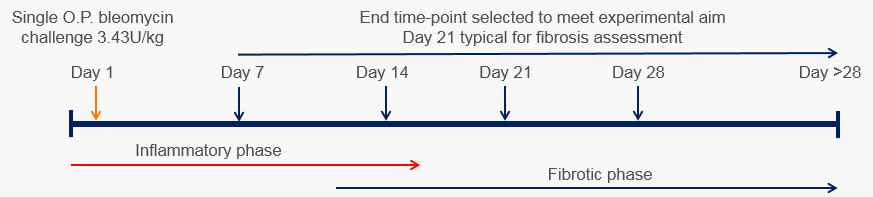
Fibrosis (assessed by lung pathology and hydroxyproline content) has been assessed over a 28-day time-course; end time-point can be selected to meet experimental aim (day 21 is typical). Bronchoalveolar fluid (BALF) analysis of cellularity and inflammatory mediator content as well as in-life lung function assessment can also be conducted.
-
VALIDATION DATA
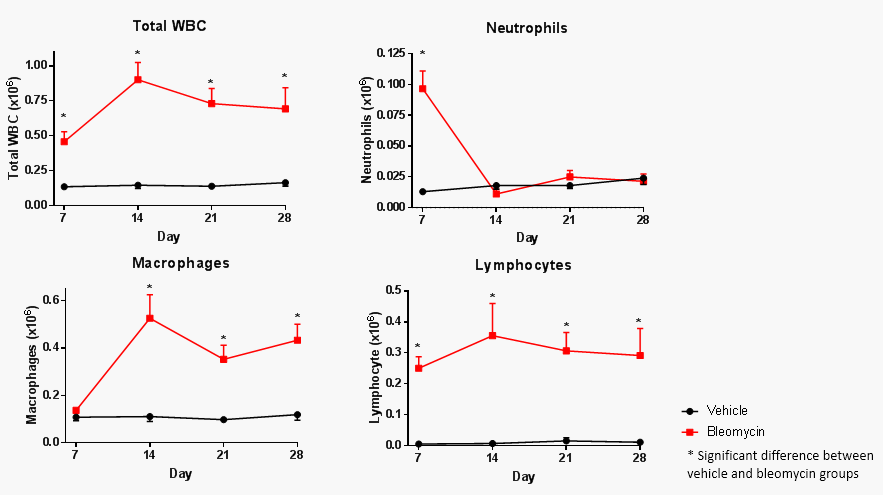
Bleomycin elicits a significant increase in BALF cell influx. Cellular kinetics vary according to cell type.
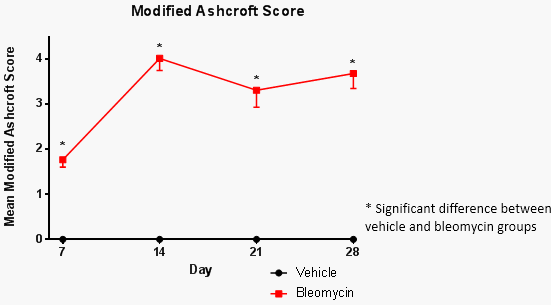
Significant increase in mean Ashcroft score observed following bleomycin treatment. Fibrosis and inflammation incidence scores are also captured (not shown) enabling detection of trends.
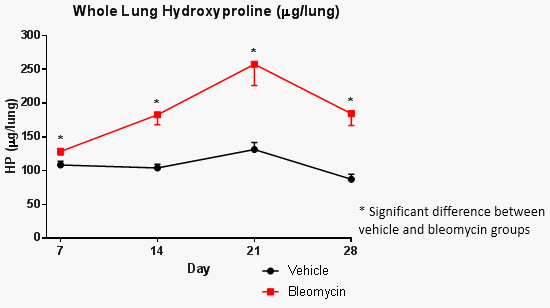
Significant increase in mean hydroxyproline observed following bleomycin treatment. Hydroxyproline is quantified using an LCMS analytical method which provides improved sensitivity/reproducibility compared with the standard colorimetric method.
Pulmonary Fibrosis Studies in Rats
-
STUDY PARAMETERS
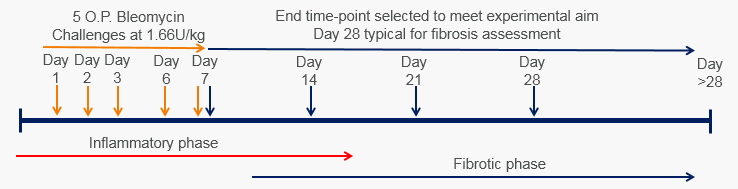
Fibrosis (assessed by lung pathology and hydroxyproline content) has been assessed over a 28-day time-course. The typical end-point is day 28.
-
VALIDATION DATA
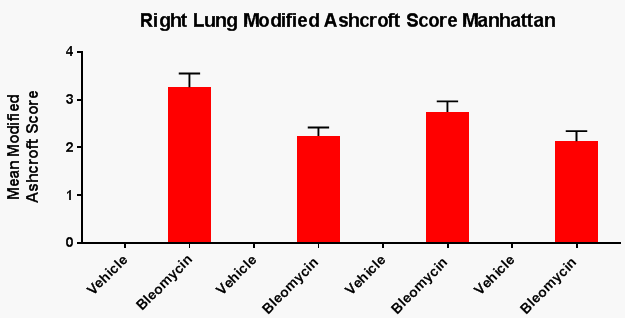
Significant, consistent fibrosis response to bleomycin at day 28. Fibrosis and inflammation incidence scores are also captured (not shown) enabling detection of trends.
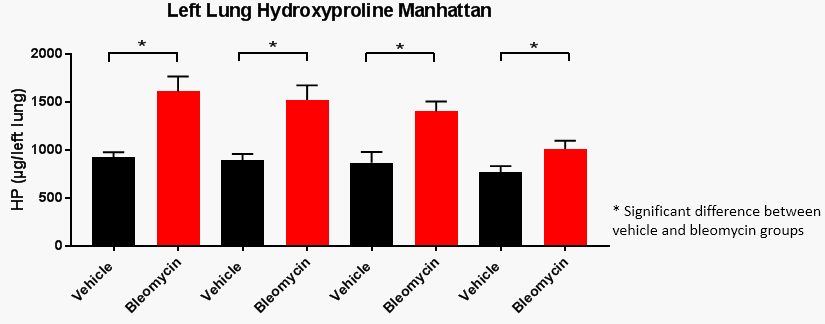
Significant hydroxyproline response to bleomycin at day 28.