Induction of TNBS Colitis in Mice
A single intrarectal instillation of haptenizing molecule 2,4,6-trinitrobenzene sulfonic acid (TNBS) in vehicle ethanol is known to induce immunogenic reactions in the colon wall and generate colitis in mice that models the human condition. CD4+ T cells are suggested to play a key role in inducing colitis in this mouse model.
Histopathologically, the TNBS model is characterized by more focal damage in the colon than the DSS colitis model. Presensitization may be used to mimic a delayed type hypersensitivity reaction. Our inflammation group has validated this model for use in testing efficacy of novel therapeutic compounds.
TNBS-induced Colitis Mouse Model Study Data & Endpoints
Our TNBS colitis mouse model is usually induced by a single intrarectal administration of TNBS and then observed for 5-7 days.
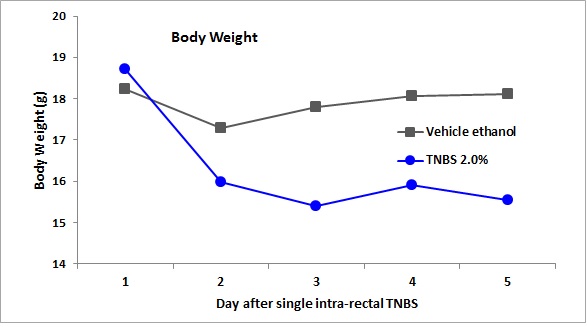
Body weight loss in 2% TNBS-treated mice compared with vehicle ethanol-treated mice.
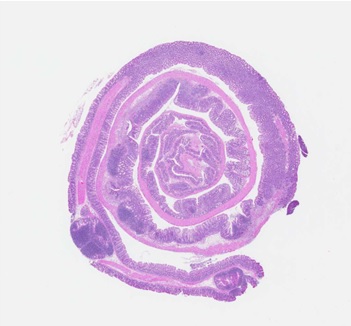
H&E stained section of colon from TNBS-treated mice.
COLITIS STUDY ENDPOINTS
- PK/PD blood collections
- Cytokine/chemokine analysis
- Clinical chemistry
- Histopathological evaluation
- Immunohistochemistry
- Myeloperoxidase (MPO) activity assay