
Lupus Studies in NZB/W Mice
Charles River has characterized a clinically relevant model of lupus, the NZB/W mouse. In this model, lupus develops spontaneously with an increase in autoantibodies at 5 months of age and peak at 8-9 months, which parallels with development of proteinuria, an indicator of kidney dysfunction.
Study parameters include in-life clinical evaluation of proteinuria and serum autoantibodies, blood creatinine, and histopathological evaluation of kidney sections together with optional cytokine analysis in serum and kidneys.
Study Endpoints in SLE Mouse Model
- PK/PD blood collections
- Cytokine/chemokine analysis
- Clinical chemistry
- Histopathological evaluation
- Immunohistochemistry
- Flow cytometry in lymph nodes or spleen
In-life Proteinuria Readout
-
PROTEINURIA
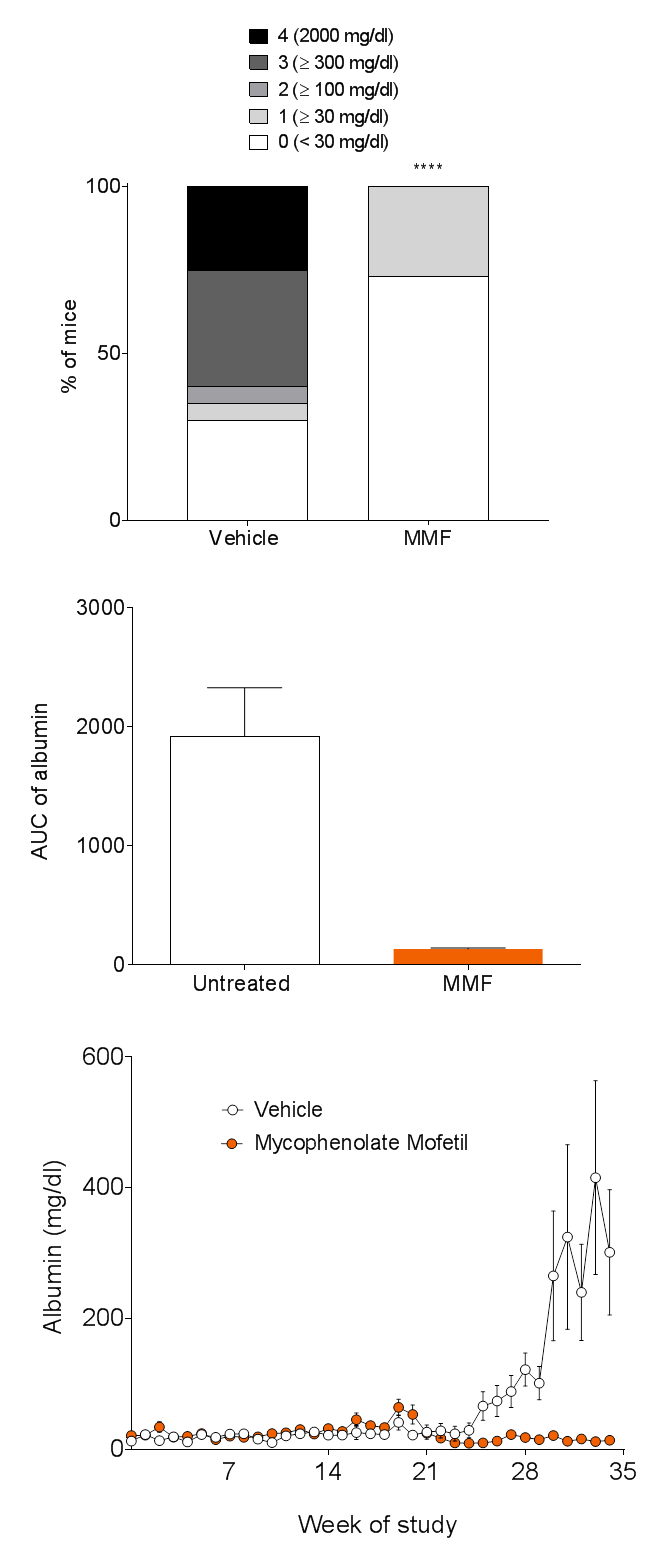
Mycophenolate Mofetil (MMF) administered daily at 100 mg/kg shows efficacy on proteinuria in the NZB/W mouse model of spontaneous SLE.
Ex Vivo Analysis
-
BONE MARROW FLOW CYTOMETRY ANALYSIS
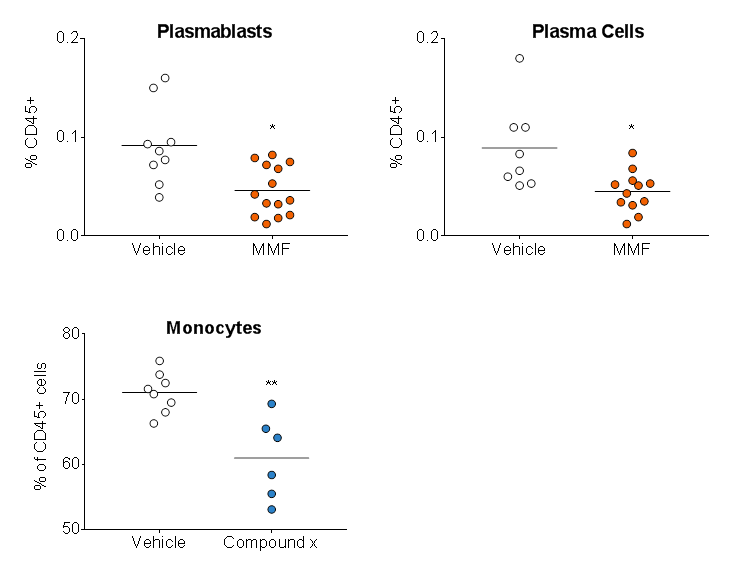
Mycophenolate Mofetil (MMF) administered daily at 100 mg/kg. Compound X caused a decrease in the proportion of bone marrow monocytes.
-
LYMPH NODE FLOW CYTOMETRY ANALYSIS
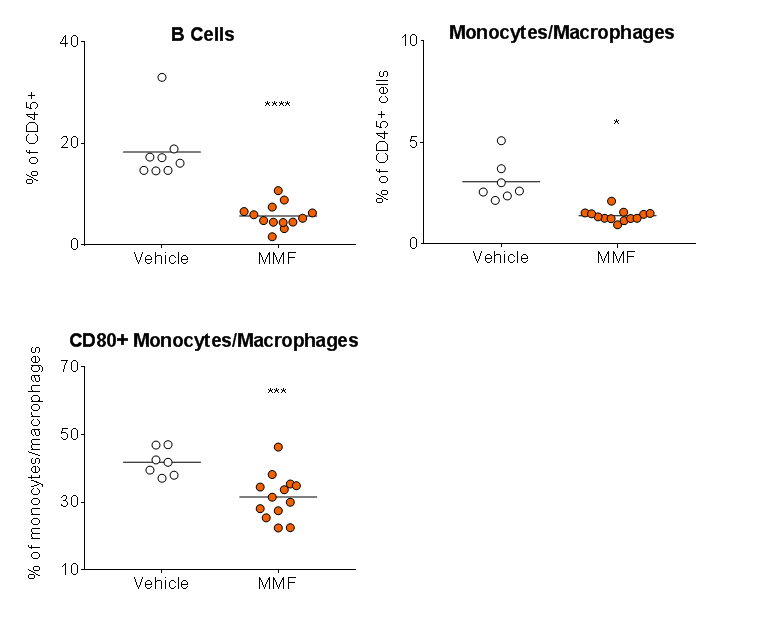
Mycophenolate Mofetil (MMF) administered daily at 100 mg/kg shows efficacy via a reduction in lymph node B cells, monocytes/macrophages, and the activation of monocytes/macrophages.
-
SPLEEN FLOW CYTOMETRY ANALYSIS
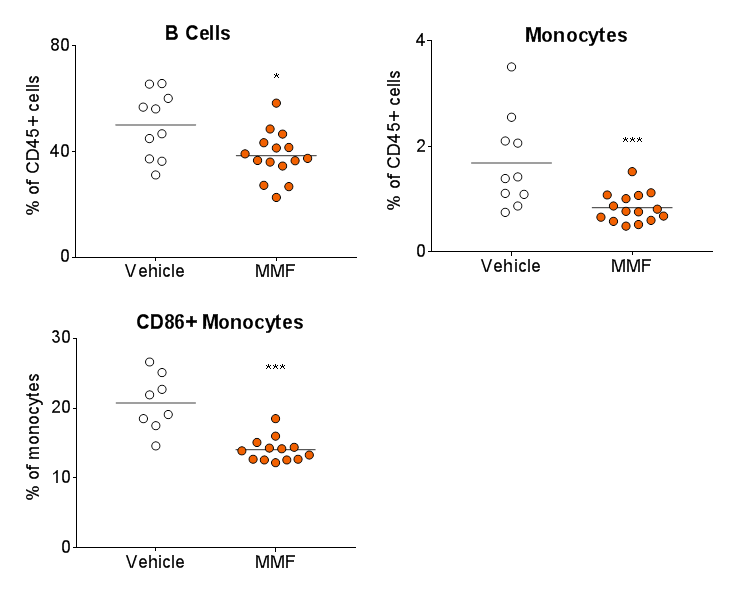
Mycophenolate Mofetil (MMF) administered daily at 100 mg/kg shows efficacy via a reduction in spleen B cells, monocytes, and the activation of monocytes (as shown by CD86 expression).