
Pharmacodynamic Biomarker Assays
Industry studies have identified a lack of efficacy as a cause of failure in 38% of programs in Phase I and 84% of programs in Phase II. Poor target validation or a lack of target engagement can be a primary cause of failure. Pharmacodynamic biomarker assays can help demonstrate target engagement and confirm proof of mechanism (POM), a key component to improve probable success in a trial.
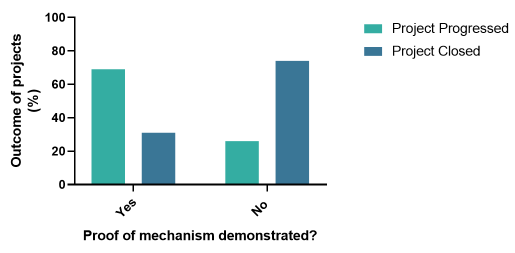
Our expertise in immunology allows us to map immune function in the clinic. Through implementation of a validated set of analytical, cellular, and even functional assays, as part of the clinical team in Phase 0-II studies, confirmation that the drug is engaging with the target and is having the effect predicted is key to a successful program.

eGuide: Biomarker Solutions from Discovery to Clinical Trials
Learn how strategic biomarker integration can accelerate research & de-risk pipelines to bring life-saving therapies to patients faster. This guide helps you uncover smarter ways to de-risk studies and accelerate timelines, without compromising scientific rigor.
Read the Guide
Available Platforms Used as Exploratory Endpoints in Clinical Trials
Cellular Protein-Based Assays
Gene Expression Assays
Lead Time for Pharmacodynamic Biomarker Assay Validation Prior to Clinical Sample Receipt
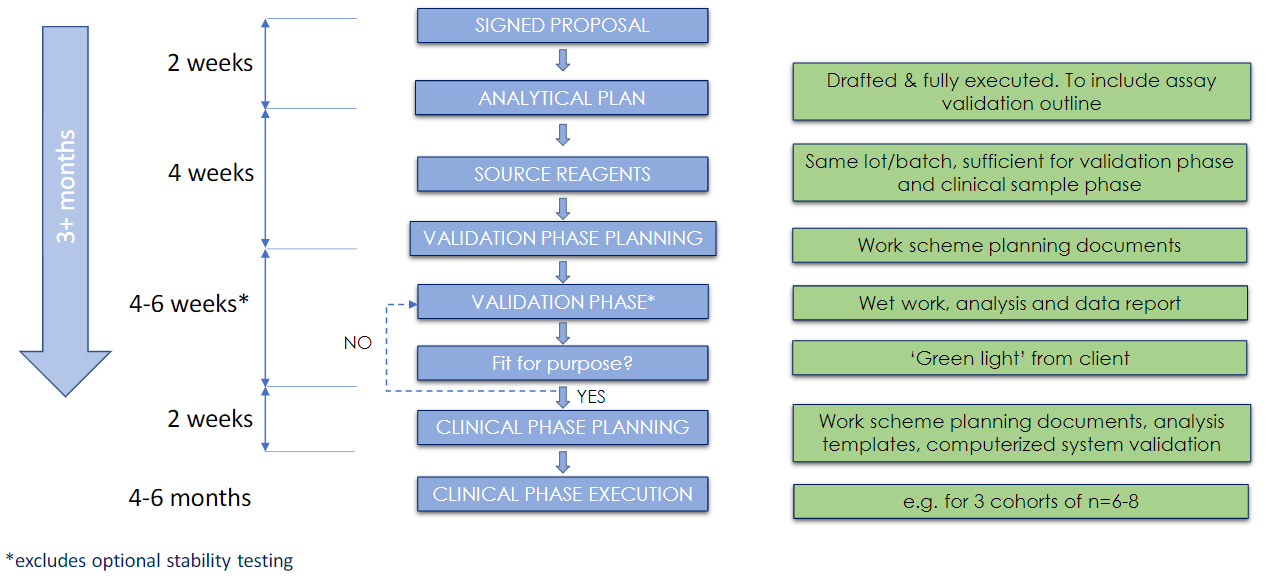
Our bespoke PD biomarker service is tailored to the needs of your individual program. The data is intended for exploratory purposes, not for regulatory submission. Having identified a suitable platform, we will perform a fit-for-purpose validation to demonstrate pharmacodynamic biomarker assay performance and will advise on sample handling in order to ensure an optimal condition for downstream analysis.

Bioanalytical Strategies Unlocked: Innovative Approaches to PK, Immunogenicity, and Biomarkers
In this webinar, our scientific experts will walk you through real-world case studies that illustrate how innovative bioanalytical approaches can help you overcome common hurdles in pharmacokinetics (PK), immunogenicity, and biomarker applications.
Watch the Replay
How We Help Your PD Biomarker Program
-
Confirming Mechanism Of Action (MOA)
We identify and monitor PD biomarkers that confirm MOA. If your molecule affects the immune system, we can employ analytical, cellular, or even functional assays to confirm that your molecule interacts with its target modulating immunological function as anticipated.
-
Efficacy Predicting
By carefully analyzing drug effects in the patient, our PD biomarker platforms support your drug discovery and development programs, providing high-quality data early in the process that will support the critical decisions taken to progress a molecule.
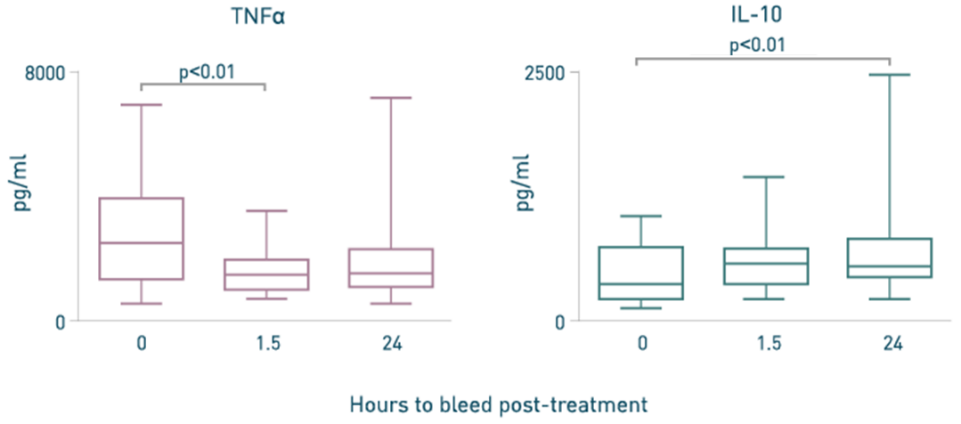
The consequences of novel treatments on the ability of patient-derived cells to produce inflammatory and anti-inflammatory cytokines are assessed in validated pharmacodynamic biomarker assays.
Frequently Asked Questions (FAQs) About Pharmacodynamic (PD) Biomarker Assays
-
What types of samples can be applied to PD biomarker analysis?
The starting material for immune assays is often blood from trial subjects before and after dosing. Some assay types such as qPCR and NanoString can also be applied to tissue biopsies. Depending on the tissue, cells may also be isolated for cell-based/functional assays.
Regardless of sample type, we are keen to ensure the best chance of success in our downstream assays, so can advise on sample handling (e.g., anticoagulants and storage), and will often comment on lab manual sections relating to endpoints.
-
How far in advance of the trial should we discuss our requirements?
Typically, it takes a minimum of three months from study signature to get to a point where an assay is validated and given the green light to be used on clinical trial samples for a basic/established assay. More time should be allowed if an assay is particularly complex, if a new assay needs to be developed, or if prolonged sample stability testing is incorporated.
-
What pre-validated panels of pharmacodynamic biomarkers are available?
Even though we have experience with a number of different pharmacodynamic biomarker assay platforms and panels for PD biomarker analysis, this is not a catalog service. We can advise on experimental approaches to measure biomarkers of interest, and if fit-for-purpose validation would be required to demonstrate assay performance.
-
Why do we need to include an assay validation phase?
We need to source and test the lot of critical reagents to be used in the trial to show how they perform in our hands even when a request closely matches something we’ve run before. This ensures that the combination of assay kits, qualified operators, and our equipment gives assay performance that is fit-for-purpose. During the assay validation phase, it is also important to demonstrate that the biomarker withstands the sample handling proposed for the clinical sample phase.
-
What is the format of the PD biomarker report?
As soon as data is available and QC has been checked, the data report will be in either an Excel spreadsheet or a PowerPoint, at a suitable frequency (e.g., batched by patient cohort). For clinical studies, a full report will be available as a Word document at the end of the trial.